Grand Junction, CO Cost of Living 2026: Rent, Homes, Taxes
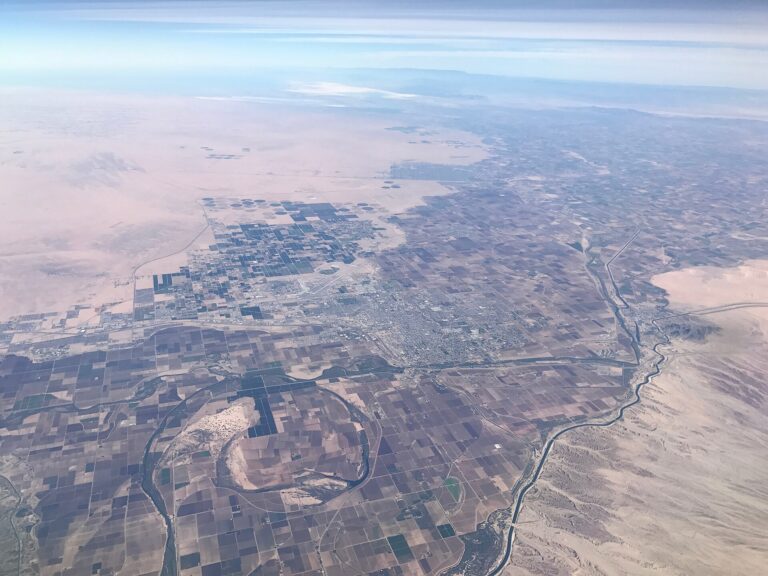
Grand Junction is the county seat and largest city of Mesa County, and Wikipedia describes it as the most populous city in western Colorado, sitting where the Gunnison River meets the Colorado River about 247 miles west-southwest of the State Capitol in Denver. It is home to Colorado Mesa University, which Wikipedia puts at nearly 10,000 students, and to several hospitals that rank among its largest employers. For someone leaving a big metro, the pitch is simple: median home values and rents run well below Colorado’s, while incomes run lower too.
What renters pay: Census medians and HUD’s 2026 fair market rents
The Census Bureau puts Grand Junction’s median gross rent (rent plus utilities the tenant pays) at $1,101 per month (ACS 2019 to 2023, U.S. Census Bureau). The city’s median household income in the same survey is $66,676. A year of median rent, $1,101 x 12 = $13,212, equals 19.8% of that median income, which is under the common 30% affordability line.
HUD’s newer benchmark is the Fiscal Year 2026 Fair Market Rent for the Grand Junction, CO MSA, which consists of Mesa County (HUD FY2026 FMR):
| Unit size | FY2026 FMR | FY2025 FMR | Income needed at 30% of pay |
|---|---|---|---|
| Efficiency | $881 | $873 | $35,240 |
| 1 bedroom | $986 | $961 | $39,440 |
| 2 bedrooms | $1,249 | $1,245 | $49,960 |
| 3 bedrooms | $1,737 | $1,745 | $69,480 |
| 4 bedrooms | $2,095 | $2,091 | $83,800 |
The last column is the FMR x 12 divided by 0.30. The year-over-year change is small: the one-bedroom FMR rose from $961 to $986, about 2.6%, and the three-bedroom figure actually slipped by $8. A household earning the city’s median income of $66,676 clears the 30% test for a two-bedroom at the FMR ($49,960 needed) but falls short for a three-bedroom ($69,480 needed).
Buying a home at 7% mortgage rates
The median value of an owner-occupied home in Grand Junction is $358,300 (ACS 2019 to 2023, U.S. Census Bureau). Freddie Mac’s Primary Mortgage Market Survey reported a 30-year fixed rate averaging 7.03% for the week of September 24, 2026 (Freddie Mac PMMS). Using those two numbers:
- Down payment at 20%: $71,660, leaving a loan of $286,640.
- Monthly principal and interest over 30 years at 7.03%: about $1,913.
- Household income needed to keep that payment at 30% of gross pay: about $76,512 ($1,912.80 x 12 / 0.30).
- That payment equals 34.4% of the city’s $66,676 median household income, before property taxes and insurance, which are not included here.
The ratio of median home value to median household income is 5.37 in Grand Junction ($358,300 / $66,676). The statewide ratio is 5.43 ($502,200 / $92,470) (ACS 2019 to 2023, U.S. Census Bureau). So homes cost less in dollars than the Colorado median, yet relative to local pay they are only slightly easier to afford than the state as a whole. Buyers arriving with equity from a higher-priced metro are the group for whom that math works best. The Census also counts 62.8% of occupied homes in the city as owner-occupied (18,226 of 29,037), shown rounded to 63% in the box above.
Sales tax at 8.66% and Colorado’s flat income tax
The City of Grand Junction lists a combined sales tax rate of 8.66% inside city limits, made up of a 3.39% city tax, the 2.90% State of Colorado tax and a 2.37% Mesa County tax (City of Grand Junction, Finance). The city rate rose from 3.25% to 3.39% on July 1, 2023, after voters approved Measure 1A to finance a recreation center at Matchett Park. At 8.66%, a $1,000 purchase such as a refrigerator carries $86.60 in sales tax. The city also notes that deliveries to addresses outside city limits do not carry the city’s portion.
Colorado’s individual income tax is a single rate applied to Colorado taxable income. The Colorado Department of Revenue lists that rate as 4.4% for tax year 2025, after 4.25% for 2024 (Colorado DOR income tax guide). On $60,000 of Colorado taxable income, 4.4% comes to $2,640. The flat rate makes the state portion easy to estimate, though the actual bill depends on deductions and credits.
Getting around: gas prices, Grand Valley Transit and regional links
Fuel costs more here than in the state as a whole. On September 27, 2026, AAA listed regular gasoline at an average of $4.449 per gallon in Grand Junction, against $4.215 for Colorado overall (AAA Colorado gas prices). That $0.234 gap adds about $3.51 to a 15-gallon fill-up. A year earlier, AAA’s Grand Junction average for regular was $3.2095.
Grand Valley Transit (GVT) is the county bus system, with routes in Grand Junction, Palisade and Fruita, and it ran fare-free on all fixed routes and paratransit during August 2026 (Mesa County, GVT). Its published fares (GVT fares and passes):
- One-way adult fare: $1.50 (transfers not included).
- Day pass: $3.75.
- Monthly adult pass: $45.00; senior and youth monthly pass: $22.50.
- Annual adult pass: $275.00, which is $265 less than buying twelve monthly passes ($45 x 12 = $540).
- Paratransit one-way fare: $3.00, with ADA certification required.
- Children 10 and under ride free through the Kids Ride Free Program, and kids 10 to 18 can get a free pass through the Student Pass Program.
For longer trips, Wikipedia notes that Grand Junction Regional Airport is the largest airport in western Colorado, with nonstop flights as of 2026 to Denver, Dallas to Fort Worth, Las Vegas, Salt Lake City, Phoenix, San Francisco and Santa Ana. Amtrak’s California Zephyr stops at the Grand Junction station, and Colorado’s state-run Bustang buses run a West line to Denver and an Outrider line to Durango. Interstate 70 connects the city east to Denver.
Hospitals, schools and the jobs they support
Health care and education dominate the local payroll. The top employers listed on Wikipedia, citing the city’s 2024 Annual Comprehensive Financial Report, are:
| Employer | Employees |
|---|---|
| Mesa County Valley School District 51 | 3,465 |
| St. Mary’s Regional Hospital | 2,846 |
| Community Hospital | 1,400 |
| Mesa County | 1,271 |
| Colorado Mesa University | 1,173 |
| Grand Junction VA Medical Center | 1,022 |
| City of Grand Junction | 860 |
| Family West Health | 616 |
| West Star Aviation | 559 |
| HopeWest | 350 |
Three of the top ten are hospitals. Community Hospital describes itself as a full-service acute care hospital and a Level III Trauma Center serving the Western Slope region of Colorado and eastern Utah (Community Hospital). The VA Western Colorado Health Care System has its medical center at 2121 North Avenue (VA Western Colorado). For retirees and anyone managing a chronic condition, it matters that three of the city’s ten largest employers are hospitals.
Wikipedia’s history of the local economy also carries a caution: the Grand Valley boomed on oil shale in the 1970s and early 1980s and went bust when Exxon pulled out in 1982, and a 2008 drop in natural gas prices slowed the economy again in 2009. The current employer list leans on schools, hospitals and government, rather than on energy companies. The latest Bureau of Labor Statistics figure for the Grand Junction metro area is a 4.3% unemployment rate for July 2026, preliminary and not seasonally adjusted, up from 3.4% in April 2026 (BLS LAUS). The Census five-year figure for the city itself is 4.5%.
How Grand Junction compares with Fruita, Montrose and Colorado
Fruita is a smaller city in western Mesa County, inside the Grand Junction metro area (Wikipedia). Montrose is the county seat of neighboring Montrose County, on U.S. Highway 50 (Wikipedia). The same Census survey gives these figures (ACS 2019 to 2023, U.S. Census Bureau):
| Place | Median household income | Median home value | Median gross rent | Home value / income | Owner-occupied |
|---|---|---|---|---|---|
| Grand Junction | $66,676 | $358,300 | $1,101 | 5.37 | 62.8% |
| Fruita | $77,680 | $361,500 | $1,275 | 4.65 | 80.5% |
| Montrose | $63,177 | $359,000 | $1,117 | 5.68 | 69.8% |
| Mesa County | $71,485 | $349,400 | $1,154 | 4.89 | 71.9% |
| Colorado | $92,470 | $502,200 | $1,693 | 5.43 | 66.3% |
Median home values in the three cities sit within $3,200 of each other. Fruita’s higher median income gives it the best value-to-income ratio of the group, while its rents run higher and far more of its homes are owner-occupied. Montrose has the oldest population of the three, with a median age of 45.9 against 40.0 in Grand Junction. Compared with Colorado as a whole, Grand Junction’s median income is 72.1% of the state figure, its median home value is 71.3% and its median rent is 65.0%.
A few other Census figures help describe who lives here. Grand Junction’s median age is 40.0, compared with 37.5 statewide. The share of adults 25 and older with a bachelor’s degree or higher is 36.1% in the city and 44.7% in Colorado. The city’s poverty rate is 13.0%, against 11.2% for Mesa County and 9.4% for the state (ACS 2019 to 2023, U.S. Census Bureau). For newcomers these gaps are context, and they fit the employer list above, which is led by schools, hospitals and public agencies.
Tradeoffs to weigh before moving
- Lower costs come with lower pay. The city’s median household income of $66,676 is $25,794 below the state median, so the savings are largest for people who bring remote income or home equity with them.
- The climate is dry and hot in summer. Wikipedia reports 9.05 inches of precipitation a year, an average of 68 days at or above 90 degrees F and about 17.6 inches of snow per season.
- Distance from Denver is real: about 247 miles, so trips to the Front Range lean on I-70, Bustang, Amtrak or flights.
- Fuel cost more than the state average in AAA’s September 27, 2026 figures above. GVT covers the Grand Junction, Palisade and Fruita area.
- The economy has a boom-and-bust history tied to energy, though today’s largest employers are schools, hospitals and government.
Frequently Asked Questions
What is the average rent in Grand Junction, CO in 2026?
What is the sales tax rate in Grand Junction?
How much income do you need to buy a median-priced home in Grand Junction?
Is Grand Junction cheaper than the rest of Colorado?
How much does the bus cost in Grand Junction?
Who are the largest employers in Grand Junction?
How this guide was made. Figures come from the sources named next to each number. A first draft was written with the help of an AI language model; every place name, price, date and claim was then checked against primary sources by the Small City Guide editors (see About and Methodology). Last verified: September 27, 2026.
What changed: New guide, first published October 2026.
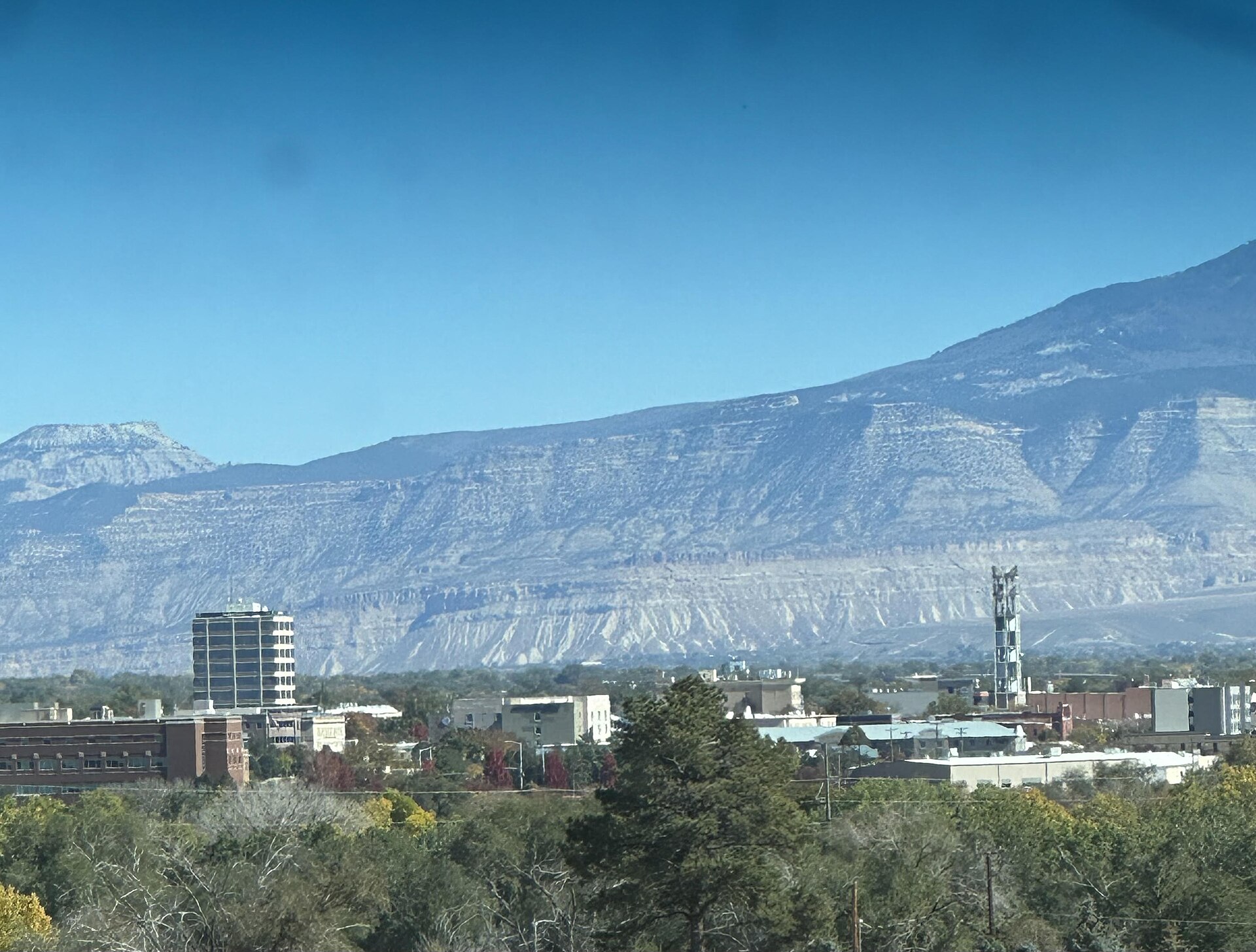
Photo: Egonarc, CC BY-SA 4.0, via Wikimedia Commons.