Fayetteville, AR Cost of Living in 2026
Fayetteville is home to the University of Arkansas, which enrolled more than 34,000 students in fall 2025, and the Census Bureau’s 2025 estimate puts the city at 106,623 residents. Census figures for 2019 to 2023 show a median home value of $322,500 against a median household income of $59,074, with median gross rent at $1,003 a month. This guide breaks down what housing, food, transportation and health care cost here in 2026.
This is a city that feels younger than almost anywhere else its size. With a median age of just 28.7 years, Fayetteville skews heavily toward students, young professionals, and the kind of people who moved here for the University of Arkansas and quietly never left. That demographic shapes everything: the rental market, the restaurant culture, the traffic on game day, and the gap between what things cost and what a lot of residents actually earn.
Fayetteville at a Glance
Fayetteville sits in the Boston Mountains, part of the Ozarks, in Northwest Arkansas, on Interstate 49 between Fort Smith to the south and Kansas City to the north. The metro area it anchors, which includes Springdale, Rogers, and Bentonville, has become one of the fastest-growing regions in the country, with growth driven in large part by Walmart, whose headquarters is in nearby Bentonville.
The city proper has a population of 97,227, which puts it firmly in the “big small city” category. Big enough for a legitimate arts scene, a thriving restaurant corridor, and a Division I athletic program. Small enough that you still hit actual traffic on Dickson Street during a Razorbacks home game and know it’s going to be a problem.
The University of Arkansas enrolled more than 34,000 students in fall 2025, and their presence is impossible to separate from the city’s identity. The 49.8% bachelor’s degree attainment rate among residents is striking for a mid-South city this size, but it also reflects a population that skews heavily toward the educated and relatively young. The flip side: a 21.4% poverty rate that sits meaningfully above the national average, driven in large part by a large student population and a service-sector workforce that supports the university economy.
Housing Costs: Renting and Buying in 2026
Housing is where Fayetteville’s story gets genuinely interesting, and not entirely in the good way the city’s boosters prefer to tell it.
Renting
The Census-reported median gross rent of $1,003 per month is a useful anchor, but treat it as a floor for 2026, not a target. That figure reflects the full rental stock including older apartments, shared student housing, and units that haven’t been updated since the Clinton administration. If you’re a young professional moving here from, say, Denver or Nashville, you will find those units. But you probably won’t want them.
The Uptown Fayetteville area, around the Northwest Arkansas Mall in north Fayetteville, takes in many of the city’s newer homes and businesses.
The 41.9% homeownership rate signals what many already suspect: most people here rent, either by choice or by necessity. That’s low, and it keeps the rental market competitive.
Buying
The median home value sits at $322,500, which sounds reasonable until you stack it against that $59,074 median household income. That median value is about 5.5 times the median household income, which puts a typical home out of easy reach for a household earning the local median.
Food and Groceries
Fayetteville’s food scene punches above its weight, full stop. Dickson Street and the surrounding blocks have real restaurants run by people who care, not just chains and fast food. Arsaga’s, the local coffee roaster with a cafe at Church and Center streets, and Hugo’s, a basement restaurant off the historic square that has been open since 1977, are the kinds of places that would hold their own in cities twice the size, and The Preacher’s Son, in a restored church in nearby Bentonville, is worth the drive.
The Fayetteville Farmers’ Market on the downtown square runs spring through fall and keeps produce costs manageable if you’re willing to make it a Saturday habit.
Major grocery options include multiple Walmart Supercenters, Harps Food Stores, a Natural Grocers, and a Whole Foods on North College Avenue. Eating out frequently will inflate your monthly food spend considerably.
Transportation
Fayetteville is walkable in its core and car-dependent almost everywhere else. That’s the honest summary. If you live near campus or downtown, you can genuinely get by without a car for daily errands. For everyone else, a vehicle is not optional.
The Ozark Regional Transit system runs buses across Fayetteville and into the broader metro, and the University of Arkansas runs Razorback Transit, a fare-free bus system that serves the campus and other stops in Fayetteville, including the downtown square. But route frequency and coverage are limited enough that most working adults with jobs outside downtown simply drive. Plan for it.
Parking downtown is paid, with city-run meters, surface lots and parking decks. Near campus, parking is a genuine headache on class days, and the university’s lots are assigned by permit type, with some hourly spaces. If you’re working at the U of A or visiting regularly, factor this in early.
Healthcare
Northwest Arkansas has genuinely good healthcare infrastructure for a region this size, and Fayetteville sits at its center. Washington Regional Medical Center, in Uptown Fayetteville, is the only Level II trauma center in Northwest Arkansas. The University of Arkansas for Medical Sciences (UAMS) has a Northwest Arkansas campus in Fayetteville, and the broader metro draws physicians and specialists at a rate that would surprise people unfamiliar with the area’s growth.
For the uninsured or underinsured, the 21.4% poverty rate means this is a real concern for a significant share of residents.
Entertainment and Lifestyle
This is where Fayetteville earns its reputation. The outdoor infrastructure alone is remarkable for a city of about 100,000 people (the Census Bureau’s 2025 estimate is 106,623). The Razorback Regional Greenway is a roughly 40-mile, primarily off-road shared-use trail that runs from Kessler Mountain Regional Park in Fayetteville north through Springdale, Rogers and Bentonville to Bella Vista, and it’s genuinely excellent. Lake Fayetteville and its trail sit inside the city, Devil’s Den State Park has about 64 miles of trails south of town, and Lake Leatherwood Park in Eureka Springs is a longer day trip. If you mountain bike, hike, or trail run, you will not run out of reasons to go outside.
The Walton Arts Center brings touring Broadway productions and national acts to a genuinely nice 1,200-seat venue downtown. Fayetteville’s live music scene, anchored around Dickson Street clubs like George’s Majestic Lounge, is authentic and well-supported. Game day at Donald W. Reynolds Razorback Stadium seats over 76,000 people, and the energy is real even when the football isn’t.
How Fayetteville Compares to Nearby Cities
Little Rock, AR
Little Rock is the state capital with a population around 200,000. Its median home value is $221,200 (ACS 2019 to 2023), about $100,000 below Fayetteville’s, and its median gross rent of $1,067 is comparable. The job market leans heavily on state government, healthcare, and finance. Fayetteville wins on quality of life metrics, walkability in its core, and outdoor access. Little Rock offers more urban amenities, more neighborhood variety, and a more diverse economy. For someone in government or finance, Little Rock makes more sense. For someone in tech, logistics, or working for a Walmart supplier, Fayetteville and the NWA corridor win easily.
Tulsa, OK
Tulsa is the more genuinely urban alternative, with a population over 400,000. Median home values in Tulsa run $180,000 to $220,000, making it cheaper to buy. Median rents are similar to Fayetteville. Tulsa has more economic diversity, better arts infrastructure, and lower housing costs relative to income. Fayetteville beats it on outdoor access, campus energy, and proximity to the NWA tech and logistics boom. If you have no connection to the university economy and want more city for your money, Tulsa deserves serious consideration.
Honest Pros and Cons
The Real Advantages
- Outdoor recreation is exceptional, with a world-class trail network essentially free to use.
- Job market in the NWA corridor is strong, particularly in logistics, retail supply chain, and tech adjacent to Walmart’s ecosystem.
- Educated, young population creates a social scene and cultural energy unusual for a city this size.
- Healthcare infrastructure is solid, with a Level II trauma center at Washington Regional and a UAMS regional campus.
The Real Downsides
- The income-to-housing ratio is tightening. A $322,500 median home value against a $59,074 median income is already stressed.
- The 21.4% poverty rate is not a rounding error. A substantial share of the population is economically precarious, and that shapes everything from school funding to neighborhood investment.
- Car dependency outside the core is a genuine lifestyle constraint and a recurring expense.
- Game day traffic is a real quality-of-life issue for anyone who lives near campus or uses Highway 71 on fall Saturdays.
- Summers are hot and humid in a way that surprises people who picture the Ozarks as cool mountain country. July and August are genuinely brutal.
Who Fayetteville Is Right For
The NWA Career Climber
If you’re in supply chain, logistics, retail analytics, or tech and have a job offer tied to the Walmart ecosystem or one of the nearly 1,300 suppliers and vendors in the region, Fayetteville is an excellent base. Your income will likely exceed the $59,074 median meaningfully, and the cost structure rewards that. You can own a real house, eat well, and have an active outdoor life without the financial anxiety that comes with a similar career in a coastal metro.
The University of Arkansas Graduate Student or Young Faculty
The city is quite literally built around this person. The walkable core, the rental market, the bar scene, the cultural calendar: all of it serves someone affiliated with the university. Just understand that graduate student stipends against Fayetteville’s rental market require careful budgeting, and the $1,003 median rent is not what you’ll find in a desirable unit near campus in 2026.
The Outdoor-First Remote Worker
If you work remotely and your primary non-negotiable is access to serious trail infrastructure, Fayetteville is hard to beat at this price point. You get about 40 miles of regional greenway, immediate access to Ozark singletrack, and a real food and arts scene to come home to.
The Retiree Seeking Value and Activity
A younger-skewing median age of 28.7 means Fayetteville is not a retirement community, and some older adults find the college-town energy tiring after a while. But for retirees who want an active lifestyle and strong arts programming at the Walton Arts Center, Fayetteville delivers. The Crystal Bridges Museum of American Art in nearby Bentonville alone is worth the move for a certain kind of culturally engaged retiree.
The Bottom Line
Fayetteville, AR in 2026 is a genuine value proposition for people whose incomes exceed the local median, and a genuinely difficult financial environment for those who don’t. The $59,074 median household income is real, and so is the $322,500 median home value. Those two numbers in tension define a lot of life here. The city’s strengths are real and specific: excellent outdoor infrastructure, a vibrant food and arts scene, and strong job growth in the NWA corridor. The weaknesses are equally real: a tightening housing market, significant poverty, and the kind of car dependency that adds friction and expense to daily life outside the downtown core.
Move here with a clear-eyed understanding of where your income sits relative to the local economy, and Fayetteville is one of the better quality-of-life bets in the mid-South. Move here assuming everything will be affordable simply because it’s Arkansas, and you’ll be surprised by the end of your first year.
Frequently Asked Questions
What is the average rent in Fayetteville, AR in 2026?
Is Fayetteville, AR expensive to live in compared to other Arkansas cities?
What is the average household income in Fayetteville, AR?
Is Fayetteville, AR a good place to buy a house in 2026?
How walkable is Fayetteville, AR and do you need a car?
Sources & methodology. Demographic and economic figures in this guide are drawn from the U.S. Census Bureau, 2019 to 2023 American Community Survey 5-Year Estimates. A newer 2020 to 2024 release came out on January 29, 2026; this guide still uses the 2019 to 2023 figures. Other figures come from the sources named next to them.
Last reviewed September 2026.
How this guide was made. Figures come from the U.S. Census Bureau ACS 2019 to 2023 5-year estimates and the other sources named next to each number. A first draft was written with the help of an AI language model; every place name, price, date and claim was then checked against primary sources by the Small City Guide editors (see About and Methodology). Last verified: September 26, 2026.
What changed: Fact-checked against primary sources in September 2026: 14 statements corrected, opening rewritten, photo replaced with a credited image of the city.
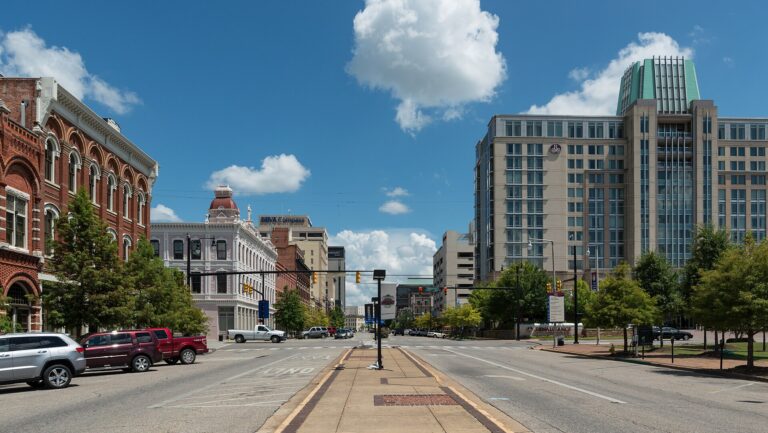
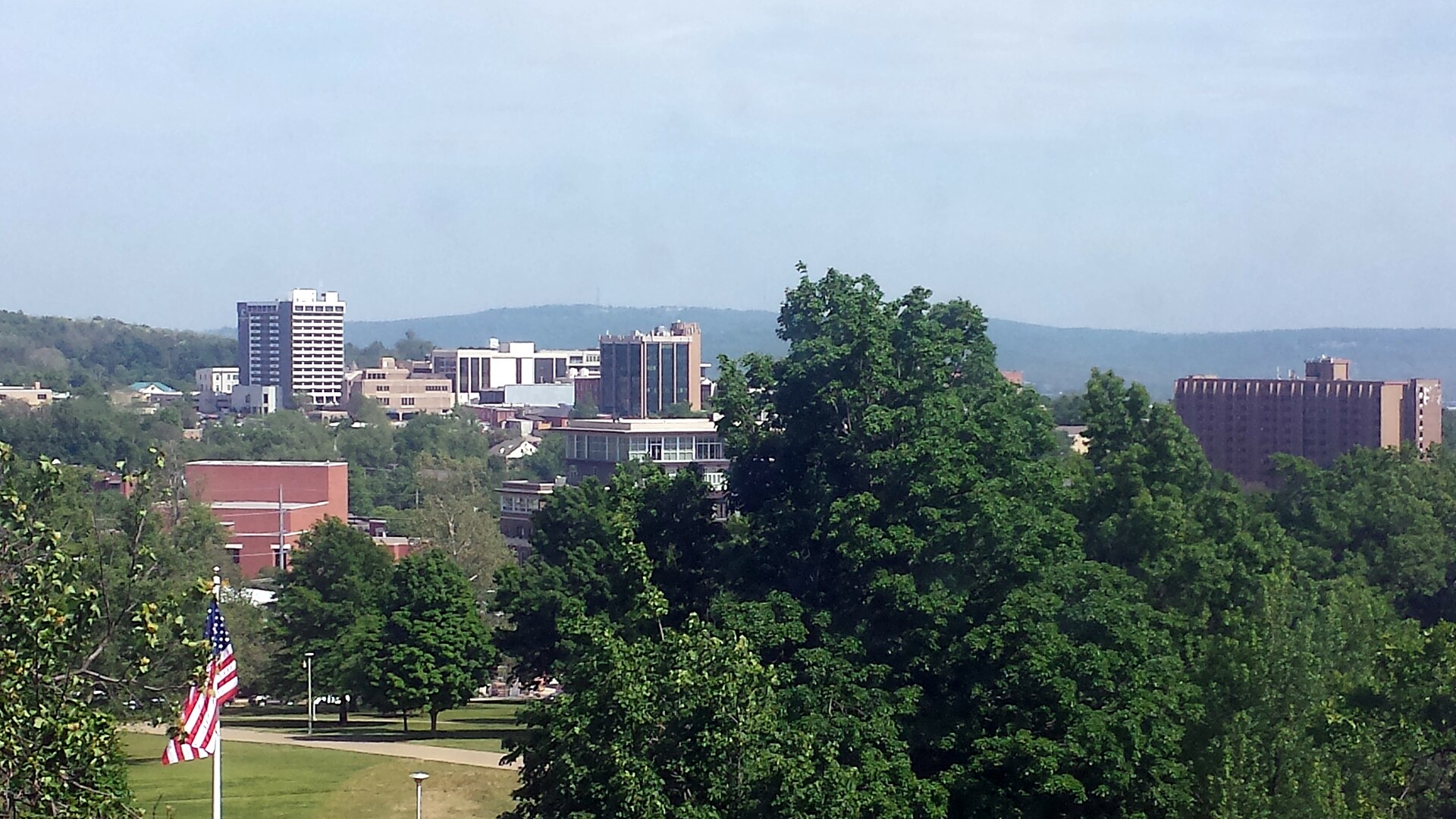
Photo: Brandonrush, CC BY-SA 3.0, via Wikimedia Commons.