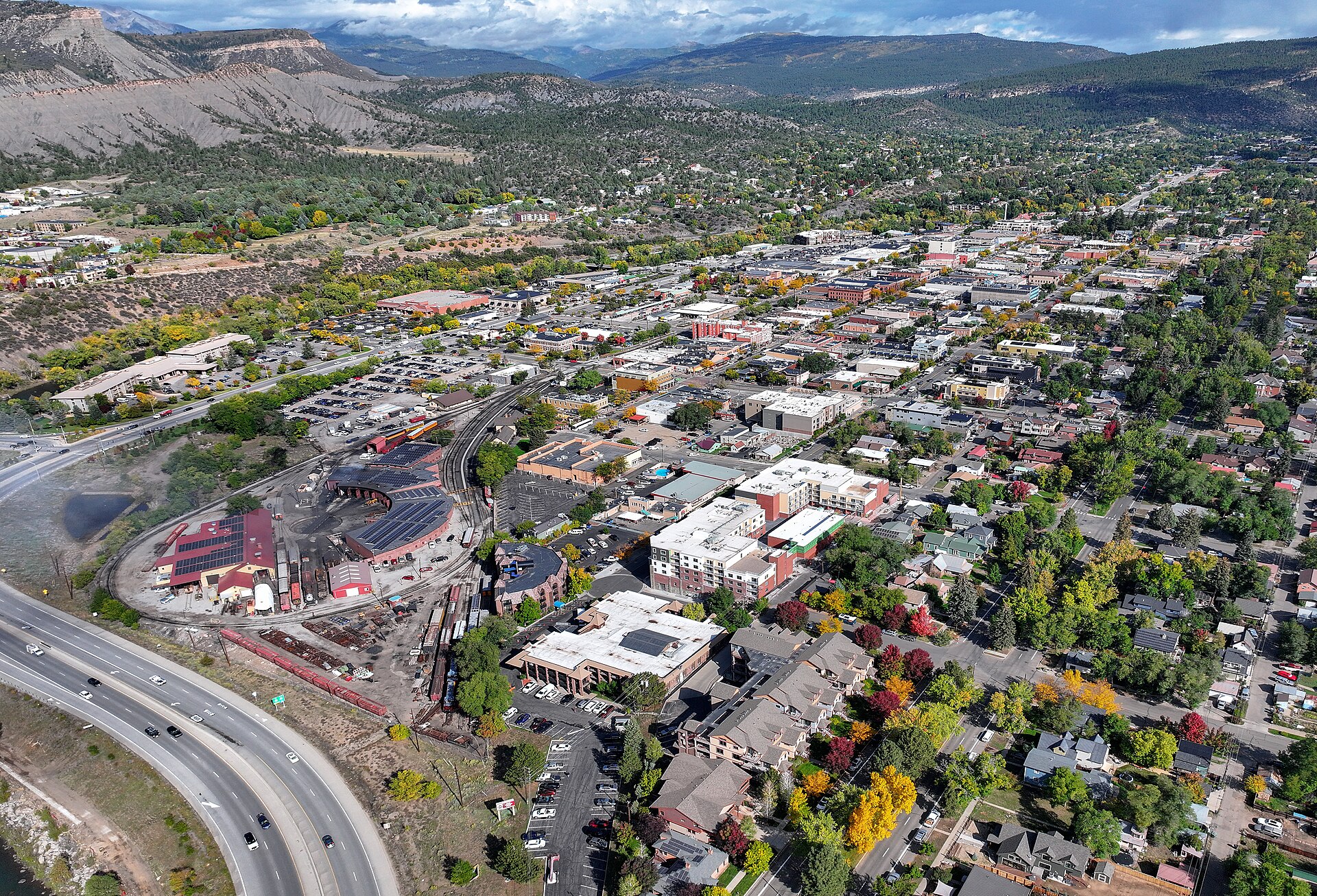
Durango, CO Cost of Living in 2026: Rent, Homes, Taxes
Durango is the county seat of La Plata County in southwestern Colorado and the county’s most populous city, with 19,071 residents at the 2020 census according to Wikipedia. It is home to Fort Lewis College, a public four-year liberal arts college that enrolled 3,544 students as of 2024, and to the Durango & Silverton Narrow Gauge Railroad, a heritage railroad running to Silverton (Wikipedia). The short version for anyone leaving a big metro: Durango’s median home value is more than seven times its median household income.
All Census figures on this page come from the 2019 to 2023 American Community Survey 5-year estimates, available at data.census.gov. Five-year estimates are averages over that period, so they trail today’s market; the HUD, Freddie Mac, AAA and tax figures below are newer and dated where they appear.
A $609,700 Median Home on a $79,545 Median Income
Durango’s median home value is $609,700 and its median household income is $79,545 (ACS 2019 to 2023). Dividing the first by the second gives a price-to-income ratio of 7.66, meaning the typical owner-occupied home is valued at more than seven and a half years of the typical household’s gross income. For La Plata County as a whole, the same ACS figures are a $549,100 median home value against an $85,296 median household income, a ratio of 6.44.
To see what that means for a buyer, take the median value and apply Freddie Mac’s 30-year fixed average of 7.03% for the week of September 24, 2026 (Freddie Mac PMMS). With 20% down ($121,940), the loan is $487,760, and principal and interest come to about $3,255 a month. Keeping that payment at 30% of gross income takes about $130,197 a year ($3,255 x 12 / 0.30), and that is before property tax, homeowners insurance and any HOA dues, which this calculation does not include. The gap between that $130,197 and the $79,545 local median is the central fact of Durango’s cost of living.
Durango’s homeownership rate is 55.4%, while La Plata County’s is 71.0% (ACS 2019 to 2023).
Renting in Durango: Census Medians and HUD’s 2026 Benchmarks
Renters occupy 44.6% of Durango’s occupied housing units, and the median gross rent, which includes utilities paid by the tenant, is $1,562 a month (ACS 2019 to 2023). Over a year that is $18,744, or 23.6% of the citywide median household income of $79,545. That share is computed against all households, not renters only, so it likely understates the burden for a typical renting household.
For a more current benchmark, HUD’s fiscal year 2026 Fair Market Rents for La Plata County set the following gross rent levels (HUD FY2026 FMR file). The right-hand column shows the gross annual income at which each rent equals 30% of income (rent x 12 / 0.30).
| Unit size | FY2026 Fair Market Rent, La Plata County | Income for rent at 30% |
|---|---|---|
| Studio | $1,181 | $47,240 |
| 1 bedroom | $1,211 | $48,440 |
| 2 bedrooms | $1,589 | $63,560 |
| 3 bedrooms | $1,942 | $77,680 |
| 4 bedrooms | $2,288 | $91,520 |
Fair Market Rents are HUD’s program benchmarks for the county, not listing prices, and they cover all of La Plata County rather than the city alone. They are still useful for a first budget: a household earning Durango’s median income of $79,545 clears the 30% line for a three-bedroom FMR, but only narrowly.
Supply is part of the story. At the 2020 census, 10.8% of Durango’s 9,150 housing units were vacant, with a rental vacancy rate of 7.9% and a homeowner vacancy rate of 2.4% (Wikipedia, citing the 2020 census).
Colorado’s Flat Income Tax and Durango’s 9.4% Sales Tax
Colorado taxes income at a single flat rate that changes by year. The Colorado Department of Revenue lists 4.4% for tax year 2025, after 4.25% for 2024 (Colorado DOR income tax guide). The rate applies to Colorado taxable income, which starts from federal taxable income with state additions and subtractions, so it is not applied to gross pay. As an illustration, $50,000 of Colorado taxable income at 4.4% is $2,200.
Sales tax is where Durango stands out. The Department of Revenue’s July to December 2026 rate table lists a combined 9.4% for Durango: 2.9% state, 3% La Plata County and 3.5% city (Colorado DOR jurisdiction rates, July to December 2026). The same table lists 7.69% for Cortez. On $1,000 of taxable purchases, that is $94.00 in Durango against $76.90 in Cortez. The table marks Durango as a self-collected home rule city, meaning the city collects its own sales tax, so check the city’s own rules on how specific items are taxed.
Getting Around: $1 Bus Fares, DRO Nonstops and Pricier Gas
Durango Transit runs fixed-route trolleys, a microtransit fleet and paratransit service (City of Durango Transit). Current fares are $1.00 per adult trip and $0.50 for seniors 60 and older or people with disabilities, with a $3.00 daily pass, a $10.00 weekly pass and a $30.00 adult monthly pass (Durango Transit rates). A low-income program sells monthly passes at $20, and Fort Lewis College students get a free mobile ticket. Buses accept exact change only, and passes are sold at the Transit Center at 250 West Eighth Street.
After fixed-route service ends, the city’s DuranGO! microtransit provides curb-to-curb evening rides inside city limits, booked only through its app, at $2.00 per ride and $1.00 for seniors 60 and older and people with disabilities, card only (DuranGO! Microtransit). The transit page also notes a new Route 5 serving Mercy Hospital and the Three Springs area every 30 minutes (City of Durango Transit).
For air travel, Durango-La Plata County Airport (DRO) is served by American Airlines and United Airlines, with year-round daily nonstops to Dallas-Fort Worth, Denver and Phoenix and seasonal nonstops to Houston (Durango-La Plata County Airport).
Driving costs more than the state average. On September 27, 2026, AAA listed regular gasoline at $4.7984 a gallon in the Durango area against a Colorado average of $4.2153, a gap of about $0.58, or 13.8% (AAA Colorado gas prices). A 15-gallon fill-up works out to $71.98 in Durango and $63.23 at the state average. AAA’s year-ago Durango figure was $3.1768, so local prices were about 51% higher than a year earlier.
Healthcare: Mercy Regional Medical Center and Animas Surgical Hospital
Mercy Regional Medical Center is Durango’s general hospital. It has 82 beds, is a Level III trauma center, and moved to its current campus east of downtown in the Grandview area in June 2006; it became part of CommonSpirit Health in August 2023 when Centura Health split (Wikipedia: Mercy Regional Medical Center). Durango also has Animas Surgical Hospital, listed with 12 beds and a Level IV designation (Wikipedia: List of hospitals in Colorado).
For someone used to a metro with several large hospital systems, the tradeoff is less choice of hospitals. Anyone managing an ongoing condition should confirm that their specialists and insurance network reach Durango before moving.
Who Pays the Bills: Tribe, Schools, Hospital and Ski Resort
More than 35,000 people work in La Plata County, and the county’s ten largest employers, as listed in the City of Durango’s 2024 Annual Comprehensive Financial Report, lean heavily on government, education, healthcare and tourism (Wikipedia, citing the city’s 2024 ACFR):
| Employer | Employees |
|---|---|
| Southern Ute Indian Reservation | 1,600 |
| City of Durango | 1,047 |
| Durango School District 9-R | 998 |
| Mercy Medical Center | 901 |
| Purgatory Resort | 850 |
| Fort Lewis College | 683 |
| La Plata County | 445 |
| Walmart | 437 |
| Bayfield School District 11-JT | 216 |
| Rocky Mountain Chocolate Factory | 200 |
The local job market is tight on paper. The Census estimate of Durango’s unemployment rate is 2.6% (ACS 2019 to 2023), and the Bureau of Labor Statistics puts La Plata County at 3.6% for July 2026, a preliminary figure (BLS Local Area Unemployment Statistics). The same BLS series shows 2.9% in April 2026 and 4.2% in February 2026. The workforce is also highly educated: 58.3% of Durango adults 25 and older hold a bachelor’s degree or higher (ACS 2019 to 2023). For a remote worker keeping a metro salary, that combination matters less; for someone job hunting locally, it means competition for professional roles.
Durango Against Cortez and the Rest of La Plata County
Cortez, the county seat of Montezuma County (Wikipedia), is described by Wikipedia as a local commercial center that competes with Durango, which makes it a useful reference point. The same ACS 2019 to 2023 figures (data.census.gov) show how different the two markets are:
| Measure | Durango | Cortez | La Plata County |
|---|---|---|---|
| Population | 19,257 | 8,898 | 56,088 |
| Median household income | $79,545 | $51,377 | $85,296 |
| Median home value | $609,700 | $226,700 | $549,100 |
| Median gross rent | $1,562 | $1,028 | $1,409 |
| Home value to income ratio | 7.66 | 4.41 | 6.44 |
| Homeownership rate | 55.4% | 60.3% | 71.0% |
| Poverty rate | 14.9% | 13.8% | 12.4% |
| Unemployment rate | 2.6% | 5.6% | 3.1% |
Durango’s median home value is $383,000 higher than Cortez’s, or 2.69 times as much, and its median rent is $534 a month higher. Using the same 7.03% rate and 20% down, the Cortez median home would carry principal and interest of about $1,210 a month, which fits the 30% rule on roughly $48,410 a year. HUD’s FY2026 two-bedroom Fair Market Rent for Montezuma County is $1,180, against $1,589 for La Plata County (HUD FY2026 FMR file). Cortez also has the lower combined sales tax, 7.69% against 9.4%. The tradeoff is a lower local median income and a higher unemployment estimate in Cortez.
The Tradeoffs in Plain Numbers
- Housing is the budget. At a 7.66 home value to income ratio and roughly $130,197 of income needed to carry the median home’s principal and interest at 30%, buying on a local salary is a stretch. Renting at the $1,589 two-bedroom FMR needs about $63,560 a year.
- Everyday purchases cost more in tax. The 9.4% combined sales tax is 1.71 points above Cortez’s 7.69%.
- Driving costs more, but the bus is cheap. Gas ran 13.8% above the state average on September 27, 2026, while a monthly adult bus pass is $30.
- Air access is solid for the size. DRO has year-round nonstops to Dallas-Fort Worth, Denver and Phoenix.
- Healthcare is local but limited. One 82-bed Level III general hospital and one 12-bed surgical hospital serve the city.
Durango tends to suit buyers bringing equity from a higher-cost market, remote workers with a metro salary, and people who value the college and outdoor economy enough to accept tight housing. It is a harder fit for a household that will depend on median local wages and wants to own soon.
Frequently Asked Questions
What is the average rent in Durango, CO in 2026?
How much income do you need to buy a median home in Durango?
What is the sales tax rate in Durango, Colorado?
Does Durango have public transit?
Is Durango more expensive than Cortez?
How this guide was made. Figures come from the sources named next to each number. A first draft was written with the help of an AI language model; every place name, price, date and claim was then checked against primary sources by the Small City Guide editors (see About and Methodology). Last verified: September 27, 2026.
What changed: New guide, first published October 2026.
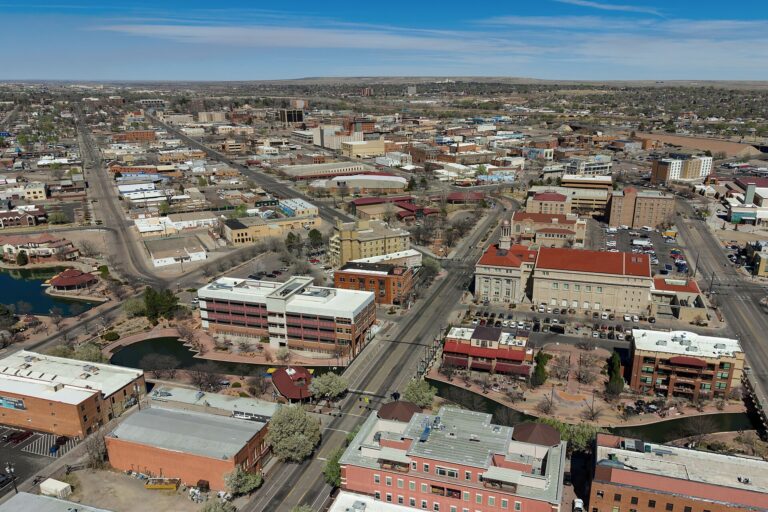
Photo: Quintin Soloviev, CC BY 4.0, via Wikimedia Commons.