
Pros and Cons of Living in Madison, WI (2026)
Madison sits on an isthmus between Lake Mendota and Lake Monona, with the state government, UW-Madison and UW Health as its largest employers and Epic Systems in nearby Verona. Its first bus rapid transit line opened in September 2024, and the Dane County Farmers’ Market still circles the Capitol every Saturday from April to November. The tradeoffs are about 52 inches of snow in a normal year, a state income tax that tops out at 7.65%, and tight housing close to downtown.
Here’s what the numbers and the daily reality actually look like in 2026.
The Basics: Who Lives in Madison?
Madison has a population of 275,568, with a median age of just 31.8 years, which is young even by college-town standards. The University of Wisconsin anchors that youth, but it’s not just students padding the figure. A growing tech and biotech sector has kept young professionals in town well past graduation. The bachelor’s degree attainment rate sits at 59.2%, and that educational density shapes everything from the restaurant scene to local politics to your average dinner party conversation.
The median household income is $76,983 per year. That’s respectable, though it lands noticeably below what you’d expect from a city with this level of education and a 2.7% unemployment rate. More on that gap in the cons section.
The Pros of Living in Madison
1. A Diverse Job Market
A 2.7% unemployment rate is not a typo. Madison’s economy is genuinely diverse in a way that most mid-sized cities aren’t. The state government, UW-Madison, and UW Health collectively employ tens of thousands of people, providing a stable employment floor that insulates the city from the boom-bust cycles that hit manufacturing-dependent metros hard. Layered on top of that is a legitimate tech corridor, with companies like Epic Systems (the healthcare software giant based in nearby Verona) employing over 13,000 people. Insurance, finance, and biotech round out the mix.
What this means practically: if you’re in healthcare IT, life sciences, public policy, education, or software, you will have options here. Remote workers also benefit from Madison’s relatively affordable cost base compared to where many of their employers are headquartered.
2. The Lakes Are Not a Gimmick
Madison sits on an isthmus between Lake Mendota and Lake Monona, and the outdoor access this creates is legitimately excellent. In summer, you can kayak, paddleboard, or sail on both lakes. The Lakeshore Path runs through the UW Lakeshore Nature Preserve, which covers about 4 miles of Lake Mendota’s southern shore. Memorial Union Terrace is an iconic spot where you can grab a brat and a beer literally at the water’s edge.
Winter access matters too. Ice fishing, cross-country skiing at places like Elver Park, and skating on the lakes when conditions allow keep outdoor culture alive year-round, which is important context for a city that gets real winters.
3. The Food and Drink Scene Punches Above Its Weight
For a city of 275,000, Madison’s food scene is legitimately impressive. The Dane County Farmers’ Market, which runs Saturday mornings around Capitol Square from April through November, is one of the largest producer-only farmers’ markets in the country. That agricultural backbone feeds a restaurant culture that emphasizes local sourcing in a way that feels genuine rather than marketed.
Highlights include the Old Fashioned on the Square (yes, that’s the drink Wisconsin is obsessed with, and the restaurant leans into it with local meats and cheeses), and Merchant for cocktails. The craft brewery scene includes Karben4 on Kinsman Boulevard, which lists Ale Asylum among its affiliate brands and occupies Ale Asylum’s original building, and Working Draft Beer Company on East Wilson Street.
4. Bikeability That’s Actually Real
Madison consistently ranks among the top bike-friendly cities in the country, and unlike some cities where that ranking feels aspirational, you can actually see it. Bike lanes, bicycle boulevards and the Capital City Trail create a usable network. A meaningful percentage of residents commute by bike for at least part of the year, which cuts transportation costs and is worth factoring in if you’re deciding between a one-car and two-car household.
5. A Genuinely Educated, Engaged Community
The 59.2% bachelor’s degree rate creates a particular civic texture. Neighborhood associations are active. Independent bookstores survive here. If you care about being in a place where people are paying attention to local issues, Madison delivers that in a way that’s hard to replicate in larger, more fragmented metros.
The flip side, which is worth naming honestly, is that Madison’s political culture is deeply progressive and fairly uniform. If you hold different views, you may find the social environment less welcoming than the city’s reputation for openness would suggest.
6. Healthcare Access Is Exceptional
UW Health and SSM Health operate major systems here, and the presence of a top-tier academic medical center means access to specialized care that smaller cities simply can’t offer. For families with complex medical needs or anyone who places high value on healthcare proximity, this is a legitimate quality-of-life factor, not just a bullet point.
7. Rental Costs Are Manageable, For Now
The median gross rent in Madison is $1,364 per month. For a city with this employment base, educational profile, and quality of life, that’s still a workable number. A single professional earning near the median household income can reasonably rent a one-bedroom without being crushed. It’s not cheap, but it’s not San Francisco or Austin either. The caveat, explored below, is the direction the market is moving.
The Cons of Living in Madison
1. The Winters Are Legitimately Hard
This is not a caveat, it’s a core feature. Madison averages about 52 inches of snowfall per year (NOAA 1991-2020 normal at the Dane County Regional Airport), with temperatures regularly dropping below 0°F with wind chill in January and February. The lakes freeze. The commutes become exercises in patience. If you’re relocating from a warmer climate, the psychological adjustment to a five-month winter is real and shouldn’t be minimized. Many people love the seasons here and adapt well. Others move away after two or three winters. Know which type you are before you sign a lease.
2. Wisconsin’s Tax Burden Is High
Wisconsin has a progressive state income tax that tops out at 7.65% for higher earners. Property taxes add to that load for homeowners.
3. The Income-to-Cost Gap Is Getting Tighter
Here’s the tension at the heart of Madison’s affordability story: the city’s educational attainment and job quality metrics are top-tier, but the median household income of $76,983 doesn’t fully reflect the wage premium you might expect. Many of the city’s largest employers (state government, the university, nonprofits) pay stable but not spectacular salaries. Meanwhile, housing costs have climbed steadily. More than half the city rents, and as demand from new arrivals and students stays high, that median rent figure has been moving upward.
4. The Poverty Rate Reveals a Two-Track City
The 16.2% poverty rate sits in uncomfortable contrast to the 59.2% college degree rate and the low unemployment figure. Madison has deep structural inequality that the aggregate numbers obscure. This is not a small-town feel-good story with a uniform middle class. If you’re moving here and care about these dynamics, you’ll find active organizations working on them, but you’ll also find a city still grappling seriously with residential segregation and opportunity gaps.
5. Traffic and Growth Pains Are Real
Madison’s road infrastructure has not kept pace with its population growth. The Beltline Highway, the main east-west artery, is a genuine daily frustration during peak hours. The city has invested in bike and bus infrastructure, but car commuters crossing the city at peak hours should expect delays.
6. Housing Inventory Is Tight
The isthmus geography that makes Madison beautiful also constrains it. There is a finite amount of land between the two lakes, and development pressure pushes prices up on the most desirable streets. New construction is happening in outer neighborhoods and surrounding suburbs like Middleton, Fitchburg, and Sun Prairie, but those locations trade the walkable urban experience for square footage.
7. The “University Town” Dynamic Can Grate
If you’re not affiliated with UW, you’ll notice that the university’s rhythms dominate the city’s calendar, housing market, and traffic patterns. Move-in weekend in late August turns the near-campus neighborhoods into gridlock. Football Saturdays in fall are either thrilling or exhausting depending on your tolerance for roughly 76,000 fans descending on your city. Game-day parking near Camp Randall is simply not something you plan around; you plan around working around it.
Who Should Move to Madison
- Early-career professionals in tech, healthcare IT, or life sciences. The job market, the low unemployment rate, and the relatively manageable rent make this an excellent launching pad.
- Outdoor enthusiasts who want four real seasons. If you ski, bike, kayak, and run, the infrastructure here genuinely supports all of it.
- People who value civic engagement and an educated peer community.
- Families who prioritize healthcare access. UW Health is a major asset for anyone with complex medical needs.
- Remote workers priced out of coastal cities.
Who Should NOT Move to Madison
- People who hate cold weather, full stop. You will not “get used to it” if you fundamentally dislike it. The winters here are long and unambiguous.
- High earners looking to minimize their tax bill. Wisconsin’s income and property taxes will be a recurring frustration compared to Sun Belt alternatives.
- Those expecting a politically diverse social environment. Madison is ideologically consistent in a way that can feel insular if you don’t share the prevailing views.
- People who need a large urban metro for career advancement in finance, entertainment, or fashion. Madison is excellent at what it’s excellent at. It doesn’t pretend to be Chicago or New York, and it shouldn’t.
- Budget buyers expecting to find affordable starter homes in walkable neighborhoods. The combination of constrained isthmus geography and high demand means that particular combination is increasingly rare.
Final Verdict: Madison, WI in 2026
Madison is a genuinely good place to live, and the data supports that. A 2.7% unemployment rate, a legitimate outdoor lifestyle, and a food and culture scene that outperforms its population size all make a real case.
But the tension between Madison’s aspirations and its affordability trajectory is real. A median household income of $76,983 against a $346,900 median home value leaves a homeownership rate of just 46.6%, and the 16.2% poverty rate makes clear that the city’s prosperity is unevenly distributed. These are not dealbreakers, but they are things an honest relocation guide has to name.
If you’re young, employed in a knowledge-sector job, and genuinely want to engage with a city rather than just live in it, Madison is an easy recommendation. If you’re chasing affordability or warmth, keep looking.
Overall rating: 7.8 out of 10. High floor, real friction points, best suited for people who go in with clear eyes about what it offers and what it doesn’t.
Frequently Asked Questions
What is the average rent in Madison, WI in 2026?
Is Madison, WI a good place to find a job?
How cold does Madison, WI get in winter?
Is Madison, WI affordable compared to other Midwest cities?
What is the population and demographic profile of Madison, WI?
Sources & methodology. Demographic and economic figures in this guide are drawn from the U.S. Census Bureau, 2019 to 2023 American Community Survey 5-Year Estimates. A newer 2020 to 2024 release came out on January 29, 2026; this guide still uses the 2019 to 2023 figures. Cost estimates combine these official figures with current local listings and are rounded for readability.
Last reviewed September 2026.
How this guide was made. Figures come from the U.S. Census Bureau ACS 2019 to 2023 5-year estimates and the other sources named next to each number. A first draft was written with the help of an AI language model; every place name, price, date and claim was then checked against primary sources by the Small City Guide editors (see About and Methodology). Last verified: September 26, 2026.
What changed: Fact-checked against primary sources in September 2026: 4 statements corrected, 6 off-topic Census sentences removed, opening rewritten, photo replaced with a credited image of the city.
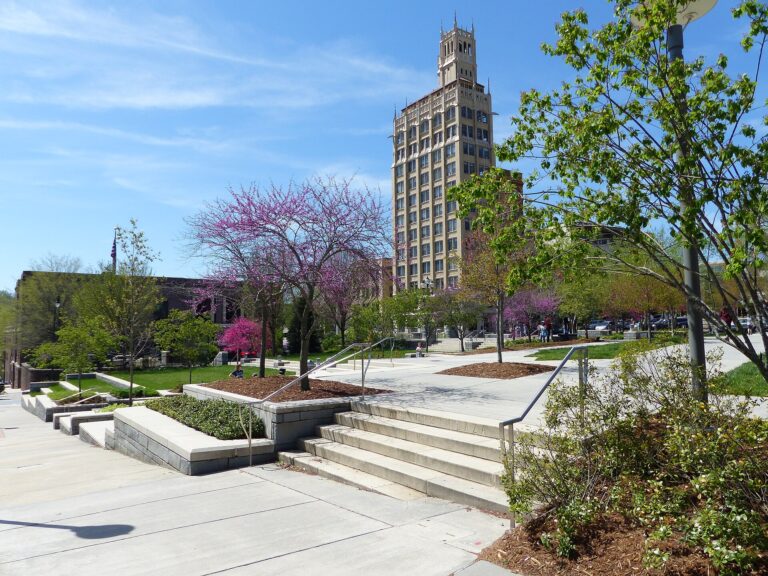
Photo: John Benson from Madison WI, CC BY 2.0, via Wikimedia Commons.