Pros and Cons of Living in Asheville, NC in 2026
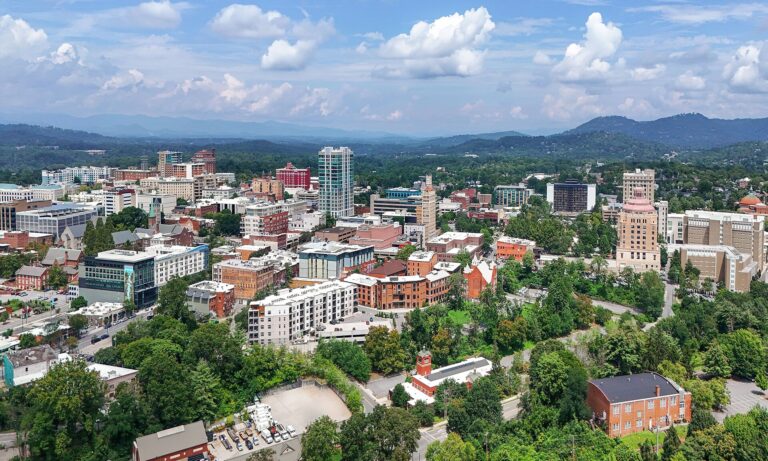
Asheville is a city of 94,369 people at about 2,100 feet in the Blue Ridge Mountains, where the median home value of $411,000 is more than six times the median household income of $67,221 (ACS 2019-2023). Hurricane Helene flooded the River Arts District and Biltmore Village on September 27, 2024 and left the city without drinkable tap water until November 18, 2024, and two years later recovery still shapes daily life. In 2026 the city also has the $1.8 billion I-26 Connector under construction and HCA’s Mission Hospital under close federal oversight after its fourth immediate jeopardy finding in January 2026. This guide sets those realities against the climate, trail access, and food scene that keep drawing people here.
The Pros of Living in Asheville, NC
1. The Climate Is Genuinely One of the Best in the South
Asheville sits at roughly 2,130 feet of elevation, and that altitude changes everything. Summer highs typically run in the low to mid 80s Fahrenheit (normal highs at Asheville Regional Airport: 82.5 F in June, 85.3 F in July, 84.0 F in August, NOAA 1991-2020 normals), meaning you’ll get through July without the brutal, suffocating humidity that blankets Charlotte or Atlanta. Winters are mild compared to the Midwest or Northeast, with average lows in the 20s to 30s and only occasional snow. The flip side is real and covered in the cons section, but on a pure day-to-day livability scale, the climate is a massive quality-of-life win for most residents. Four distinct seasons, fall foliage that draws tourists from across the country, and summer evenings where you can actually sit on a porch. That’s harder to find in the South than you’d think.
2. Outdoor Access Is Exceptional and Immediate
This isn’t “there’s a park nearby” outdoor access. The Blue Ridge Parkway runs directly through Asheville. The 500,000-acre Pisgah National Forest starts just southwest of the city at Bent Creek. The Appalachian Trail is within striking distance. Mount Mitchell, the highest peak east of the Mississippi at 6,684 feet, is about 30 miles northeast of Asheville. Rock climbing at Rumbling Bald, whitewater kayaking on the French Broad River, mountain biking on the Bent Creek trails, and dozens of waterfall hikes are all within reach for a day trip. For someone who wants to be outside most weekends, Asheville’s geography is almost unfair in how much it delivers.
3. A Food and Drink Scene That Punches Way Above Its Weight
For a city under 100,000 people, Asheville has a culinary reputation that rivals cities three times its size. The River Arts District and South Slope neighborhoods are dense with everything from James Beard-nominated spots to beloved local taco joints. The craft beer scene is particularly well-developed, with breweries like Burial Beer, Wicked Weed, and New Belgium operating inside the city, and Sierra Nevada’s East Coast brewery south of the city in Mills River, next to Asheville Regional Airport. Farmers markets and local sourcing are taken seriously here, not just marketed. If food and drink culture matters to you in daily life, Asheville delivers.
4. Arts, Culture, and a Distinct Identity
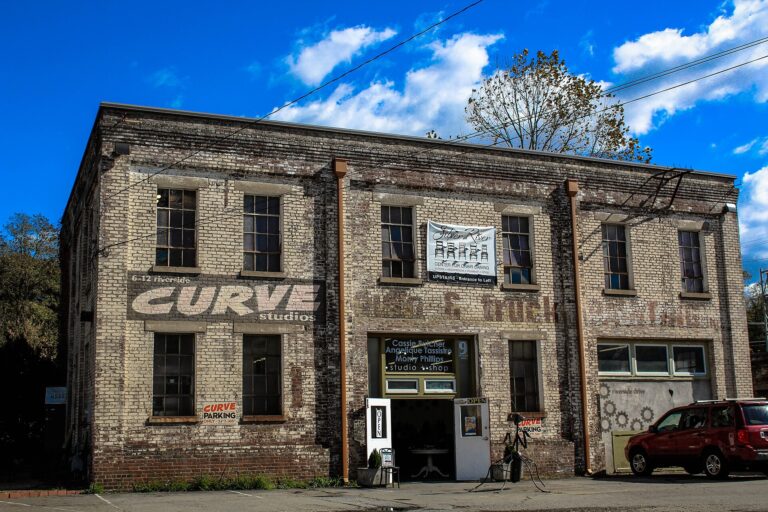
Asheville has a genuine arts community, not a decorative one. The River Arts District is home to working studios where local artists actually create, and it is a district that was nearly wiped out when the French Broad flooded it during Hurricane Helene in September 2024; roughly 80% of its studios and buildings were damaged or destroyed, and most galleries, studios and breweries reopened or relocated by fall 2025. District events such as the Spring Studio Stroll (May 9, 2026, 10 a.m. to 5 p.m.) open studios to the public, with demonstrations and an art market. The Biltmore Estate, the largest privately owned home in the United States, is a cultural landmark that also happens to be a major local employer. The city supports live music deeply, with venues ranging from the historic Orange Peel to small acoustic rooms that book touring artists nightly. This is an educated, culturally engaged population, and that shapes what the city supports and sustains.
5. A Strong and Diverse Job Market for Its Size
The unemployment rate sits at 4%, which is essentially at the national full-employment level. Healthcare is the dominant industry, anchored by Mission Hospital (now part of HCA Healthcare) and a web of specialty clinics and practices that make Asheville a regional medical hub. Education, tourism, and hospitality round out the major sectors. Remote work has also reshaped the local economy significantly. A growing share of Asheville residents work fully remote for companies headquartered elsewhere, which helps explain how a city with a median household income of $67,221 per year sustains housing prices at the levels they’ve reached. That income figure, while below the national median of roughly $78,000, goes meaningfully further when your commute is zero and your quality of life is high.
6. A True Sense of Community and Walkability in Core Neighborhoods
Downtown Asheville and neighborhoods like Montford, West Asheville, and the South Slope are genuinely walkable and human-scaled. Independent businesses dominate the streetscape. Neighbors know each other. There’s a strong culture of local loyalty, buying from local shops, attending local events, and investing in the community. For people moving from anonymous suburban sprawl, this is often the most surprising and welcome adjustment.
7. Reasonable Rent for a Mountain City of This Caliber
The median gross rent in Asheville is $1,303 per month according to Census data. That number deserves context. Comparable mountain-lifestyle cities post higher medians on the same Census measure: Boulder, Colorado at $1,924 and Bend, Oregon at $1,767 (ACS 2019-2023 median gross rent). Asheville is not cheap, and it has gotten significantly more expensive over the past five years, but relative to the experience it offers, the rental market remains more accessible than its peer set. A $1,303 median rent means there are genuinely affordable options below that line if you’re flexible on neighborhood or unit size.
The Cons of Living in Asheville, NC
1. Home Prices Have Become Genuinely Prohibitive
The median home value in Asheville is $411,000. That figure is the single most important number for anyone considering buying here. To put it in direct terms: a household earning the median income of $67,221 per year would need to spend roughly six times their annual income to buy the median home. The standard affordability threshold is three times income. The homeownership rate is 50.3%, meaning roughly half of Asheville households rent rather than own, a low share for a city this size. If you’re arriving without significant equity from a previous sale or substantial savings, buying a home in Asheville in 2026 is a serious financial stretch.
2. The Poverty Rate Reveals a City of Two Experiences
A 14.6% poverty rate alongside a booming food and beverage scene and a flood of higher-income transplants creates a city that can feel economically bifurcated. Long-term residents and service industry workers are frequently displaced by rising rents and costs. The people making your craft cocktail or cleaning your vacation rental very often cannot afford to live in the city where they work. This isn’t a unique problem in American cities, but it’s particularly stark in Asheville because the gap between the visitor-facing economy and the underlying wage structure is so visible.
3. Traffic and Infrastructure Are Struggling to Keep Up
Asheville’s street grid was not designed for a city that hosts millions of tourists annually and has absorbed thousands of new residents. Merrimon Avenue, Tunnel Road, and Interstate 26 through the city are regular bottlenecks during peak hours. Parking downtown is genuinely difficult on weekends. Public transit options are limited. If you’re accustomed to a city with real transit infrastructure, or if you need to commute by car daily, budget extra time and extra patience. That is finally changing, at a cost: NCDOT broke ground on the $1.8 billion I-26 Connector on April 23, 2026, and rebuilding the I-26, I-240 and Patton Avenue interchanges means ramp closures and construction traffic through West Asheville and downtown until about 2031.
4. Natural Disaster Risk Is Real and Recently Proven
Hurricane Helene’s impact on Western North Carolina in late 2024 was a stark reminder that mountain geography does not equal safety from extreme weather. Flooding, landslides, and infrastructure failure hit Asheville hard: the storm killed 43 people in Buncombe County, flooded nearly all of Biltmore Village and the River Arts District, and knocked out the city water system, with the boil-water notice not lifted until November 18, 2024, more than seven weeks later. The French Broad River, which runs through the city, has a documented history of flooding. If you’re buying property in Asheville, understanding the specific flood zone designation and elevation of a given parcel is not optional. Climate patterns are shifting, and the risk profile of mountain cities is being actively reassessed by insurers and planners alike.
5. North Carolina’s Tax Structure Has Real Costs
North Carolina has made significant changes to its tax structure in recent years, moving toward a flat income tax rate that is currently phasing down. That sounds favorable, but the overall property tax burden, combined with rising assessed values as home prices climb, means effective tax bills on Asheville properties have increased substantially. State income tax, local sales tax, and property tax together represent a meaningful bite. This is not a zero-income-tax state like Texas or Florida, which matters for retirees and remote workers specifically evaluating the Southeast for tax advantages.
6. Tourism Pressure on Daily Life Is Constant
Asheville and Buncombe County drew nearly 14 million visitors in 2023 (about 5 million overnight and 9 million day-trippers, per Explore Asheville and Tourism Economics); Hurricane Helene cut visitor spending from $2.97 billion in 2023 to $2.65 billion in 2024. For residents, this means that on any given Friday evening in October, downtown is essentially inaccessible by car, restaurant wait times double, and familiar neighborhood spots are packed with people who don’t know the layout or culture of the city. Inside the city limits, whole-house short-term vacation rentals are legal only in the Resort zoning district; residential zones allow only homestays, where the owner lives in the home full time and rents one or two bedrooms, and the city takes complaints about illegal listings. If you move to Asheville expecting a quiet small city, the tourist economy will challenge that expectation regularly.
7. Winters Include Ice and Occasional Disruption
The mild winter reputation is mostly true, but Asheville’s elevation and mountain geography mean that ice storms are a real phenomenon. A quarter-inch of freezing rain can shut down roads that run over steep terrain far more effectively than six inches of flat-city snow. The city’s capacity to respond to winter weather events is limited. If you work in healthcare or another field where showing up is not optional, understand that Asheville winters come with occasional days where roads are genuinely impassable.
Who Should Move to Asheville
Remote workers with salaries anchored to higher-cost markets are probably the single best fit for Asheville in 2026. If you’re earning a salary set in San Francisco, Boston, or New York and can work from anywhere, the math works exceptionally well. You bring income that matches or exceeds local housing costs while accessing a quality of life that your origin city can’t match.
Outdoor enthusiasts who want genuine access, not Instagram access, will thrive here. If your weekends are built around hiking, cycling, kayaking, or climbing, Asheville’s geography is hard to beat east of the Rockies.
People in healthcare careers will find strong employment, multiple employers competing for talent, and a professional community that is well-established. Mission Hospital, the Charles George VA Medical Center, and an expanding network of specialty practices make this a deep job market for nurses, physicians, and allied health professionals, with one caveat: Mission, owned by HCA since 2019, was placed in federal ‘immediate jeopardy’ in 2025 and again in January 2026 over staffing and patient-safety findings; the January sanction was lifted in February 2026, and in August 2026 the hospital reported it was back in substantial compliance with federal standards.
Creatives, artists, and musicians who want to live and work in an environment that takes their field seriously, not just as decoration, will find a genuine community here. The River Arts District is a working arts district, and the local appetite for live music, visual art, and craft is real and sustained.
Retirees with equity from a previous home sale can navigate the purchase market and enjoy the climate, the food scene, and the walkability of core neighborhoods.
Who Should NOT Move to Asheville
First-time buyers on a single average income will find the ownership math brutal. A $411,000 median home value against a $67,221 median household income is a gap that requires either dual high incomes, significant outside capital, or a willingness to buy in outlying areas like Weaverville or Black Mountain and commute in (Swannanoa, on the same corridor, was one of the communities hardest hit by Swannanoa River flooding during Helene and is still rebuilding).
People who need a robust public transit system will be frustrated. Asheville is, fundamentally, a driving city. If you don’t own or don’t want to own a car, your daily options are significantly limited.
Those seeking a quiet, under-the-radar lifestyle should be honest with themselves: Asheville is one of the most written-about small cities in America. It is not under the radar. If crowded weekends, packed parking decks, and tourist-season restaurant waits would erode your quality of life, factor that in heavily.
People who are sensitive to economic inequality in their living environment may find Asheville’s visible gap between its curated visitor economy and its service-worker poverty rate difficult to sit with. A 14.6% poverty rate in a city marketed as a lifestyle destination creates real and visible contradictions.
Final Verdict: Is Asheville Worth It in 2026?
Asheville earns a 7.5 out of 10 as a place to live in 2026. The score reflects genuine excellence in climate, outdoor access, food culture, and community identity, offset by housing affordability pressures that are not theoretical but mathematically documented, a tourism economy that imposes real costs on daily resident life, and a natural disaster risk profile that has been updated by recent experience.
The city rewards people who arrive with eyes open. The median rent of $1,303 per month is workable. The median home value of $411,000 requires a real financial plan.
Asheville is not for everyone, and it no longer pretends to be accessible to everyone. What it offers, to the right person in the right financial position, is a quality of life that is genuinely difficult to replicate anywhere else in the eastern United States. That’s the honest verdict.
Frequently Asked Questions
What is the average rent in Asheville NC in 2026?
Is Asheville NC affordable to live in?
What are the main industries and job opportunities in Asheville NC?
How bad is traffic in Asheville NC?
Is Asheville NC safe from flooding and natural disasters?
Sources & methodology. Demographic and economic figures in this guide are drawn from the U.S. Census Bureau, 2019 to 2023 American Community Survey 5-Year Estimates. A newer 2020 to 2024 release came out on January 29, 2026; this guide still uses the 2019 to 2023 figures. Other figures come from the sources named next to them.
Last reviewed September 2026.
How this guide was made. Figures come from the U.S. Census Bureau ACS 2019 to 2023 5-year estimates and the other sources named next to each number. A first draft was written with the help of an AI language model; every place name, price, date and claim was then checked against primary sources by the Small City Guide editors (see About and Methodology). Last verified: September 26, 2026.
What changed: Fact-checked against primary sources in September 2026: 14 statements corrected, 5 off-topic Census sentences removed, opening rewritten, photo replaced with a credited image of the city. On September 27, 2026 every named place and figure was re-checked; details that could not be confirmed from a primary source were removed.
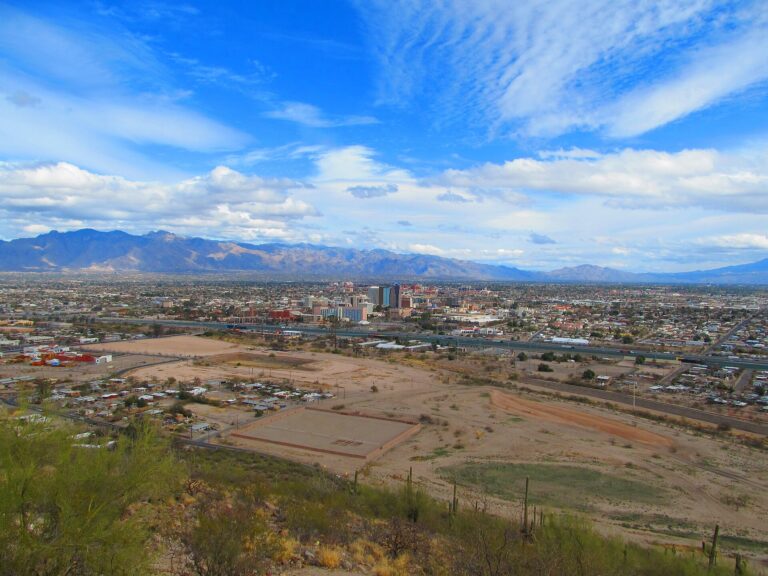
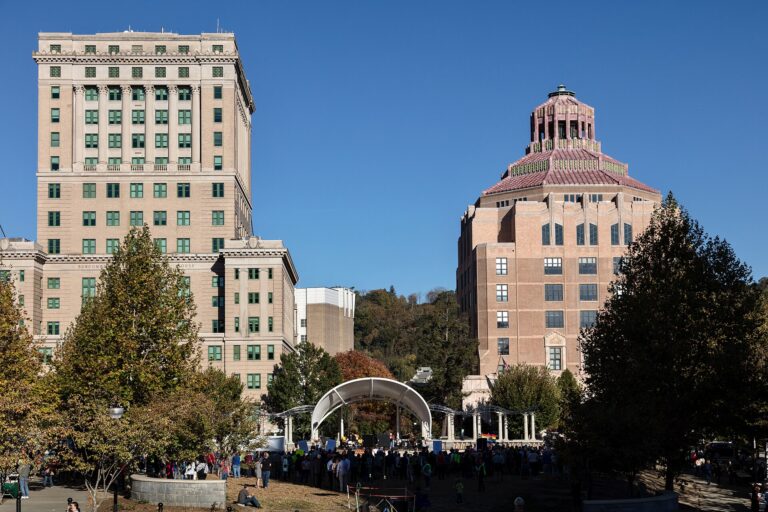
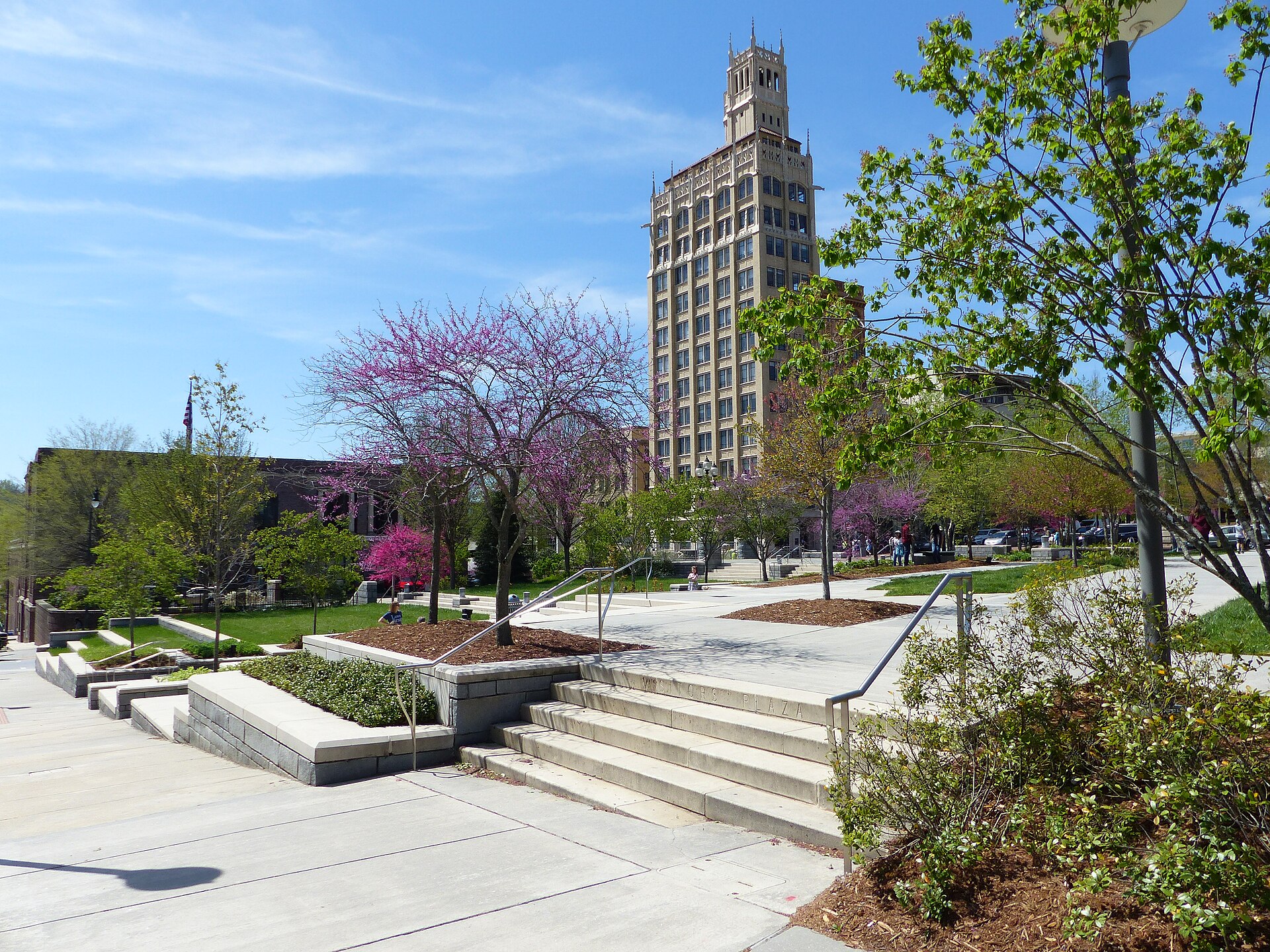
Photo: Stilfehler, CC BY-SA 4.0, via Wikimedia Commons.