Little Rock, AR Cost of Living 2026: Rent, Homes, Taxes
Little Rock is Arkansas’s capital and most populous city, on the south bank of the Arkansas River. The Census Bureau’s 2019 to 2023 American Community Survey puts its median gross rent at $1,067 a month and its median home value at $221,200, against a median household income of $60,583. This guide walks through housing by neighborhood, then groceries, transportation, healthcare and taxes.
But affordable doesn’t mean perfect. Little Rock has real challenges, from a 16.4% poverty rate to a car-dependent layout to a summers that will genuinely test your heat tolerance. This guide gives you the full picture so you can make an informed decision, not a romanticized one.
Overview: What Little Rock Actually Is
Little Rock has a population of 202,739, making it a true mid-size city rather than a small town wearing city clothes. The median age is 36.4 years, which tracks with a workforce-age population that skews toward established professionals rather than fresh college graduates. About 44% of residents hold a bachelor’s degree or higher, a figure that reflects the presence of state government employment, a growing healthcare sector, and the University of Arkansas for Medical Sciences (UAMS) campus.
Little Rock sits on the south bank of the Arkansas River, and North Little Rock, a separate city, sits directly across the water. By road, Little Rock is roughly 350 miles from Nashville, 135 miles from Memphis and 320 miles from Dallas. It is not a hub city. You will not hop a nonstop to Seattle from here without a connection.
The vibe is Southern but not sleepy. There are restaurant clusters in the Heights and SoMa (South Main) districts and a River Market entertainment district downtown. The unemployment rate sits at 4.2%, below the 5.2% national rate in the same Census survey, and the median household income is $60,583 per year.
Housing Costs by Neighborhood: Rent and Buy in 2026
The Census-verified median gross rent of $1,067/month is the baseline, but the actual range across neighborhoods is wide enough that where you land matters a lot.
Downtown and the River Market
Downtown puts you close to the Clinton Presidential Center, the River Market pavilions and the Metro Streetcar.
The Heights and Hillcrest
These neighborhoods sit in the north-central part of the city. Both were once part of the suburb of Pulaski Heights, annexed by Little Rock in 1916, and both center on sections of Kavanaugh Boulevard, with shops and restaurants along it.
Chenal Valley and West Little Rock
Chenal Valley is a more recently developed section in the west-central part of the city and a major residential and commercial hub for west Little Rock, built along Chenal Parkway.
North Little Rock
North Little Rock is a separate city directly across the river, linked to downtown Little Rock by the Metro Streetcar. Its Argenta district has art galleries, theaters, bars and restaurants, and hosts the Argenta Vibe music series.
The homeownership rate of 54.2% tells you something meaningful: more than half of residents own, which is consistent with housing that is actually accessible to median-income earners.
Food and Groceries
Grocery options include Kroger and The Fresh Market on Cantrell Road.
The SoMa and Heights neighborhoods both have clusters of restaurants and bars. Downtown, the River Market district has a number of restaurants, bars and shops, with Ottenheimer Hall as a starting point.
Transportation: Budget for a Car
Little Rock is car-dependent. Rock Region METRO runs buses, the Metro Streetcar between downtown Little Rock and North Little Rock, and app-booked METRO Connect on-demand zones, but only 1.0% of Little Rock workers commute by public transit, against 76.5% who drive alone, according to the Census ACS 2019 to 2023. Budget for owning a vehicle.
AAA’s Arkansas average for regular gasoline was $4.04 a gallon on September 27, 2026, about 44 cents below the national average of $4.48.
Little Rock’s airport, Bill and Hillary Clinton National Airport (LIT), is compact and easy to use. Flights connect primarily through Dallas, Chicago, Atlanta, and Charlotte. Expect to add a connection for most domestic routes that a larger hub city would serve nonstop.
Healthcare
Healthcare is one of Little Rock’s genuine strengths. The city functions as the medical hub for the entire state of Arkansas. The University of Arkansas for Medical Sciences (UAMS) is both the state’s primary academic medical center and a major employer, with more than 10,000 employees. Arkansas Children’s Hospital is nationally recognized. Baptist Health Medical Center and CHI St. Vincent round out a healthcare system that is well-developed relative to the city’s size.
Arkansas did expand Medicaid under the ACA, so lower-income residents have more coverage access than they did a decade ago. The concentration of major hospitals also means specialist access that smaller Arkansas cities simply don’t have.
Entertainment and Lifestyle
The outdoor access is underrated. Pinnacle Mountain State Park, about 13 miles northwest of downtown, has summit trails up its 1,011-foot peak. The Arkansas River Trail runs 17 miles along both sides of the river. Allsopp Park and Murray Park provide green space within city limits.
For culture, the Arkansas Arts Center (now the Arkansas Museum of Fine Arts, following a major 2023 renovation) has free admission. The Robinson Center hosts touring Broadway shows and concerts. Downtown, the River Market district has bars and live music.
How Little Rock Compares to Nashville and Dallas
The two closest larger metros worth benchmarking against are Nashville, Tennessee (about 350 road miles northeast) and Dallas, Texas (about 320 road miles southwest).
Little Rock vs. Nashville
The same Census survey puts Nashville’s median home value at $383,100 and its median gross rent at $1,486, against Little Rock’s $221,200 and $1,067. The same household income stretches further in Little Rock.
Little Rock vs. Dallas
The Census survey puts Dallas’s median home value at $295,300 and its median gross rent at $1,403. Texas has no state income tax, which helps Dallas residents; Arkansas taxes income at graduated rates with a 3.9% top rate. Little Rock wins on housing cost.
Honest Pros and Cons
The Genuine Advantages
- Housing affordability that is real, not relative. A $221,200 median home value means a median-income household can actually own here.
- Strong healthcare infrastructure anchored by UAMS and Arkansas Children’s Hospital.
- A functional restaurant and arts scene that most people outside Arkansas don’t expect.
- Short commutes. The average commute in Little Rock is 18.3 minutes, against 26.6 minutes nationally, according to the Census ACS 2019 to 2023.
- Outdoor access within a short drive: the Ouachita Mountains begin at Pinnacle Mountain State Park, and the Buffalo National River’s Tyler Bend area is about 110 road miles north.
The Real Challenges
- A 16.4% poverty rate means significant economic inequality, concentrated in specific parts of the city.
- Car dependency is non-negotiable for most residents. If you don’t drive or can’t afford a car, daily life is genuinely difficult.
- Summers are brutal. July and August average highs sit near 92 degrees, June averages about 88 and September about 85, and humidity is high throughout. This is not a small thing if you’re relocating from a temperate climate.
- Job market depth is limited. Beyond state government, the economy rests on healthcare, banking, transportation and retail.
- Flight access requires a connection. Flight access is thinner than at a hub. Clinton National has year-round nonstops to about 14 cities, including Dallas, Atlanta, Charlotte, Chicago, Denver, Houston and New York, but most other trips need a connection.
Who Little Rock Is Right For
The healthcare professional. UAMS, Baptist Health, Arkansas Children’s, and CHI St. Vincent are all based in Little Rock, and UAMS alone has more than 10,000 employees. Housing costs, with a $1,067 median rent, make a real difference to a healthcare salary.
The state government or nonprofit worker. Little Rock is the capital, and that shapes the economy. Policy analysts, attorneys, lobbyists, and administrators who work in or around the state government apparatus find the combination of relevant career opportunities and low overhead hard to beat.
The first-time homebuyer who wants in now. With a homeownership rate of 54.2% and a median home value of $221,200, home values here sit well below the U.S. median of $303,400 in the same Census survey.
The outdoor-and-culture balance seeker. Pinnacle Mountain State Park and the 17-mile Arkansas River Trail sit close to a city with its own restaurant and bar districts in SoMa, the Heights and the River Market.
The Verdict
Little Rock in 2026 is a city for people who have done the math. The Census numbers are not flattering on every metric: a 16.4% poverty rate reflects structural challenges that real residents live with. But the housing numbers, the healthcare access, and the outdoor proximity add up to something genuinely compelling for the right person.
If your career can function here, your budget will thank you. A household earning $60,583 in Little Rock is not wealthy, but it is functional. Do that math in Nashville or Dallas and report back. The answer will look different.
Little Rock rewards the people who give it a real chance rather than dismissing it based on zip code preconceptions. It’s not the right city for everyone, but for the profiles above, it makes a strong case on the numbers alone.
Frequently Asked Questions
What is the average rent in Little Rock, AR in 2026?
Is Little Rock, AR a good place to live on a $60,000 salary?
How much does a house cost in Little Rock, AR in 2026?
Is Little Rock, AR safe to live in?
How does the cost of living in Little Rock compare to Nashville or Dallas?
Sources & methodology. Demographic and economic figures in this guide are drawn from the U.S. Census Bureau, 2019 to 2023 American Community Survey 5-Year Estimates, the most recent release available for Little Rock. Other figures come from the sources named next to them.
Last reviewed September 2026.
How this guide was made. Figures come from the U.S. Census Bureau ACS 2019 to 2023 5-year estimates and the other sources named next to each number. A first draft was written with the help of an AI language model; every place name, price, date and claim was then checked against primary sources by the Small City Guide editors (see About and Methodology). Last verified: September 26, 2026.
What changed: Fact-checked against primary sources in September 2026: 7 statements corrected, opening rewritten, photo replaced with a credited image of the city.
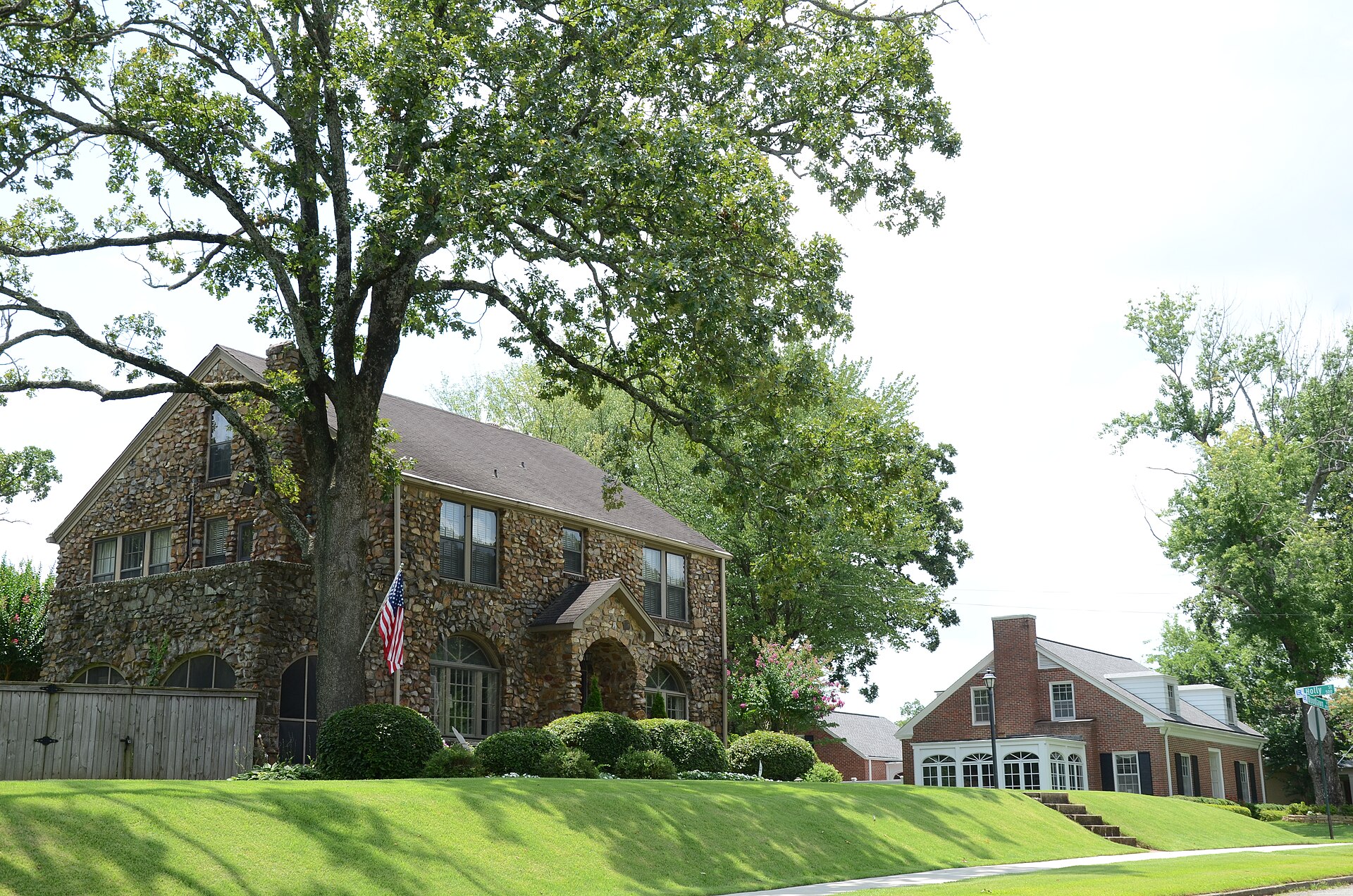
Photo: Valis55, CC BY-SA 3.0, via Wikimedia Commons.