Tucson, AZ Cost of Living in 2026: Housing and Transit
Tucson has a median home value of $242,200 and a median gross rent of $1,079 a month, according to the Census Bureau’s 2019 to 2023 American Community Survey. Buses and the Sun Link streetcar have been fare free since March 2020, but most households still need a car. This guide breaks down what housing, groceries, transportation, healthcare and free time cost in the city in 2026.
Tucson at a Glance: Population, Vibe, and Location
Tucson sits in the Sonoran Desert of southern Arizona, about 60 miles north of the Mexican border and roughly 108 miles southeast of Phoenix. Its population is 543,348, according to U.S. Census Bureau 2019-2023 American Community Survey 5-Year Estimates, which makes it a genuine mid-sized city rather than a sleepy college town. The median age is 34.6 years, a number shaped heavily by the University of Arizona, which enrolled 54,384 students in fall 2025 and anchors the central part of the city.
The vibe is hard to categorize cleanly. You have a large student population, a significant retiree community drawn by the climate and affordability, a growing remote-worker base, and a long-established Hispanic community that gives the city its culinary and cultural texture. It is also a place with real economic strain. The poverty rate stands at 18.8% and the unemployment rate at 6.4%, both figures that sit noticeably above national averages. These are not numbers to gloss over. They reflect a city that has not fully converted its size and amenities into broad economic opportunity, which is worth understanding before you assume Tucson is uniformly affordable and easy.
That said, the median household income of $54,546 per year goes considerably further here than it would in Seattle, Denver, or Austin. The key is knowing what you are actually buying with it.
Housing Costs by Neighborhood: Rent and Buy in 2026
Housing is where Tucson’s value proposition is clearest. The Census-verified median home value is $242,200, according to the Census Bureau’s 2019 to 2023 estimates. The median gross rent of $1,079 per month is equally striking. For context, that is the citywide median, meaning half of all rental units in Tucson rent for less than that figure.
Prices vary by neighborhood, and this guide does not quote neighborhood figures. Sam Hughes sits east of the University of Arizona, and downtown includes the Presidio District, Barrio Viejo and the Congress Street Arts and Entertainment District. Oro Valley and Marana are incorporated suburbs northwest of the city, South Tucson is a separate city surrounded by Tucson south of downtown, and East Tucson includes Saguaro National Park East. Check current listings for the area you are considering.
The homeownership rate in Tucson is 51.7%, which is nearly split right down the middle. That balance reflects both the large renter population tied to the university and a genuine culture of ownership among long-term residents. Freddie Mac’s weekly average for a 30-year fixed mortgage ran about 6.0% to 6.2% in early 2026 and reached 7.03% on September 24, 2026. At 6% to 7%, a $242,000 home with 10% down means roughly $1,300 to $1,450 a month in principal and interest, before property taxes and homeowners insurance.
Food and Groceries: What a Typical Month Costs
Tucson was designated a UNESCO City of Gastronomy in 2015, the first city in the United States to earn that designation. That matters practically, not just culturally, because it means the local food scene is deeply rooted in fresh, regional ingredients rather than chain-dependent dining. You can eat well here without spending city prices.
Fry’s Food and Drug, a Kroger subsidiary that serves Arizona, is one of the main grocery options.
Rollies Mexican Patio, which describes its menu as Sonoran-style Tucson food, is one local example of the regional cooking the city is known for.
Transportation: Car-Dependent by Design
There is no sugarcoating this. Tucson is a car city. The Sun Link streetcar connects downtown to the University of Arizona, and the Sun Tran bus system covers the metro. All Sun Tran, Sun Link, Sun Van, Sun On Demand, Sun Express and Sun Shuttle rides are fare free at the direction of the Mayor and Council, as they have been since March 2020, but neither is built for the kind of car-free lifestyle you can manage in Chicago or even some Denver neighborhoods. If you do not have a car, you will feel it.
Healthcare: Hospitals, Costs, and Access
Tucson has a solid healthcare infrastructure for a city its size. Banner University Medical Center, affiliated with the University of Arizona College of Medicine, is the flagship academic medical center and handles complex cases. Tucson Medical Center and Carondelet St. Joseph’s Hospital round out the major facilities. The presence of a major research university means access to specialty care that smaller cities simply cannot offer.
El Rio Health, a community health network with clinics across Tucson, says it provides care to all community members regardless of a patient’s financial status, which is relevant given the city’s 18.8% poverty rate. Tucson has no dental school; Arizona’s two dental schools are in the Phoenix area (A.T. Still University in Mesa and Midwestern University in Glendale).
Entertainment and Lifestyle: What Your Free Time Costs
The desert itself is free, and that is not a trivial point. Tucson is surrounded by hiking options that require nothing more than an entrance fee ($25 per vehicle for a 7-day pass at Saguaro National Park, or $45 for its annual pass; $10 to $20 per vehicle at Catalina State Park). Sabino Canyon, Mount Lemmon, and the trails throughout Catalina State Park are legitimate outdoor recreation that costs almost nothing on a recurring basis.
The Rialto Theatre downtown, opened in 1920, has operated as a concert venue since it reopened in 1995. The Tucson Museum of Art charges $15 for general admission and offers pay-what-you-wish admission on the first Friday of each month.
For those who enjoy nightlife, Fourth Avenue and Congress Street are the center of Tucson’s bar and live music scene. Club Congress, the music venue inside Hotel Congress, has hosted touring bands since 1985.
Tucson vs. Phoenix vs. Las Vegas: A Honest Comparison
Phoenix is the most natural comparison. It has a light rail system, and Phoenix Sky Harbor handled about 51.6 million passengers in 2025, against about 3.9 million at Tucson International Airport in its 2025 fiscal year.
Las Vegas is another Southwest option. Nevada has no individual income tax, which matters more for higher earners.
The core takeaway: if your job or income is location-independent, compare current listings in all three cities against the Tucson Census figures in this guide before deciding.
Honest Pros and Cons of Living in Tucson
Pros
- Genuine affordability: A median rent of $1,079 and median home value of $242,200 come from the Census Bureau’s 2019 to 2023 estimates.
- Outdoor access: Five mountain ranges, two units of Saguaro National Park, and year-round hiking weather (with some brutal July and August heat) put a lot of hiking close to the city.
- Cultural depth: The Sonoran food tradition, strong arts scene, and university energy give Tucson a character that most comparably priced cities lack.
- Mild winters: From October through April, the weather is genuinely excellent. Average daily highs run in the mid-60s to mid-70s from November through March and in the low to mid-80s in October and April, low humidity, and abundant sunshine.
- Young median age: At 34.6, the city does not feel stagnant. The university keeps a large student population in the city.
Cons
- Summer heat is punishing: Average daily highs run from about 95 to 101 degrees Fahrenheit from June through September. Monsoon season officially begins June 15, and the first storms usually arrive in early July, adding humidity. Budget for higher electricity bills for air conditioning.
- Job market limitations: The 6.4% unemployment rate and median household income of $54,546 sit alongside an employer base led by the University of Arizona, RTX, Davis-Monthan Air Force Base, the State of Arizona, Tucson Unified School District and Pima County.
- Poverty concentration: The 18.8% poverty rate shapes the experience of different neighborhoods very differently. Some areas have visible economic distress that prospective residents should understand, not ignore.
- Car dependency: If you do not own a car, your options are genuinely constrained. This is a structural issue, not one that will be solved by the time you arrive.
- Limited airport connectivity: Tucson International Airport (TUS) handled about 3.9 million passengers in its 2025 fiscal year, compared with about 51.6 million at Phoenix Sky Harbor in 2025. Budget for the drive to Phoenix if you fly frequently.
Who Is Tucson Actually Right For?
Remote workers with location flexibility: If your income is set by a market elsewhere (San Francisco, New York, Seattle) and you can work from anywhere, Tucson’s cost structure is genuinely exceptional. A remote salary set in a high-cost market goes further against a $1,079 median rent. The 30.2% bachelor’s degree-or-higher rate is another figure worth knowing.
Retirees on fixed incomes: The combination of affordable housing, mild winters, and accessible healthcare through Banner University Medical Center makes Tucson a logical choice for retirees who want Sun Belt climate without Sun Belt price tags.
University of Arizona students and recent graduates: If you are staying post-graduation, Tucson’s housing costs make it possible to actually build savings while working an entry-level job.
Outdoor-focused households: Hikers, mountain bikers, rock climbers, and birders get access to recreation close to home. Catalina State Park, for example, lists hiking and bird watching among its activities.
Final Verdict: What Tucson Is and Is Not
Tucson is not a boomtown. It is not going to double in population in the next decade or generate a surge of high-paying jobs that transforms the economic landscape. The numbers bear that out: an 18.8% poverty rate and 6.4% unemployment rate are not the profile of a city on a rocket trajectory. But that is also not the right frame for evaluating it.
What Tucson is, reliably and specifically, is a mid-sized desert city with a genuine cultural identity and exceptional outdoor access, where the median household income is $54,546 and the median gross rent is $1,079. If your financial goals include owning a home, keeping your fixed costs low, and living in a place with real character, Tucson delivers on all three in 2026.
Come with your eyes open about the job market, the summer heat, and the car dependency. Make peace with those, and Tucson will likely surprise you with how livable it actually is.
Frequently Asked Questions
What is the average rent in Tucson, AZ in 2026?
Is Tucson, AZ cheaper than Phoenix?
What salary do you need to live comfortably in Tucson in 2026?
Is Tucson a good place to retire in 2026?
How much does it cost to buy a house in Tucson, AZ in 2026?
Sources & methodology. Demographic and economic figures in this guide are drawn from the U.S. Census Bureau, 2019 to 2023 American Community Survey 5-Year Estimates. A newer 2020 to 2024 release came out on January 29, 2026; this guide still uses the 2019 to 2023 figures. Cost estimates combine these official figures with current local listings and are rounded for readability.
Last reviewed September 2026.
How this guide was made. Figures come from the U.S. Census Bureau ACS 2019 to 2023 5-year estimates and the other sources named next to each number. A first draft was written with the help of an AI language model; every place name, price, date and claim was then checked against primary sources by the Small City Guide editors (see About and Methodology). Last verified: September 26, 2026.
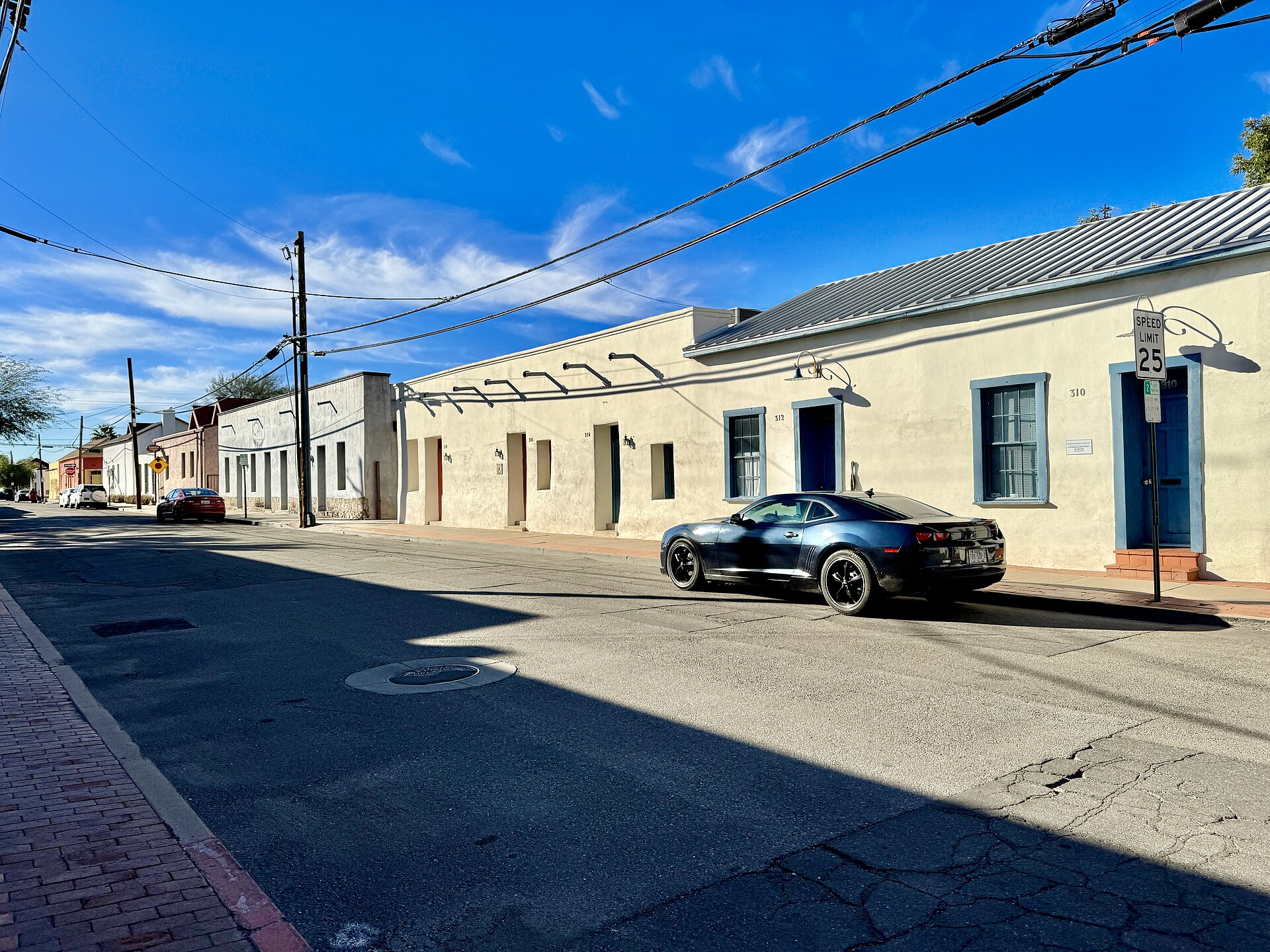
What changed: Fact-checked against primary sources in September 2026: 8 statements corrected, opening rewritten, photo replaced with a credited image of the city.
Photo: w_lemay, CC BY-SA 2.0, via Wikimedia Commons.