Cost of Living in Anchorage, AK in 2026
Anchorage is Alaska’s largest city, with about 289,000 residents. Most homes heat with natural gas from Cook Inlet, but most of the food and goods residents buy arrive by ship, truck or plane. Census figures put the median home value at $375,900 and median gross rent at $1,453 a month, against a median household income of $98,152. Alaska has no state income tax, and the 2026 Permanent Fund Dividend is $1,200 per eligible resident.
But let’s be direct: Anchorage is expensive, and the reasons are structural, not temporary. Almost everything consumable gets shipped or flown in. Winters are long and heating bills are real. If you’re relocating for work or adventure and want an honest picture of what your dollars will actually do here in 2026, this guide is for you.
Anchorage at a Glance
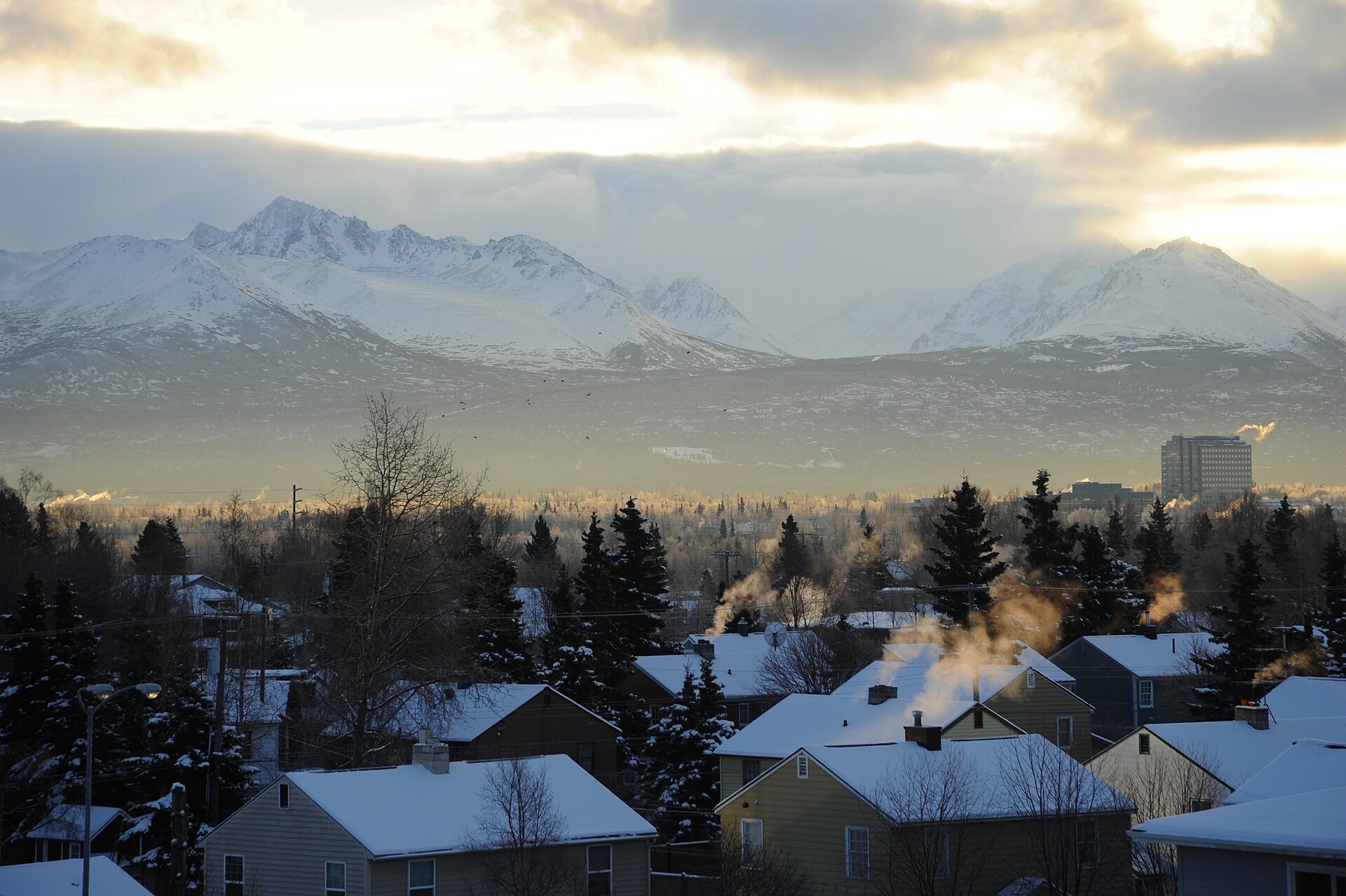
With a population of 289,069, Anchorage is by far Alaska’s largest city, accounting for roughly 40% of the state’s entire population. It doesn’t feel like a sprawling metropolis, though. The downtown core is compact, the mountains are visible from nearly every major road, and moose wander through residential neighborhoods with a frequency that never quite stops being surreal.
The median age is 34.9 years, which reflects a workforce-heavy population anchored by the military (Joint Base Elmendorf-Richardson), the oil and gas industry, healthcare, and a significant Alaska Native community. The city has real cultural depth that visitors often miss: the Alaska Native Heritage Center, a strong arts scene at the Alaska Center for the Performing Arts, and a restaurant culture that punches well above its weight.
The median household income of $98,152 per year is genuinely high, and it needs to be. Alaska has no state income tax and residents receive the annual Permanent Fund Dividend (the 2026 dividend is $1,200 per person, including a $200 energy relief payment; the 2025 dividend was $1,000), but those advantages get absorbed quickly by the cost of goods, energy, and housing. The poverty rate of 9.3% tells you that high median incomes don’t mean everyone is comfortable here.
Housing Costs by Neighborhood
The Census Bureau’s 2019-2023 American Community Survey puts median gross rent in Anchorage at $1,453 per month and the median home value at $375,900. Those numbers are the anchor, but they obscure a wide spread depending on where you land.
Renting in Anchorage (2026 Estimates)
Rents vary by neighborhood, from midtown and Spenard to South Anchorage and the area around the Dimond Center. Heating is a real winter cost, so ask each landlord whether heat is included in the rent.
The homeownership rate is 63.7%. If you’re moving to Anchorage on a tight timeline, start your search early.
Buying in Anchorage (2026 Estimates)
The $375,900 median home value reflects the broad middle of the market. Prices vary with location, from downtown condos to South Anchorage and Eagle River, a community within the Municipality of Anchorage that functions as a suburb. Garages matter here, and condos carry HOA fees on top of the mortgage.
At the Freddie Mac 30-year fixed average of 7.03% (week of September 24, 2026), the median-priced home with 10% down comes to roughly $2,260 per month in principal and interest before taxes, insurance, or HOA. On a household income of $98,152, that’s tight but manageable for a dual-income household. For a single earner, the math gets harder fast.
Food and Groceries
Most food and goods reach Alaska by sea. The Port of Alaska in Anchorage receives 95 percent of all goods destined for the state.
Grocery options include Fred Meyer (owned by Kroger), Carrs-Safeway, and the local New Sagaya City Market.
Downtown restaurants include Orso, on West 5th Avenue, and Glacier Brewhouse, which brews its own beer.
Transportation
Anchorage is car-dependent. This is not a mild understatement. The public transit system (People Mover) runs buses from a downtown hub, but it is not a realistic primary transportation option for most residents. You need a car, and that car needs to be reliable in conditions that include black ice, -10°F temperatures, and occasional moose encounters at highway speeds.
Winter tires and the wear of cold starts add to vehicle maintenance costs compared with a mild-climate city.
The Ted Stevens Anchorage International Airport is a genuine asset. It’s a major air cargo hub (the world’s third busiest by cargo volume in 2025) and has solid direct connections to Seattle, Portland, Chicago, and major hubs. Many residents fly Outside (Alaska’s term for the contiguous U.S.) to see family, so airfare belongs in the budget.
Healthcare
Healthcare access in Anchorage is solid by Alaskan standards, which is a low bar compared to the rest of the country, but the city does have real infrastructure. Providence Alaska Medical Center is the largest hospital in the state, a full-service facility with Level II trauma capabilities. Alaska Regional Hospital (HCA Healthcare) is the other major player. The Alaska Native Medical Center, jointly owned and managed by the Alaska Native Tribal Health Consortium and Southcentral Foundation, is the referral hospital for the Indian Health Service Alaska Region and one of Alaska’s two Level II trauma centers.
Check what your employer’s health plan covers before you move. If you’re self-employed or between jobs, health insurance is a significant budget item.
Entertainment and Lifestyle
Here is where Anchorage earns its cost premium for a specific type of person. The outdoor recreation access is genuinely extraordinary. Chugach State Park, one of the largest state parks in the country, sits directly on the city’s eastern edge. The Tony Knowles Coastal Trail is 11 miles of paved path along Cook Inlet, used by cyclists, joggers, and skiers. Flattop Mountain, the most climbed mountain in Alaska, sits just east of the city in Chugach State Park; from the Glen Alps trailhead it is a 1.5-mile trail to the plateau. Backcountry skiing, ice fishing, snowmachining, and bear viewing are not weekend road trips; they are Saturday afternoon activities.
The Alaska Center for the Performing Arts hosts touring Broadway shows, symphony performances, and the Anchorage Opera. The Anchorage Museum charges $25 for adult admission, or $20 for Alaska residents with a valid ID. Craft beer is a local institution: Anchorage Brewing Company, Midnight Sun Brewing, and King Street Brewing all brew in the city.
With 37.7% of residents holding a bachelor’s degree or higher, Anchorage has a educated, outdoorsy, and relatively young population that sustains a surprisingly lively cultural scene for a city its size. Summers are remarkable: 19+ hours of daylight in June, outdoor festivals, and the kind of energy that can only exist when everyone knows winter is coming.
Honest Pros and Cons
The Real Pros
- No state income tax plus the Permanent Fund Dividend. That combination is a genuine financial advantage, especially at higher income levels.
- Outdoor access next door. You are not driving to the mountains; you are living next to them.
- Strong job market in specific sectors. Oil and gas, military, healthcare, and government jobs pay well and are relatively stable.
- A real community feel. Anchorage is large enough to have real amenities but small enough that you recognize faces and build genuine networks quickly.
- Housing that is expensive but not absurd. The $375,900 median home value is within reach for many dual-income households.
The Real Cons
- Groceries and goods cost significantly more. This is permanent and structural, not a 2026 anomaly.
- Darkness and cold are psychologically real. Winter depression (Seasonal Affective Disorder) is not a joke here. Plan for it with light therapy, exercise routines, and a social calendar that survives January.
- You are geographically isolated. Every trip Outside means a flight, and seeing elderly parents regularly is an expensive commitment.
- Healthcare access has limits. For complex medical needs, you may have to travel.
- Car dependency is total. If you don’t own a reliable vehicle, daily life becomes genuinely difficult.
Who Is Anchorage Right For?
The outdoor-first professional. If your ideal life involves skiing before work, fishing on weekends, and camping in wilderness that most Americans will never see, Anchorage is a legitimate answer. The city’s strong job market in healthcare, engineering, oil and gas, and federal employment means you don’t have to sacrifice a career to live this way. The median household income is $98,152.
The military family. Joint Base Elmendorf-Richardson, operated by the U.S. Air Force under Pacific Air Forces, is in Anchorage. On-base housing, commissary access, and the military community soften the cost-of-living premium considerably.
The Alaska-career professional. Most of the offices and administration of Alaska’s oil and gas industry are in Anchorage, and so is the state’s largest hospital. Engineers, physicians, nurses, and government contractors often find that the compensation-to-lifestyle ratio is genuinely favorable.
The person who actively wants isolation to be a feature, not a bug. Not everyone. But for people who find dense urban environments exhausting, who want to raise children with real wilderness as a backyard, or who simply want a life that doesn’t look like everyone else’s, Anchorage delivers something that is hard to replicate anywhere south of the 60th parallel.
The Honest Verdict
Anchorage is not cheap. The median rent of $1,453 per month is just the beginning once you factor in heating, groceries, transportation, and the occasional flight home. But the median household income of $98,152 and the absence of state income tax mean that for people who land in the right industries, the math can actually work.
The mistake people make is comparing Anchorage to cities with similar population counts. It isn’t Boise or Spokane with snow. It’s a genuinely different kind of place with a different set of tradeoffs. The people who thrive here are the ones who came for specific reasons and built their lives around those reasons. The people who struggle are usually the ones who expected the Lower 48 experience at Alaska prices.
If you know why you want to be here, Anchorage will reward that clarity. If you’re not sure, the cost premium will wear on you faster than the darkness.
Frequently Asked Questions
What is the average rent in Anchorage, AK in 2026?
Is Anchorage, AK expensive to live in compared to other Alaskan cities?
How much does a house cost in Anchorage, AK in 2026?
What salary do you need to live comfortably in Anchorage, AK?
Does Alaska’s Permanent Fund Dividend help offset Anchorage’s cost of living?
Sources & methodology. Demographic and economic figures in this guide are drawn from the U.S. Census Bureau, 2019 to 2023 American Community Survey 5-Year Estimates. A newer 2020 to 2024 release came out on January 29, 2026; this guide still uses the 2019 to 2023 figures. Other figures come from the sources named next to them.
Last reviewed September 2026.
How this guide was made. Figures come from the U.S. Census Bureau ACS 2019 to 2023 5-year estimates and the other sources named next to each number. A first draft was written with the help of an AI language model; every place name, price, date and claim was then checked against primary sources by the Small City Guide editors (see About and Methodology). Last verified: September 26, 2026.
What changed: Fact-checked against primary sources in September 2026: 5 statements corrected, opening rewritten, photo replaced with a credited image of the city.
Photo: Wonderlane, CC BY 2.0, via Wikimedia Commons.