Hot Springs, AR Cost of Living in 2026
Hot Springs sits 55 miles southwest of Little Rock at the edge of the Ouachita Mountains, with Hot Springs National Park and Bathhouse Row running through its downtown. Census figures put the median home value at $156,900 and the median gross rent at $902 a month. Local incomes are low as well: the median household earns $46,441 a year and 21.3% of residents live below the poverty line.
Overview: What Kind of City Is Hot Springs?
Hot Springs has a population of 38,023, according to the U.S. Census Bureau’s 2019 to 2023 American Community Survey 5-Year Estimates. That’s small enough that you’ll recognize faces around town within a few months, but large enough to support a modest downtown restaurant scene, two hospital systems, and a regional arts community that punches above its weight. The median age of 45.1 years tells you something important: this is not a college town, and it doesn’t pretend to be. The vibe skews older, more settled, and more retirement-friendly than, say, Fayetteville or Conway.
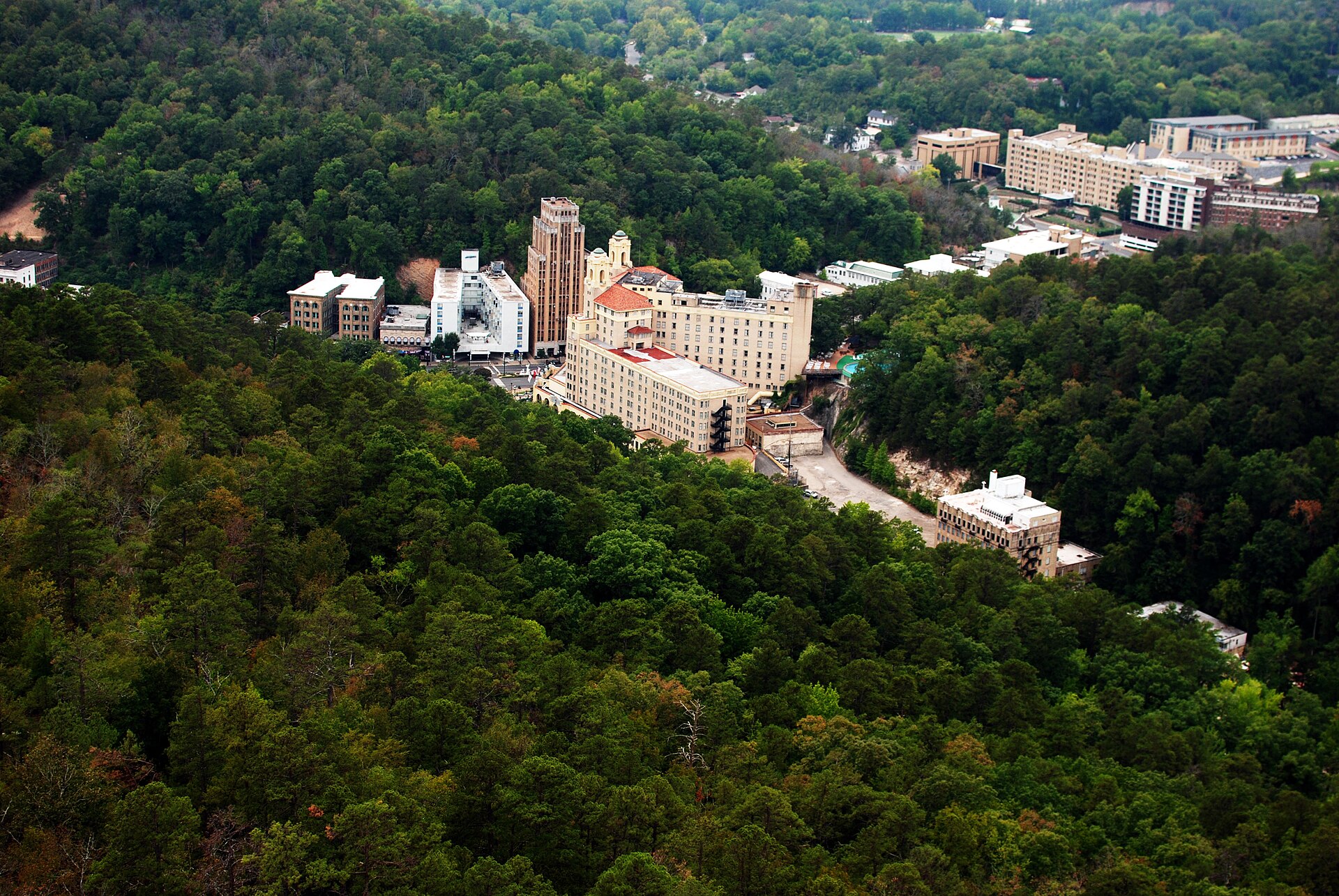
Lake Hamilton and Lake Catherine, two reservoirs on the Ouachita River, lie just south of the city, and Hot Springs National Park cuts directly through the core. Bathhouse Row, the historic strip of ornate bathhouses on Central Avenue, is a genuine draw and not just a backdrop. People actually use the bathhouses. That said, the economy here is real and sometimes rough. A 21.3% poverty rate and a median household income of $46,441 per year mean a meaningful share of residents are navigating tight budgets. The unemployment rate sits at 5.5%, slightly above the national rate of 5.2% in the same Census survey. These are not numbers to gloss over.
The good news for relocators: that economic reality translates directly into affordability you won’t find in most comparable-sized cities outside the South.
Housing Costs: Rent and Buying in 2026
Housing is where Hot Springs makes its most compelling case. The Census-verified median home value is $156,900, which is well below the national median of $303,400 in the same Census survey.
Renting in Hot Springs
The median gross rent is $902 per month, which is genuinely affordable by almost any national standard.
Downtown, much of it preserved as the Central Avenue Historic District, offers charm and walkability, though “walkability” in Hot Springs is relative. You can walk to Central Avenue restaurants and the national park trails, but most errands still require a car.
Buying a Home
With a homeownership rate of 57%, most Hot Springs residents own their homes, and the path to ownership is genuinely accessible here compared to national norms.
One honest caution: the city has older housing stock throughout much of its inventory. Homes built before 1980 are common, and inspection surprises, deferred maintenance, and flood zone considerations near the lakes are real factors to research before closing.
Food and Groceries
Arkansas cut its state sales tax on groceries to zero on January 1, 2026, which provides a meaningful though modest savings on every shopping trip.
Dining out is where Hot Springs surprises people. The tourist economy has produced a restaurant scene that’s genuinely good for a city this size. Superior Bathhouse Brewery, at 329 Central Avenue inside the national park, brews its beer with thermal spring water.
Transportation
Hot Springs is car-dependent. Full stop. There is a city bus system (Intracity Transit) with three fixed routes that run weekdays and Saturdays but not Sundays, but it serves a narrow slice of the city’s geography and schedule, and it’s not realistic for most commuters. Plan to own a vehicle.
The average commute to work in Hot Springs is 17 minutes, according to the same Census survey. Downtown parking is paid, and the city has added ParkMobile as a way to pay. Little Rock is about 55 miles away, so if you commute to Little Rock regularly, add meaningfully to both fuel and wear costs.
Healthcare
Hot Springs has two main hospital systems: CHI St. Vincent Hot Springs on Werner Street and National Park Medical Center on Malvern Avenue, which runs an emergency room. For serious or highly specialized care, residents typically travel to Little Rock, which has the University of Arkansas for Medical Sciences (UAMS), a major academic medical center.
The 21.3% poverty rate does correlate with healthcare access challenges for a segment of the population, but for a relocating professional or retiree with insurance, the facilities here are adequate for routine and moderate-complexity care.
Entertainment and Lifestyle
The national park is free and essentially your backyard. Hiking the park’s trails up to the Hot Springs Mountain Tower, soaking at Buckstaff Bathhouse (on Bathhouse Row since 1912, with a whirlpool mineral bath at $45 and the traditional bathing package with massage at $101, per the bathhouse’s posted rates), and fishing on Lake Hamilton are genuine, accessible leisure options, and the park charges no entrance fee. That’s a quality-of-life asset that doesn’t show up in income statistics but matters enormously to daily life.
Beyond the outdoors: the Oaklawn Racing Casino Resort is the city’s horse racing track, casino and entertainment hub. It draws visitors from across the region and gives the city a pulse of activity it might otherwise lack given its size. A night at Oaklawn is an affordable local outing, not a destination Vegas trip. The Garland County Library is solid, and the Hot Springs Documentary Film Festival each October is legitimately well-regarded nationally.
How Hot Springs Compares to Nearby Cities
Little Rock (55 miles northeast)
Little Rock’s median household income is higher, $60,583 in the same Census survey, and so are its housing costs: a median gross rent of $1,067 a month and a median home value of $221,200. Little Rock offers more job diversity, a commercial airport (Clinton National), and a more developed dining and arts scene. The tradeoff is that you’re in a city of about 200,000 people inside a metro of roughly 750,000 with more traffic and costs that are meaningfully higher than Hot Springs without being dramatically so. For remote workers, Hot Springs wins on quality of life per dollar. For career-focused professionals, Little Rock’s job market wins.
Fayetteville (Northwest Arkansas)
Fayetteville is a different category entirely. Fayetteville is home to the University of Arkansas and a booming tech and corporate sector (Walmart’s home base of Bentonville is nearby), and its median home value is $322,500 in the same Census survey. The population skews much younger (a median age of 28.7), the job market is stronger, and the energy is faster. For someone prioritizing career growth, Fayetteville makes sense. For someone prioritizing cost, retirement, or a slower pace, Hot Springs is $100,000-plus cheaper on the purchase price of a home and offers a more established, quieter lifestyle.
Honest Pros and Cons
The Real Pros
- Housing affordability that is hard to overstate. At $156,900 median home value and $902 median rent, this is genuinely rare in 2026.
- Natural setting. Two lakes just south of town, the Ouachita Mountains, and a national park inside the city make an exceptional combination for a city this size.
- Short commutes. The average commute to work is 17 minutes, according to the Census survey.
- A real local culture. The bathhouse history, the film festival, the racing scene, and the arts community give this city identity beyond “affordable small town.”
- A relatively low state income tax (Arkansas taxes wages at graduated rates that top out at 3.9%).
The Real Cons
- Poverty rate of 21.3% means real economic stress is visible. Parts of the city are struggling, and that affects everything from school quality to retail options to the overall sense of investment in public infrastructure.
- Job market limitations. A 5.5% unemployment rate and a median income of $46,441 reflect a local economy that does not have abundant high-paying opportunities. Remote work changes this, but if you need a local job above the service/healthcare sector, options are limited.
- Car dependence. If you don’t drive or can’t drive, daily life is genuinely difficult here.
- Healthcare access for complex needs requires travel to Little Rock. For anyone managing serious chronic conditions, that 55-mile gap to UAMS is a real consideration.
- Summers are hot and humid. July and August average highs are about 93 degrees F in a humid subtropical climate. Air conditioning is not optional; it’s a utility cost to budget for.
Who Hot Springs Is Actually Right For
Remote Workers Leaving High-Cost Metros
If you’re earning a salary calibrated to Austin, Seattle, or the Mid-Atlantic and can work from anywhere, Hot Springs is a dramatic arbitrage opportunity. A remote salary set in a high-cost metro sits well above the $46,441 local median and leaves real financial breathing room. This is probably the strongest case for moving here in 2026.
Early and Traditional Retirees
The median age of 45.1 is not an accident. The bathhouses, the lakes, the low cost, and the slower rhythm all suit retirees. Social Security and a modest pension go meaningfully further here than in most of the country. Hot Springs Village, a large gated community nearby with nine golf courses run by a property owners association, had a median age of 68.9 in the 2020 census.
Young Families Prioritizing Space Over Scene
A family willing to sacrifice urban amenities for a large yard, lake access, and a genuinely affordable mortgage will find Hot Springs delivers. Hot Springs is split among several school districts, mainly the Hot Springs School District with parts in the Lakeside, Fountain Lake and Lake Hamilton districts, so check which one a home is zoned for and research it carefully before committing.
Artists, Creatives, and Small Business Owners
A tourist foot traffic base and a city that has cultivated a creative identity around the documentary film festival make Hot Springs an underrated option for someone opening a studio, a small shop, or a food business.
The Bottom Line
Hot Springs, AR offers something increasingly rare in 2026: a cost of living that actually matches what working and middle-class people earn. A $902 median rent and a $156,900 median home value, set against a national park and two freshwater lakes, is not a trick. The tradeoffs are real, specifically the limited local job market, the visible poverty, the car dependence, and the distance from specialized healthcare and urban amenities. But for the right person, those tradeoffs are entirely manageable. The city rewards people who come knowing what it is, not expecting what it isn’t.
Frequently Asked Questions
What is the average rent in Hot Springs, AR in 2026?
Is Hot Springs, AR a good place to retire in 2026?
What is the median household income in Hot Springs, AR?
How does the cost of living in Hot Springs compare to Little Rock, AR?
Is Hot Springs, AR a safe place to live?
Sources & methodology. Demographic and economic figures in this guide are drawn from the U.S. Census Bureau, 2019 to 2023 American Community Survey 5-Year Estimates, the most recent release available for Hot Springs. Other figures come from the sources named next to them.
Last reviewed September 2026.
How this guide was made. Figures come from the U.S. Census Bureau ACS 2019 to 2023 5-year estimates and the other sources named next to each number. A first draft was written with the help of an AI language model; every place name, price, date and claim was then checked against primary sources by the Small City Guide editors (see About and Methodology). Last verified: September 26, 2026.
What changed: Fact-checked against primary sources in September 2026: 11 statements corrected, opening rewritten, photo replaced with a credited image of the city.
Photo: Samuel Grant, CC BY-SA 3.0, via Wikimedia Commons.