Moving to Asheville after Helene: what changed by 2026
Helene reached Asheville as a tropical storm on September 27, 2024 (WLOS, September 21, 2026), and most of the damage came from water: flooding along the French Broad and Swannanoa rivers, landslides on steep slopes, and a municipal water system that could not deliver drinkable water for weeks. Two years later most of the city works again, but the repairs are uneven, and several of them matter to anyone signing a lease or making an offer here. Below: what was damaged, what is back, what housing did, and the checks to run on an address.
The scale frames everything else. North Carolina put Helene’s damage and mitigation needs at nearly $60 billion, with federal and state funding covering about $14.4 billion, roughly 24% (Asheville Watchdog, September 25, 2026). Recovery in Asheville is well ahead of many rural mountain towns, and it is still incomplete.
Helene damage in Asheville and its status in September 2026
Each status line comes from the source linked in the same row.
Asheville’s tap water: restored in 2024, still being hardened
Helene left 160,000 customers without potable water for weeks (Blue Ridge Public Radio, May 18, 2026). The citywide boil water notice was lifted on November 18, 2024, after the city tested 120 samples (BPR, November 18, 2024). The core problem was sediment. The North Fork Reservoir supplied about 80% of the system’s water (BPR, November 18, 2024), and neither its plant nor the William DeBruhl plant in Swannanoa had a pre-treatment step to strip out heavy mud.
What is fixed: the tipped fusegate on North Fork’s auxiliary spillway was rebuilt and reached substantial completion in early September 2026, debris removal in the watershed ended in spring 2026, and turbidity is back to pre-Helene levels, according to WLOS (September 21, 2026). What is not: the temporary pre-treatment units FEMA paid for, at an operating cost of about $6 million per month (City of Asheville, October 7, 2025), stopped running in November 2025 and were removed in early 2026 (WLOS, September 21, 2026). A permanent North Fork pre-treatment system is estimated at $130 million to $140 million, and a roughly 6.5-mile alternate transmission line at $140 million to $145 million (WLOS, September 21, 2026). Both designs are expected to reach the 60% mark needed for a FEMA application in spring 2027, and building them will take years after that. The city itself cautions that North Fork and Bee Tree remain vulnerable to prolonged severe weather.
At the smaller DeBruhl plant, FEMA approved a pre-treatment system estimated at $25 million, with FEMA paying 75% and construction expected to start as early as spring 2027 (BPR, May 18, 2026). The water is safe today, but the part of the system that failed in 2024 has not received its long-term fix, so keeping several days of stored drinking water is sensible.
Getting in and out: I-40, the Parkway and mountain roads
Interstate 40 through the Pigeon River Gorge, the main link west to Tennessee, reopened in March 2025 with one lane in each direction and a 40 mph speed limit (NCDOT, February 11, 2025). The one-lane-each-way setup is still in place. In early September 2026, NCDOT raised the rebuild estimate to $2.8 billion, up from $2 billion in May, and moved completion to late 2029, with two eastbound lanes and one westbound lane targeted for late 2028 (BPR, September 3, 2026).
Statewide, NCDOT says more than 99% of roads closed by Helene have reopened (BPR, July 31, 2026), though reopened is not the same as finished. The permanent rebuild of U.S. 64 and U.S. 74A through Hickory Nut Gorge, toward Chimney Rock and Lake Lure, is expected to be completed in 2029 (BPR, July 31, 2026). Private roads move slower: about 3,000 approved private road and bridge repairs sat in the state program queue as of June 2026, with about 120 complete (Asheville Watchdog, September 25, 2026). A house reached by a shared private road or bridge deserves extra scrutiny.
On the Blue Ridge Parkway, the sections around Asheville are open. The National Park Service road status for September 26, 2026 lists the Parkway open from Mount Mitchell State Park (milepost 355.3) south past Craggy Gardens, the Folk Art Center and the Pisgah area, although Craggy Gardens Picnic Area remains closed. Helene closures remain farther north, between mileposts 344.2 and 355.3, between 333.9 and 342.1, and from 317.5 to 327.5. The Park Service says work continues at 45 remaining sites and all road recovery projects are estimated for completion by the end of 2026 (NPS, page updated September 15, 2026).
River corridors: the River Arts District, Biltmore Village and Swannanoa
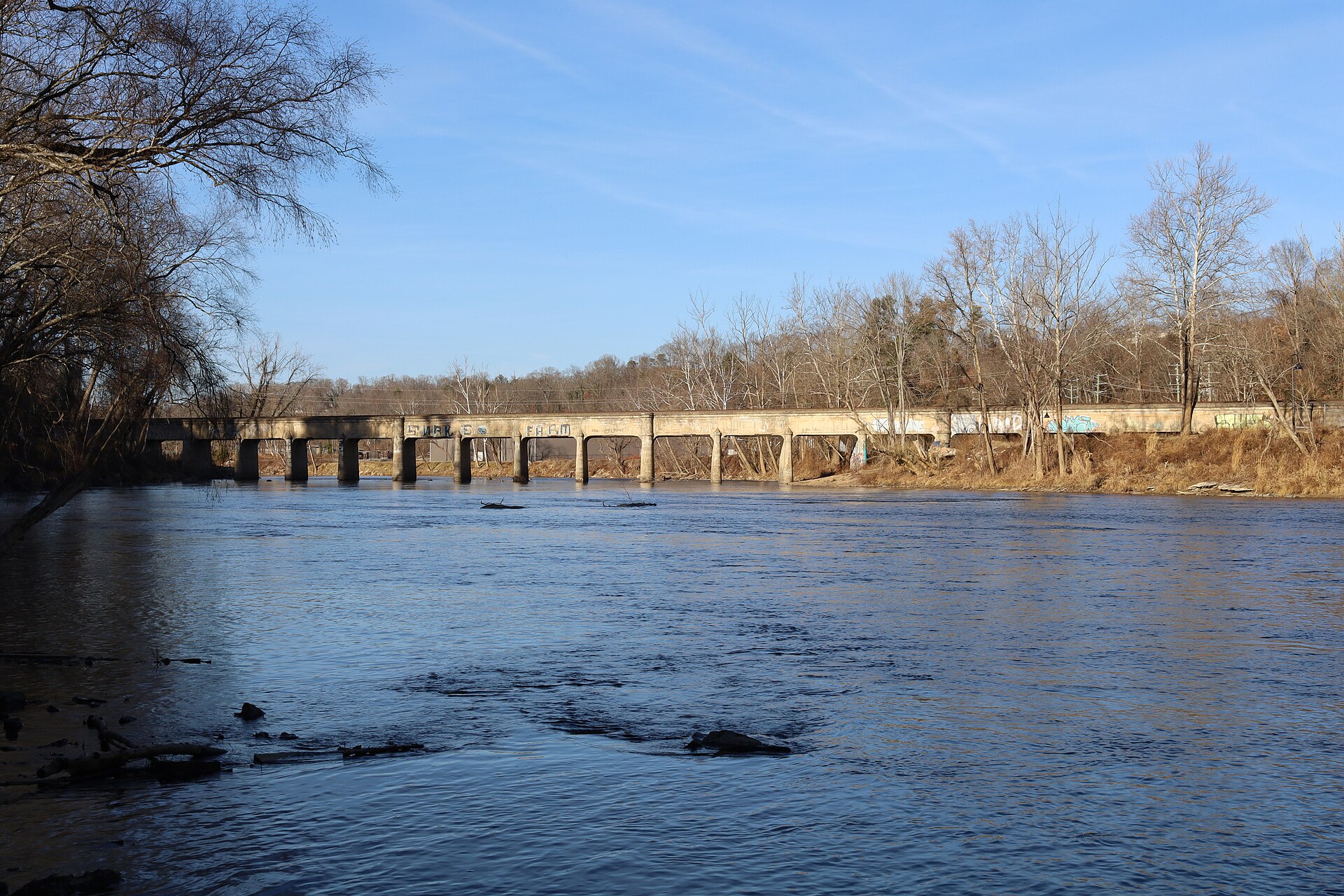
The neighborhoods that flooded worst sit along the rivers, and that is where recovery is most visible. Almost all of the River Arts District and Biltmore Village flooded during Helene, according to Wikipedia’s account of the storm in North Carolina.
Helene’s flooding of Biltmore Village was catastrophic (828newsNOW, September 22, 2026). By March 2026, many storefronts were still vacant and boarded up (WLOS, March 19, 2026). Six months later the Historic Biltmore Village Association said three more businesses would open within about six weeks, while the Cathedral of All Souls estimated in May 2026 that reopening would cost $10 million (828newsNOW, September 22, 2026). The association says the district is not yet back to pre-Helene numbers.
Swannanoa, east of the city, is one of the hard-hit areas still rebuilding (Asheville Watchdog, September 25, 2026). New businesses have opened around Beacon Village, and county commissioners are scheduled to consider a Swannanoa Small Area Plan, covering development, infrastructure and disaster resilience, for adoption in November 2026 (WLOS, September 24, 2026). At the same time, damaged and vacant buildings remain scattered through the community (WLOS, September 23, 2026). Buyouts are reshaping some river-adjacent streets: FEMA had approved 189 buyout properties in Buncombe County by May 2026, with another batch of 74 applications pending (BPR, May 11, 2026).
What home prices and rents did after the storm
Home prices kept inching up. Inside Asheville, a broker’s second-quarter report cited by the Watchdog put the median at $513,000, up from $500,000 for 2025 (Asheville Watchdog, September 8, 2026).
Rents moved more. A wave of apartment completions, many delayed by the storm, arrived as Buncombe County’s population dipped by 1,810 residents, about 0.6%, between July 2024 and July 2025 (Asheville Watchdog, September 8, 2026). CoStar data in the same report shows average multifamily rent sliding from $1,728 in the third quarter of 2024 to $1,630 in the third quarter of 2026, and market-rate vacancy peaking at 17% in late 2025 and early 2026 before easing to 14.5%. Concessions such as two or three months of free rent are common in new complexes. The bottom of the market is a different story: a survey of 22 tax-credit complexes found 99.6% occupancy, so income-restricted units remain very hard to find.
Flood maps, flood insurance and landslide risk
Flood insurance was rare before Helene. An analysis of NFIP and Census data found fewer than 1% of Buncombe County structures had flood coverage, and Asheville policyholders paid an average of more than $2,300 a year (Asheville Watchdog, October 14, 2024). The same analysis counted 1,032 Asheville structures inside a mapped flood zone, only 43% of them insured. Standard homeowners policies exclude flood, and FEMA individual assistance for uninsured losses was capped at $45,000 at the time, far below the cost of rebuilding a house.
The maps themselves are old. Most of Buncombe County’s flood maps were adopted almost 15 years ago, and FEMA says about a quarter of flood insurance claims come from outside the 100-year floodplain (Mountain Xpress, December 11, 2024). Asheville and the county require the lowest floor of new buildings in the 100-year floodplain to sit at least 2 feet above the 100-year flood level, per the same report. Buncombe County’s floodplain page points residents to the county GIS viewer and to FloodSmart for an address-level risk and premium estimate. The NFIP also depends on Congress: it lapsed on September 30, 2025 during a federal shutdown, which BPR reported could delay home sales (BPR, October 9, 2025). Ask your agent to confirm the program is authorized before any closing that depends on it.
Landslides are the risk flood maps do not show. The N.C. Geological Survey responded to 496 Helene landslides, more than the 358 it handled from 1990 to 2023; the slides killed 31 people, and about 88% occurred where at least 10 inches of rain fell (WUNC, January 9, 2026). WUNC reports that the state’s current landslide hazard maps are most useful to someone looking for a place to build a home, and that many western North Carolina real estate agencies require agents to use them when disclosing landslide risk.
Jobs, Mission Hospital and the recovery money
Buncombe County is still below its pre-storm job count. It lost about 3,100 jobs between March 2024 and March 2026, about 1,700 of them in accommodations and food services, and lodging sales remain about 5% below 2024 levels, based on NC Commerce data (Asheville Watchdog, September 25, 2026).
Mission Hospital, owned by HCA Healthcare, remains the region’s main provider of advanced specialty care and its only Level One trauma center. It is also under close scrutiny: it has received four Immediate Jeopardy warnings from federal regulators since 2021 and holds a three-star CMS rating, down from five, while HCA announced more than $32 million in new spending across its western North Carolina hospitals (Asheville Watchdog, September 17, 2026). Newcomers with ongoing health needs should research specialists and insurance networks before moving.
On funding, FEMA says its Public Assistance to North Carolina for Helene now tops $2 billion, part of more than $5 billion it has provided overall (FEMA, June 10, 2026). The City of Asheville received $225 million in HUD disaster recovery grants and in June 2026 added $19.2 million for home repair, expected to help 55 to 65 of about 150 eligible households (Asheville Watchdog, September 25, 2026). The state’s Renew NC single-family program had about 2,200 active applications, 159 homes in construction and 153 completed, per the same report, which also notes that FEMA temporary housing and rental assistance is set to end on September 30, 2026.
A pre-lease and pre-offer checklist for Asheville addresses
None of these checks takes long, and each one targets a specific way Helene hurt people here.
- Look up the flood zone. Enter the address in the FloodSmart tool and in the county GIS viewer linked from Buncombe County’s floodplain page. Treat any lot near a creek as flood-exposed.
- Ask about 2024 directly. Ask the landlord or seller in writing whether the building or lot flooded, lost road access or had slope movement during Helene, and what was repaired.
- Check the slope. Look the parcel up on the state landslide hazard viewer, and look for fresh retaining walls, cracked driveways or regraded banks above or below the house.
- Trace the road. Confirm whether the address depends on a private road or bridge, check DriveNC for closures on your commute, and drive the route after a heavy rain if you can.
- Know your water source. Confirm whether the address is on City of Asheville water or a private well, and follow the city’s water recovery project page for work that could affect service.
- Price insurance before you commit. Get homeowners and flood quotes, or renters coverage that includes flood damage to belongings, before signing.
- Check the neighbors’ plans. On a river corridor street, ask whether nearby lots are in the FEMA buyout program, since FEMA says Buncombe buyouts return the land to green space.
Asheville is functioning, open to visitors and, for renters in particular, easier on the budget than it was in 2024. The storm’s lessons are also written into its maps, and a newcomer who reads those maps address by address will make a better choice than one who reads only the listing.
How this guide was made. Figures come from the sources named next to each number. A first draft was written with the help of an AI language model; every place name, price, date and claim was then checked against primary sources by the Small City Guide editors (see About and Methodology). Last verified: September 26, 2026.
What changed: First published September 2026; 8 figures corrected in self-check. On September 27, 2026 every named place and figure was re-checked; details that could not be confirmed from a primary source were removed.
Photo: Antony-22, CC BY-SA 4.0, via Wikimedia Commons.