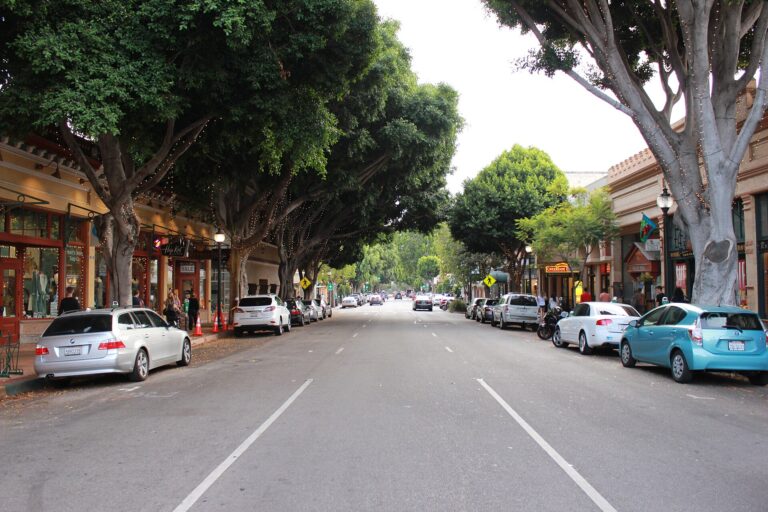

Alabama Cost of Living: 6 Cities Compared for 2026
This comparison is for people leaving a large, expensive metro who are weighing where in Alabama to land. It puts the six Alabama cities this site covers on the same Census measures, then explains what each set of numbers means in practice. Four of them, Huntsville, Birmingham, Montgomery and Mobile, are the state’s four largest cities, so this is not a list of small towns; Tuscaloosa and Auburn are the two university cities in the group.
Six Alabama cities on the same Census yardstick
Every figure in the table comes from the U.S. Census Bureau’s ACS 2019-2023 5-year estimates (tables B01003, B19013, B25064, B25077, B08013 and B08012). Rent as a share of income is the median gross rent times 12, divided by median household income. The price-to-income ratio is median home value divided by median household income. Mean commute is aggregate travel time divided by workers who did not work from home.
| Place | Population | Median household income | Median gross rent | Median home value | Rent as % of income | Price-to-income | Mean commute (min) |
|---|---|---|---|---|---|---|---|
| Huntsville | 218,814 | $70,778 | $1,078 | $263,100 | 18.3% | 3.7 | 19.3 |
| Birmingham | 199,322 | $44,376 | $1,047 | $138,600 | 28.3% | 3.1 | 21.5 |
| Montgomery | 198,440 | $55,687 | $1,059 | $148,500 | 22.8% | 2.7 | 20.5 |
| Mobile | 185,097 | $51,090 | $1,029 | $170,300 | 24.2% | 3.3 | 22.7 |
| Tuscaloosa | 107,699 | $48,536 | $1,005 | $236,600 | 24.8% | 4.9 | 18.2 |
| Auburn | 78,738 | $56,123 | $1,034 | $342,400 | 22.1% | 6.1 | 19.3 |
| Alabama | 5,054,253 | $62,027 | $963 | $195,100 | 18.6% | 3.1 | 25.4 |
| United States | 332,387,540 | $78,538 | $1,348 | $303,400 | 20.6% | 3.9 | 26.6 |
Three patterns stand out. Rents barely move across the six cities: every one sits between $1,005 and $1,078 a month, $270 to $343 below the U.S. median of $1,348 (ACS 2019-2023 5-year). Home values move a lot, from $138,600 in Birmingham to $342,400 in Auburn. And every city’s mean commute, 18.2 to 22.7 minutes, is shorter than the national 26.6 minutes and the statewide 25.4 minutes in the same survey. The rent-share column compares a typical rent with a typical household’s income across all households, owners included, so treat it as a rough gauge of how far local pay stretches, not as what any renter actually pays.
Huntsville, Birmingham, Montgomery and Mobile: Alabama’s four largest cities
Ranked by the ACS 2019-2023 5-year population estimates for Alabama places, these four are the state’s largest cities, in this order, and each has between 185,000 and 219,000 residents. None of them is a small city. Each still costs far less to house a household in than most large coastal metros, but they differ sharply in income and in what a home costs relative to it.
Huntsville: the highest incomes of the six
Huntsville is Alabama’s largest city, with 218,814 residents, and its median household income of $70,778 is the highest in this group and above the state’s $62,027 (ACS 2019-2023 5-year). That income pulls its rent share down to 18.3%, the lowest of the six, even though its $263,100 median home value is well above the state median. The site’s Huntsville cost of living guide notes that Redstone Arsenal and NASA’s Marshall Space Flight Center anchor a large defense and aerospace economy, and that the city-run Orbit bus system has sparse coverage, so a car per working adult is the realistic budget.
Birmingham: the cheapest homes, the lowest incomes
Birmingham has the lowest median home value in the group at $138,600, but also the lowest median household income at $44,376, which is why its rent share, 28.3%, is the highest of the six (ACS 2019-2023 5-year). For someone bringing a salary from outside, the low home prices are the main draw. The Birmingham cost of living guide describes the city as the center of Alabama’s largest metro area, with about 1.19 million people, and notes that the Birmingham Xpress bus rapid transit line opened in 2022 between Woodlawn and the Birmingham Crossplex, while service outside that corridor is limited.
Montgomery: the lowest price-to-income ratio
Montgomery’s median home value of $148,500 is 2.7 times its $55,687 median household income, the lowest price-to-income ratio in the table and below the U.S. ratio of 3.9 (ACS 2019-2023 5-year). On paper, that makes it the easiest of the six places for a median-income household to buy a home. The Montgomery cost of living guide names Maxwell-Gunter Air Force Base and state government as the biggest employers, since Montgomery is the state capital, and notes that the city bus system, The M, runs 14 fixed routes, from 5:00 a.m. to 9:00 p.m. on weekdays.
Mobile: the Gulf Coast option
Mobile sits in the middle of the group on most measures: a $51,090 median household income, a $170,300 median home value and a price-to-income ratio of 3.3, with the longest mean commute of the six at 22.7 minutes (ACS 2019-2023 5-year). The Mobile cost of living guide notes that it is the oldest city in Alabama, founded in 1702, and that since August 2025 Amtrak’s Mardi Gras Service has connected it to New Orleans with two round trips a day. The same guide flags hurricane season and recommends pricing flood insurance before buying.
Tuscaloosa and Auburn: university cities with pricier homes
The two smaller cities in this comparison are the fifth- and seventh-largest in Alabama by the ACS 2019-2023 5-year population estimates, with Hoover in sixth place. Both are home to large universities, and both have the highest price-to-income ratios in the table. The site’s guides for both cities note that their large student populations pull the local income and poverty figures down, so read those ratios with that in mind.
Tuscaloosa
Tuscaloosa has the lowest median gross rent of the six at $1,005 a month and the shortest mean commute at 18.2 minutes, but its $236,600 median home value is 4.9 times its $48,536 median household income (ACS 2019-2023 5-year). The Tuscaloosa cost of living guide ties the city’s median age of 28.2 to the University of Alabama and points out that Northport, a separate city across the Black Warrior River, had a median gross rent of $954 in the same Census survey.
Auburn
Auburn has the highest median home value in the group at $342,400, above the U.S. median of $303,400, and the highest price-to-income ratio at 6.1 (ACS 2019-2023 5-year). Rent is a different story: its $1,034 median is in line with the other five cities. The Auburn cost of living guide reports that Auburn University had 13,545 employees in 2024, that the city is about 90 minutes by car from the Atlanta airport on I-85, and that neighboring Opelika had a median home value of $213,700 in the same Census survey, which makes it the obvious place to look for a buyer on a budget.
Alabama taxes that apply in all six cities
Some costs follow you anywhere in the state. The Alabama Department of Revenue lists these individual income tax rates:
- Single filers, heads of family and married people filing separately: 2% on the first $500 of taxable income, 4% on the next $2,500, and 5% on taxable income over $3,000 (Alabama Department of Revenue).
- Married couples filing jointly: 2% on the first $1,000, 4% on the next $5,000, and 5% on taxable income over $6,000 (Alabama Department of Revenue).
Because the 5% rate starts at $3,000 of taxable income for single filers and $6,000 for joint filers, nearly all of a typical salary is taxed at the top rate. On the other side, the department’s list of income exempt from Alabama income taxation includes federal Social Security benefits, military retirement pay and payments from defined benefit retirement plans, which matters for retirees comparing states.
The state’s general sales and use tax rate is 4%, and the state rate on food and groceries has been 2% since September 1, 2025, down from 3% (Alabama Department of Revenue, state sales and use tax rates). Cities and counties add their own sales taxes on top of the state rate; the department publishes those local rates separately, so check the rate for the exact address you are considering before you build a budget.
Matching the six cities to a remote or local income
If you bring a remote income, rent looks nearly the same in all six places, and the choice comes down to home prices and the kind of city you want: Birmingham and Montgomery have the lowest home values, while Auburn and Tuscaloosa cost more to buy into. If you need a local job, Huntsville’s $70,778 median household income is the strongest signal in the table (ACS 2019-2023 5-year). All six city guides linked above cover rent, groceries, transportation and healthcare in more detail, with sources for each figure.
How this guide was made. Figures come from the sources named next to each number. A first draft was written with the help of an AI language model; every place name, price, date and claim was then checked against primary sources by the Small City Guide editors (see About and Methodology). Last verified: September 26, 2026.
What changed: Rewritten in September 2026 from Census ACS 2019-2023 data; replaces an earlier version.
Photo: Bren.persing, CC BY-SA 4.0, via Wikimedia Commons.