
Jobs in Asheville, NC: The 2026 Market After Helene
Asheville has a reputation problem, at least professionally. Most people know it as a weekend destination for craft beer and mountain views, which makes it easy to underestimate how complex its job market actually is. The city’s median household income sits at $67,221 per year according to U.S. Census Bureau data, and with median rent at $1,303 per month and home values at $411,000, understanding exactly what jobs pay here matters a lot more than in a lower-cost market. This guide cuts through the haze and tells you what the 2026 job market in Asheville actually looks like.
The Asheville Job Market in 2026: An Overview
Asheville’s unemployment rate was 4% in the Census Bureau’s 2019 to 2023 five-year estimates; the more current BLS figure for the Asheville metro was 3.3 percent in July 2026, after the rate spiked to 9.6 percent in October 2024 in the weeks after Hurricane Helene. That number tells part of the story. What it doesn’t tell you is that the local economy runs on a mix of healthcare, hospitality, education, and a growing tech-adjacent remote workforce, sectors that each operate on very different pay scales. That creates real competition for salaried professional roles.
It reflects the persistent wage gap between the service economy that powers tourism and the professional economy that drives growth. Many of Asheville’s working adults are employed in food service, retail, and hospitality at wages that struggle to keep pace with housing costs. Meanwhile, remote workers and healthcare professionals operate in an entirely different financial reality. Both groups live in the same city, pay the same rents, and shop at the same grocery stores. Understanding which side of that divide your career puts you on is essential before you commit to a move.
The good news: Asheville is not stagnant. Healthcare expansion, a persistent remote-work influx, and modest growth in the trades are creating real job openings. The trick is knowing where to look and what to realistically expect.
Largest employers in Buncombe County (NC Department of Commerce, Q1 2026, 1,000+ employees each): Mission Health (HCA Healthcare), Ingles Markets, Buncombe County Schools, the Charles George VA Medical Center, Buncombe County government, the City of Asheville, Walmart, Biltmore, Eaton Corporation and MAHEC. The next tier (500 to 999 employees) includes A-B Tech, Unison Engine Components, Asheville City Schools, UNC Asheville, BorgWarner and the Omni Grove Park Inn.
1. Mission Health (HCA Healthcare)
Mission Health ranks first among Buncombe County employers in the NC Department of Commerce list. Since HCA Healthcare bought the system in 2019 it has been under sustained regulatory and legal scrutiny: federal regulators placed Mission Hospital in immediate jeopardy in 2021, 2024, October 2025 and again in January 2026, and in July 2026 a judge allowed the North Carolina Attorney General’s 2023 lawsuit against HCA over emergency and cancer services to proceed to trial. Job seekers should weigh the volume of openings against those staffing concerns. Mission Hospital on Biltmore Avenue hires for roles ranging from nursing and surgical tech to administration and IT. Mission Hospital’s nurses are represented by National Nurses United; their October 2024 three-year contract, reached after a strike authorization vote, included raises of up to 29 percent for some nurses plus a pilot program on break relief staffing so nurses can take their meal and rest breaks. Compare current contract scales with offers from larger metros before assuming pay parity, which is genuinely good news for healthcare workers weighing Asheville against a bigger city.
2. Biltmore Estate
America’s largest private home is also one of Asheville’s most iconic employers. Biltmore runs a year-round operation covering hotel management, culinary arts, retail, agriculture, and event coordination. Pay varies widely by role, but the estate offers a stability that seasonal hospitality jobs do not. Management-track positions here can lead to legitimate careers in luxury hospitality.
3. Ingles Markets
Headquartered in Black Mountain, in Buncombe County, Ingles is a regional grocery chain with corporate offices and distribution operations that employ local workers in logistics, finance, IT, marketing, and retail management. It’s one of the few large employers offering corporate career tracks that don’t require you to work in healthcare or tourism.
4. Asheville City Schools and Buncombe County Schools
Together these two public school systems are among the area’s steadiest employers. Hiring has not gotten easier since Hurricane Helene: local public school enrollment has dropped around 5 percent, Buncombe County projected a $20 million budget shortfall in January 2025 and proposed a 4 percent cut to both school systems, and in spring 2025 a local teachers’ association leader said Buncombe County Schools was expected to cut 100 to 150 staff and Asheville City Schools 20 to 30 if extra county funding did not come through. Check each district’s current postings before relocating for a teaching job. North Carolina has made incremental salary improvements, though the state still ranks below the national average for educator pay. Support staff, administrators, and special education roles are in particular demand.
5. University of North Carolina Asheville (UNCA)
UNCA is a small liberal arts university with outsized importance to the local economy. It employs faculty, researchers, and a substantial administrative and facilities staff. It also anchors the city’s creative and intellectual community in ways that ripple out to the broader job market, supporting adjacent roles in nonprofits, arts organizations, and continuing education.
Fastest-Growing Sectors in 2026
Healthcare and Medical Services
This one isn’t close. Healthcare is Asheville’s most dependable growth engine. Buncombe County’s aging population, combined with retirees relocating from larger metros, has driven sustained demand for nurses, physical therapists, home health aides, behavioral health specialists, and medical coders. Mission Hospital received conditional state approval in April 2026 to add 95 more acute-care beds to its main facility. If you are a licensed healthcare worker, Asheville is actively competing for you.
Construction and Skilled Trades
Asheville’s housing crunch is a direct driver of trades employment. Electricians, plumbers, HVAC technicians, and general contractors are in demand across residential, commercial, and infrastructure projects. The city’s infrastructure was badly tested by Hurricane Helene in late 2024, and BLS counts about 11,100 mining, logging and construction jobs in the Asheville metro in August 2026, up from about 10,100 in August 2024.
Technology and Remote-Enabled Roles
Asheville does not have a traditional tech industry. What it has is a large and growing population of remote workers who moved here for quality of life and brought their tech, marketing, finance, and consulting jobs with them. That migration has created secondary demand: local IT support, cybersecurity consultants, digital agencies, and software shops have grown to service both individuals and local businesses that suddenly need more sophisticated tools. It’s a derivative tech economy, but it is real and it is growing.
Food, Beverage, and Hospitality (recovering, not growing). Leisure and hospitality took the hardest hit from Hurricane Helene: metro employment fell from about 29,000 in August 2024 to under 19,000 that October and was still about 27,000 in August 2026 (BLS). Hiring rises each summer tourist season, but expect fewer openings than before the storm.
Restaurants, bars and breweries fall within that leisure and hospitality count.
Remote Work in Asheville
Remote work has quietly reshaped who lives in Asheville. If you already have a remote job, Asheville is genuinely compelling.
The catch is infrastructure. Internet service varies by address, especially outside the city. If your remote job requires rock-solid connectivity, check the providers and speeds available at the specific address before you sign a lease.
Venture Asheville, the entrepreneurship initiative of the Economic Development Coalition for Asheville-Buncombe County and the Asheville Area Chamber of Commerce, runs a startup job board worth watching.
Typical Salaries by Major Role
Software and Technology
Software developers employed by establishments in the Asheville metro average about $142,000 a year (BLS OEWS, May 2025), though the local pool of openings is small and many developers here work remotely for out-of-market companies. IT support specialists average about $60,000 locally, while network and systems administrators average about $100,000 (BLS OEWS, May 2025).
Healthcare
Registered nurses in the Asheville metro earn a median of about $82,000 a year, with the middle half between roughly $78,000 and $99,000 (BLS Occupational Employment and Wage Statistics, May 2025); new graduates start lower and experienced specialty nurses earn more. Nurse practitioners average about $128,000 and physician assistants about $134,000 in the Asheville metro (BLS OEWS, May 2025). Physical therapists average close to $99,000 (BLS OEWS, May 2025). At the volume end of healthcare hiring, home health and personal care aides average about $34,000 and medical assistants about $44,000 (BLS OEWS, May 2025), putting them in a genuinely difficult position given the city’s home values and rents.
Education
Under the 2026-27 state salary schedule a first-year teacher with a bachelor’s degree earns a $48,000 state base (up from $41,000 in 2025-26), rising to $59,000 at 25 or more years; the master’s schedule runs from $52,800 to $64,900. BLS data for the Asheville metro (May 2025) shows average pay of about $52,000 for elementary teachers and $57,000 for secondary teachers, a reflection of North Carolina’s below-average teacher pay scale. UNCA faculty salaries vary by rank and department; federal IPEDS data put the average at about $77,000 for assistant professors, $88,000 for associate professors and $96,000 for full professors, with lecturers averaging about $58,000. Elementary and secondary school administrators, including principals, average about $84,000 (BLS OEWS, May 2025).
Skilled Trades
This is a bright spot that surprises people. Electricians in the Asheville metro average about $57,000 a year, plumbers about $56,000 and HVAC technicians about $58,000 (BLS OEWS, May 2025); licensed, experienced tradespeople and independent contractors can earn more, but the averages are closer to the mid-$50,000s than the mid-$70,000s. Construction managers average about $116,000 (BLS OEWS, May 2025).
Where to Find Jobs in Asheville
Local Job Boards and Resources
Start with NCWorks (ncworks.gov), North Carolina’s free statewide job-search and career-services system. In Buncombe County the NCWorks Career Center is overseen by Mountain Area Workforce Development, part of Land of Sky Regional Council, and offers resume and interviewing workshops and training information at no charge. Venture Asheville posts opportunities in entrepreneurship and innovation-adjacent fields. For healthcare specifically, check Mission Health’s own careers page.
Local Facebook groups should not be dismissed. Neighborhood-specific community boards can surface informal and contractor opportunities that never make it to Indeed or LinkedIn. Hospitality and trades hiring especially flows through personal networks here.
Using LinkedIn Effectively in Asheville
Asheville’s professional LinkedIn community is smaller than a major metro, which actually works in your favor. Connecting with local hiring managers directly is more likely to result in a real conversation here than it would in Charlotte or Atlanta. The key is being specific: mention the neighborhood you’re moving to, name a local landmark or business you genuinely care about, and make clear you’ve done your homework on the city. Generic “looking to relocate” messages get ignored. A message that shows you know the employer’s recent news gets attention.
Commute Considerations
Asheville is a small city by any measure, and most intra-city commutes are short. The city does not have a robust public transit system; Asheville Rides Transit (ART) runs 18 bus routes from the transit station at 49 Coxe Avenue, generally 5:30 a.m. to 10:30 p.m. Monday through Saturday and 8:30 a.m. to 6:30 p.m. on Sundays, for a $1 one-way fare. Coverage thins outside the city and late-night service is limited, so overnight or rural shifts usually still require a car. The reality for most workers is that you will need a car.
This matters for your budget calculation. With median rent at $1,303 per month and no meaningful mass transit, factor in full vehicle costs; the one bright spot is that North Carolina has some of the lowest auto insurance costs in the country, with an average annual expenditure of about $753 in 2023 against a national average of about $1,282 (Insurance Information Institute).
Career Profiles: Who Thrives in Asheville
The remote professional with location flexibility. If you earn a strong salary remotely and can work from anywhere, Asheville offers a quality of life that’s difficult to beat at its price point.
The healthcare professional at any career stage. New grad nurses, experienced NPs, and traveling healthcare workers all find a steady market here. Mission Health’s scale means there are entry-level and senior roles available consistently, and the lifestyle draw helps with retention, which means less internal competition than you might expect.
The licensed tradesperson. Electricians, plumbers, and HVAC techs who can work independently or join a regional contractor are in an unusually strong position. Construction employment in the metro is above its pre-Helene level (BLS). If you hold a North Carolina license or can transfer one, your leverage is real.
The early-career educator willing to put in time. Starting teacher salaries are modest, but Buncombe County Schools went through a difficult 2025 budget cycle, with a local teachers’ association leader saying it could cut 100 to 150 staff without extra county funding, so ask about position funding before relocating for a specific opening.
Who does not thrive here? Someone expecting a traditional corporate career ladder in finance, law, or large-scale tech. Those industries exist at the margins in Asheville but not at scale. Asheville rewards people who either bring their income with them or plug into the city’s specific strengths. It taxes people who arrive hoping the market will be something it’s not.
Frequently Asked Questions
What is the unemployment rate in Asheville, NC in 2026?
What is the average salary in Asheville, NC?
Is Asheville, NC a good place to find a job in healthcare?
Can you live on a local salary in Asheville given the high housing costs?
What are the best job boards for finding work in Asheville, NC?
Sources & methodology. Demographic and economic figures in this guide are drawn from the U.S. Census Bureau, 2019 to 2023 American Community Survey 5-Year Estimates. A newer 2020 to 2024 release came out on January 29, 2026; this guide still uses the 2019 to 2023 figures. Other figures come from the sources named next to them.
Last reviewed September 2026.
How this guide was made. Figures come from the U.S. Census Bureau ACS 2019 to 2023 5-year estimates and the other sources named next to each number. A first draft was written with the help of an AI language model; every place name, price, date and claim was then checked against primary sources by the Small City Guide editors (see About and Methodology). Last verified: September 26, 2026.
What changed: Fact-checked against primary sources in September 2026: 26 statements corrected, 9 off-topic Census sentences removed, opening rewritten, photo replaced with a credited image of the city. On September 27, 2026 every named place and figure was re-checked; details that could not be confirmed from a primary source were removed.
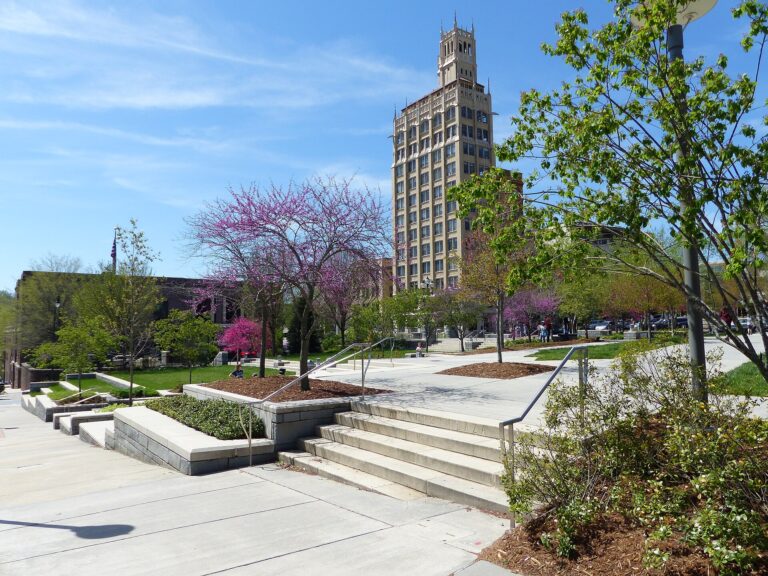
Photo: Carol M. Highsmith, Public domain, via Wikimedia Commons.