Best Neighborhoods in Asheville, NC (2026 Guide)
Asheville’s neighborhoods are separated by ridgelines, the French Broad River and the interstates, so a two-mile move can change your commute, your flood risk and your walk to a grocery store. This guide covers eight areas, from Montford’s 1890s historic district to the Hendersonville Road suburbs, with what you give up to live in each. It also covers what Hurricane Helene did to the River Arts District, which flooded along with Biltmore Village in September 2024, and where the recovery stands two years on.
The city’s layout is not intuitive. Asheville sits in a bowl formed by the Blue Ridge Mountains, and its neighborhoods radiate outward from downtown like spokes on a wheel that someone bent slightly. Elevation changes dramatically block after block, so “close to downtown” can still mean a steep drive. The French Broad River divides the west side from the urban core. I-26 and I-240 carve the city into distinct zones, and crossing them often feels like entering a different town entirely.
Half the city rents, and many of those renters are being squeezed. The median gross rent of $1,303 per month is the Census figure, but that number reflects older leases. Zumper’s late-September 2026 medians for new listings were $1,399 for a one-bedroom and $1,712 for a two-bedroom. Plan accordingly.
The Neighborhoods Worth Knowing
1. Montford
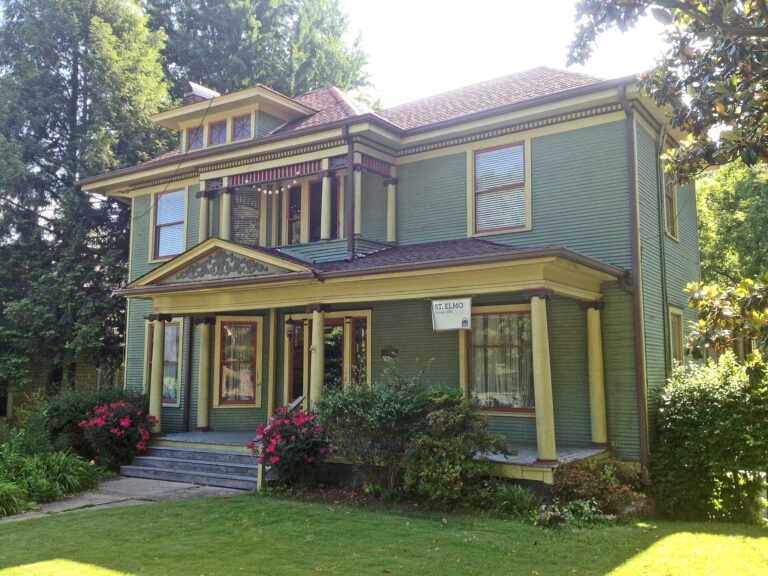
Montford was developed from 1889, and most of its 600 buildings date from 1890 to 1920. Streets lined with Victorian and Queen Anne homes, a genuine walkable grid, and proximity to downtown make this one of the most sought-after addresses in the city. It has been on the National Register of Historic Places since 1977 and, more to the point for owners, a local historic district since 1981, which means exterior changes go through the city’s Historic Resources Commission and cookie-cutter infill is largely kept out.
Walkability: High. Grocery stores, coffee shops, and the River Arts District are all reachable on foot or by short bike ride.
Best for: Remote workers, couples without kids, and anyone prioritizing neighborhood character over square footage.
Schools: Asheville City Schools runs its elementary schools as citywide magnets, so families choose a school rather than being zoned to one. Isaac Dickson Elementary (125 Hill Street) is an experiential-education magnet; the city elementaries feed Asheville Middle and Asheville High.
Downside: Historic preservation rules can make renovations expensive and slow. On-street parking is competitive. Montford is the city’s bed-and-breakfast district, and permitted homestays add to the visitor turnover on some blocks (whole-house short-term rentals are not allowed in residential zoning).
2. West Asheville
Cross the French Broad River on Haywood Road and the vibe shifts immediately. West Asheville is the city’s most politically engaged, creatively dense neighborhood. Haywood Road itself is a long commercial strip of independent restaurants, record shops, tattoo parlors, and bars. It is genuinely walkable in a way that most of Asheville is not.
Walkability: Very high along the Haywood Road corridor.
Best for: Young professionals, artists, and families who want neighborhood life over suburban quiet.
Schools: Two city magnet elementaries on this side of town are Hall Fletcher (60 Ridgelawn Road, STEAM magnet) and Lucy S. Herring (98 Sulphur Springs Road, ecology magnet). Because Asheville City Schools uses citywide choice for elementary school, living here does not lock you into either one.
Downside: Weekend nights on Haywood Road are loud. Parking is a genuine problem. The neighborhood has gentrified rapidly, pricing out many of the artists and working-class families who built its identity.
3. South Slope
South Slope is Asheville’s brewing district, and it has evolved from an industrial stretch into one of the densest concentrations of bars and restaurants in the city. Burial Beer, Green Man, and Wicked Weed’s Funkatorium are all within walking distance of each other. (Highland Brewing, the city’s original craft brewery, is out on Old Charlotte Highway in East Asheville, not here.) It is a great place to spend a Saturday afternoon and a complicated place to live full-time.
Walkability: High to downtown, moderate elsewhere.
Best for: Young professionals and people who moved here for the food and drink scene and want to live inside it.
Schools: Asheville City Schools serves large portions of the city but not all of it, so confirm the district for a specific address.
Downside: Noise on weekends is significant. The neighborhood is still developing, so construction is a constant companion. It lacks the established residential feel of Montford or West Asheville.
4. North Asheville
North Asheville is where the city’s established professional class largely lives. The homes are bigger, the lots are wider, and the streets are quieter. Beaver Lake, with its Audubon bird sanctuary, offers genuine green space, the area includes the Lakeview Park and Grove Park historic districts, and the Merrimon Avenue corridor has the neighborhood’s groceries (Trader Joe’s, Whole Foods) and its own run of independent shops and cafes. This is the neighborhood that families with school-aged children consistently gravitate toward.
Walkability: Low to moderate. A car is essentially required for daily errands.
Best for: Families, retirees with established wealth, and anyone prioritizing school quality and green space over urban access.
Schools: Ira B. Jones Elementary (544 Kimberly Avenue) and Claxton Elementary (241 Merrimon Avenue) are both here, though Asheville City Schools lets families choose among its elementary magnets. City elementaries feed the same Asheville Middle School and Asheville High, so a North Asheville address carries no built-in school advantage.
Downside: The price premium is real. You are paying significantly above the city’s $411,000 median home value to be here. The area can feel insular, and the drive downtown during tourist season tests patience.
5. River Arts District (RAD)
The River Arts District runs along the French Broad River and has shifted from working artist studios into a mixed-use neighborhood of apartments, breweries, restaurants, and remaining studio space. The Wilma Dykeman Greenway runs along the river from Hill Street to Amboy Road, linking the district to French Broad River Park and Carrier Park (sections reopened in 2025 after Helene flood damage), making it one of the better-connected areas in the city for cyclists and pedestrians.
Walkability: Growing quickly. Access to trails is excellent; access to grocery stores is still limited.
Best for: Remote workers, cyclists, and people who want a “live where you play” setup near the river.
Schools: Not a primary driver for this neighborhood’s residents, most of whom skew younger and childless.
Downside: Flooding risk is real. Hurricane Helene flooded almost the entire district on September 27, 2024; local reporting put damaged or destroyed studios and buildings at roughly 80 percent. Most galleries, studios, restaurants and breweries had reopened by fall 2025, and USA Today named the RAD the country’s best arts district in February 2026, but rebuilding is still visible, and buyers and renters should review FEMA flood maps carefully before committing. Some infrastructure is still being repaired as of 2026.
6. Kenilworth
Kenilworth sits just south of downtown and is one of Asheville’s quieter residential neighborhoods. It has a mix of mid-century bungalows and larger craftsman homes. It is not a flashy neighborhood, but it is a functional one.
Walkability: Moderate. Some errands are walkable; a car helps for most.
Best for: Families who want a calmer residential feel with reasonable downtown proximity.
Schools: Confirm the district for a specific address; Asheville City Schools serves large portions of the city but not all of it, and its elementaries all feed Asheville Middle.
Downside: Less character than Montford or West Asheville. The area around Biltmore Avenue can be congested during high tourist season.
7. Oakley / South Asheville
Oakley, on the city’s east side, and the Hendersonville Road corridor running south toward Arden make up the city’s most suburban zone, and it is unapologetically so. Strip malls, chain restaurants, big-box retail, and easy highway access define the area. It is not where you move to feel like you are living in Asheville, but it is where you move if you need more space for less money and are willing to drive for everything.
Walkability: Very low. This is a car-dependent area.
Best for: Families with children who need space and storage, retirees from larger cities who are used to suburban living patterns.
Schools: Parts of this area fall outside the Asheville City Schools district, so confirm the district for a specific address.
Downside: Commuting into downtown means driving. You lose the neighborhood texture that makes Asheville distinctive. Some residents describe it as “living near Asheville” rather than actually in it.
8. Weaverville (Near-Asheville Option)
Weaverville is technically its own incorporated town, about 9 miles north of downtown Asheville. But for buyers priced out of the city, it functions as a realistic alternative. It has a small, walkable downtown of its own, genuine community feel, and home prices roughly on par with Asheville’s (Census median about $453,000 vs $411,000), with more newer construction and larger lots for the money.
Walkability: Moderate within the small downtown core; car-dependent otherwise.
Best for: Families, teachers, and healthcare workers who find Asheville proper financially out of reach.
Downside: The commute adds up.
The Hidden Gem: Sulphur Springs Road Corridor
The area along Sulphur Springs Road on the west side, home to Lucy S. Herring Elementary, rarely comes up in neighborhood guides. It has a mix of older ranches, small craftsman homes, and a few newer infill builds, and it lacks walkable retail. Compare recent sales there with Haywood Road listings before you decide.
Neighborhoods to Approach with Caution
Parts of East Asheville along Swannanoa River Road took heavy Helene flooding in 2024. For any block you are considering, check the Asheville Police Department’s Open Data Portal and Community Crime Map on the city website rather than relying on reputation. Buyers and renters should walk the streets, check Buncombe County crime data directly, and talk to neighbors before committing.
The RAD flood risk, mentioned above, also warrants its own category. The post-Helene recovery is ongoing as of 2026. Any property within the French Broad floodplain deserves a thorough inspection and a hard conversation with an insurance agent about current flood coverage availability and cost.
How to Actually Choose
Start with a simple self-assessment. Do you have kids in school? Look at North Asheville, which has two city elementaries, and confirm the district for any address. Are you a remote worker who wants to walk to coffee, restaurants, and trails? Montford or West Asheville. Is budget the primary constraint? Compare listings in Oakley and along the Hendersonville Road corridor with those closer to downtown.
This is not a city offering easy six-figure salaries. If you are moving here for a local job rather than remote income, run the numbers carefully against that $67,221 median household income before committing to a home priced well above the $411,000 median.
One honest note on timing: Asheville’s housing market in 2026 remains tight. The combination of geographic constraints (mountains literally limit sprawl), steady in-migration, and limited new construction keeps inventory low. Do not assume you will have time to deliberate once you find the right place.
Final Pick by Lifestyle
- Best for young professionals and remote workers: West Asheville. Walkable and culturally alive.
- Best for families: North Asheville. The green space and quieter streets justify the price premium if you can absorb it.
- Best for retirees: North Asheville or Kenilworth, for neighborhood calm.
- Best for budget-conscious renters: Compare Oakley and South Asheville listings against Zumper’s citywide medians of $1,399 for a one-bedroom and $1,712 for a two-bedroom (late September 2026); Weaverville’s Census median rent is higher than Asheville’s, about $1,642 versus $1,303.
- Best for the “I want the full Asheville experience” buyer: Montford. No neighborhood better captures what makes this city worth the price of admission.
- Best under-the-radar option: Sulphur Springs Road corridor. Watch it carefully.
Asheville is a city that rewards specificity. The people who love it here are the ones who chose their neighborhood intentionally and understood what they were trading away to get what they wanted. The people who are frustrated are often the ones who moved for the abstract idea of Asheville without accounting for real costs, real traffic, and real weather. Pick your neighborhood like you mean it.
Frequently Asked Questions
What is the average rent in Asheville NC in 2026?
Is Asheville NC affordable to live in?
What is the safest neighborhood in Asheville NC?
How did Hurricane Helene affect Asheville neighborhoods in 2026?
What is the best neighborhood in Asheville for families with kids?
Sources & methodology. Demographic and economic figures in this guide are drawn from the U.S. Census Bureau, 2019 to 2023 American Community Survey 5-Year Estimates. A newer 2020 to 2024 release came out on January 29, 2026; this guide still uses the 2019 to 2023 figures. Other figures come from the sources named next to them.
Last reviewed September 2026.
How this guide was made. Figures come from the U.S. Census Bureau ACS 2019 to 2023 5-year estimates and the other sources named next to each number. A first draft was written with the help of an AI language model; every place name, price, date and claim was then checked against primary sources by the Small City Guide editors (see About and Methodology). Last verified: September 26, 2026.
What changed: Fact-checked against primary sources in September 2026: 20 statements corrected, 6 off-topic Census sentences removed, opening rewritten, photo replaced with a credited image of the city. On September 27, 2026 every named place and figure was re-checked; details that could not be confirmed from a primary source were removed.
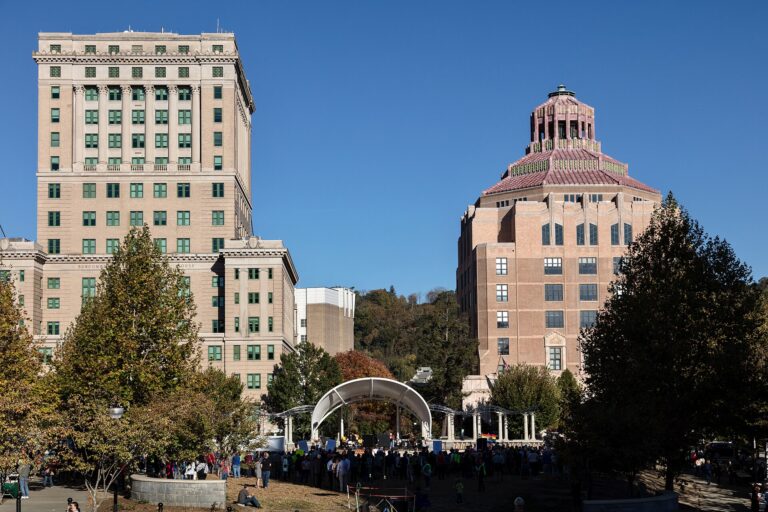
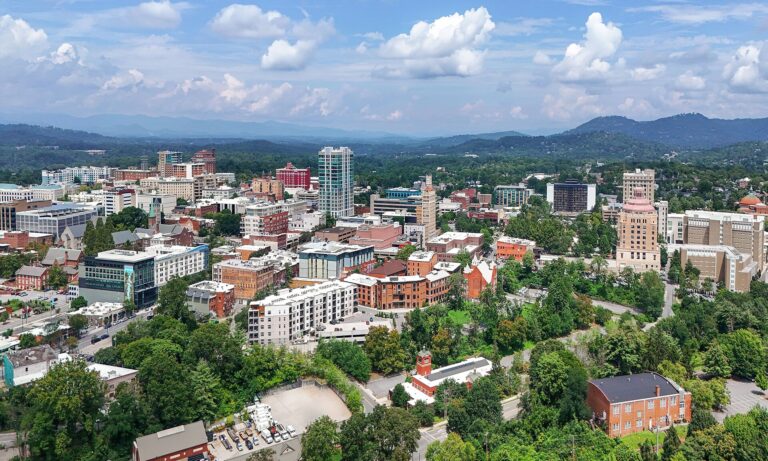
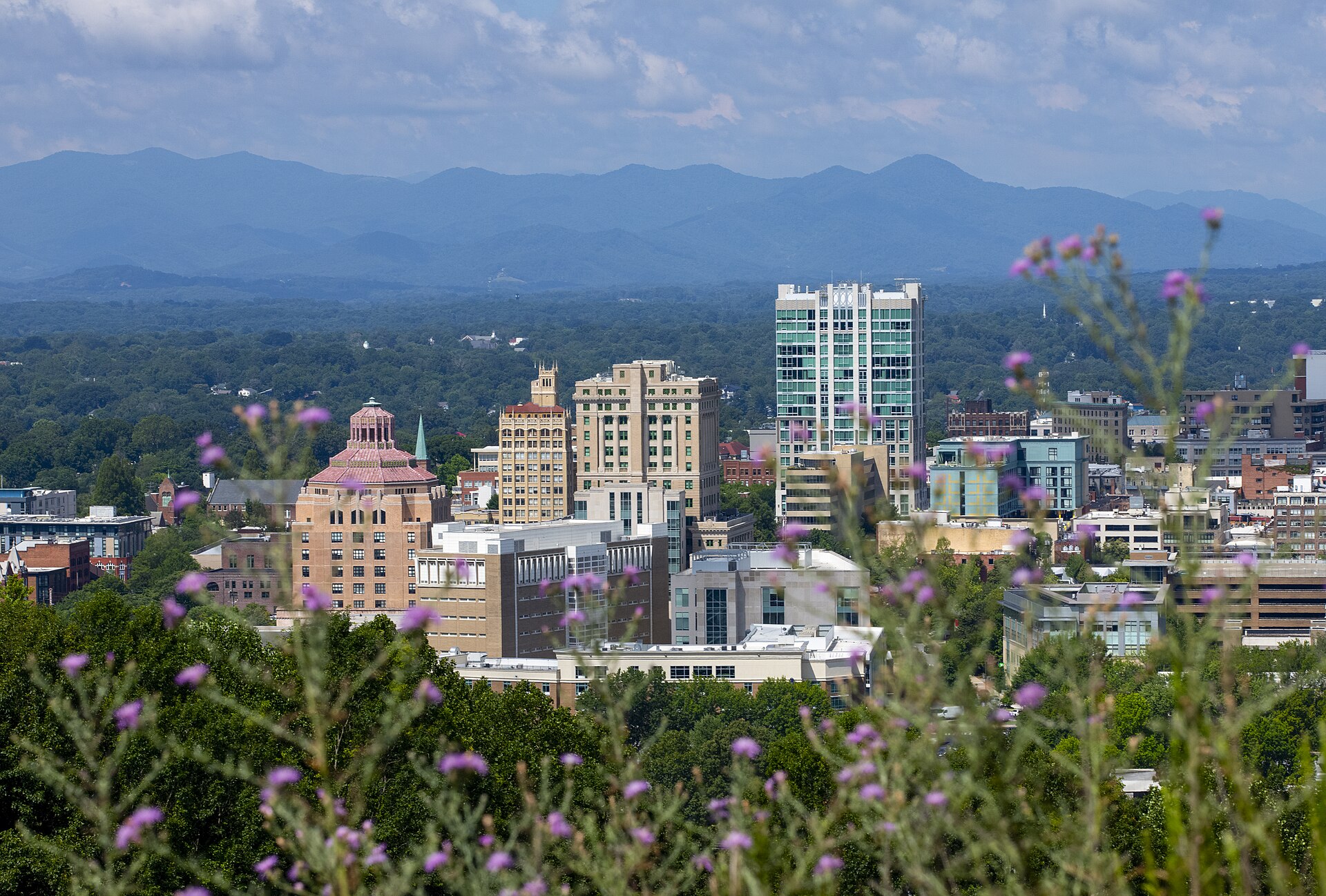
Photo: Asheville Photography, CC BY-SA 4.0, via Wikimedia Commons.