Sarasota, FL Cost of Living in 2026: Housing and More
Sarasota is a Gulf Coast city of 56,218 people where the median home value of $409,700 sits well above Florida’s $325,000, while the median gross rent of $1,514 is slightly below the state figure. Those Census numbers cover 2019 to 2023, before Hurricane Helene damaged or destroyed 3,137 buildings in Sarasota County in September 2024 and Hurricane Milton made landfall near Siesta Key that October, putting insurance and flood risk into every housing decision here. This guide breaks down housing, groceries, transportation, healthcare and entertainment costs, and marks which figures are Census data and which are estimates.
Before you make any decisions, you need to know what things actually cost here. So let us get into the numbers.
Sarasota at a Glance
Sarasota sits on Florida’s southwest Gulf Coast. It fronts Sarasota Bay, with barrier islands including Siesta Key and Lido Key sitting just offshore. The geography alone drives demand, and demand drives prices.
The U.S. Census Bureau’s 2019 to 2023 American Community Survey puts Sarasota’s population at 56,218, which keeps it firmly in small-city territory. The median age is 49.3 years, making it one of the older mid-sized cities in Florida, a state already skewing older. That age profile shapes everything from the pace of daily life to where restaurants cluster to what local politics prioritize.
The median household income is $70,065 per year, which sounds solid until you factor in Florida’s lack of state income tax (a genuine plus) alongside rising housing costs and a poverty rate of 14.3% that signals real economic stratification. The city has money, but it is not evenly spread. The unemployment rate sits at 3.6%, below the national 5.2% in the same 2019 to 2023 Census survey, and 41.7% of residents hold a bachelor’s degree or higher, reflecting a reasonably educated workforce.
The vibe is hard to pin down cleanly. Downtown Sarasota has legitimate cultural weight: the Ringling Museum, a strong arts scene, a walkable restaurant corridor on Main Street. The barrier island beaches rank among the best in the country by most measures. But the city also sprawls, and relies heavily on cars. It is not a retirement village, but it is not a young professional hub either. It is something in between, and that ambiguity is either a feature or a bug depending on what you want.
Housing Costs: Renting and Buying in 2026
Housing is where Sarasota’s cost story gets complicated fast.
Renting
The Census-verified median gross rent is $1,514 per month, but that figure reflects conditions through 2023 and the market has continued moving. Check current listings before you set a budget.
The most affordable rental pockets tend to be in the North Sarasota corridor along US-301, the Newtown neighborhood, and parts of South Sarasota near Bee Ridge Road. These areas are not glamorous, but they are functional and substantially cheaper than anything close to the water.
Midrange renters typically target the South Osprey Avenue corridor, the Rosemary District, and areas near Fruitville Road inside the city limits. These neighborhoods offer reasonable access to downtown without the waterfront premium.
Buying
The Census-verified median home value is $409,700, a figure that reflects conditions through 2023, so check current sales data for any area you are considering. A few areas to know:
- Southgate and Gulf Gate (both unincorporated communities south of the city limits): Southgate is an older suburb built in the early 1960s, and almost all of its homes are one story.
- Palmer Ranch (unincorporated, south of the city limits): A planned community between Sarasota and Osprey.
The homeownership rate of 55.7% suggests that owning is achievable for a meaningful portion of residents, but that also means nearly half of Sarasotans are renting in a market where landlord leverage is significant.
Food and Groceries
Publix is the largest supermarket chain in Florida. Walmart runs Supercenters in Sarasota, including one on Cattlemen Road. Whole Foods operates a downtown store on 1st Street for those willing to pay the premium. The Saturday Sarasota Farmers Market, centered at Main Street and Lemon Avenue downtown and open 7 a.m. to 1 p.m. year-round, is a good source of produce, though it is more of a supplement than a weekly shop.
For eating out, St. Armands Circle, the shopping circle John Ringling laid out on St. Armands Key, draws a tourist crowd, while Main Street and the Rosemary District serve downtown.
Transportation
Do not move to Sarasota expecting to go car-free. It will not work for the vast majority of people. Breeze Transit, the Sarasota County bus system formerly known as SCAT, operates bus routes, but coverage is limited, frequency is low, and getting to a job in, say, the Cattlemen Road corridor from a residential area without a car adds serious time friction to every workday.
Most residents budget for at least one car.
Healthcare
Healthcare access in Sarasota is above average for a city its size, which matters if you are moving from a larger metro and want to avoid a gap in specialist availability.
Sarasota Memorial Hospital is the anchor institution, a publicly owned regional medical center with roughly 900 beds that has appeared repeatedly in national hospital rankings. HCA Florida Sarasota Doctors Hospital provides a second major option. Sarasota Memorial has drawn national recognition for cancer care, cardiology and orthopedic surgery.
Florida did not expand Medicaid, which means residents falling below 100% of the federal poverty level can face a coverage gap. Given the city’s 14.3% poverty rate, this is a real issue for a meaningful portion of the population.
Entertainment and Lifestyle
This is where Sarasota genuinely punches above its weight class. The Ringling Museum of Art is legitimately world-class and costs $30 for adults for general museum admission, which covers the Museum of Art, Circus Museum and Bayfront Gardens. The Sarasota Opera, Asolo Repertory Theatre, and the Florida Studio Theatre all maintain professional-grade programming, with Sarasota Opera staging a fall production and its Winter Opera Festival in February and March. For a city of 56,000, the cultural density is remarkable.
Siesta Key Beach consistently places in national top-ten lists, and the quartz sand is not hype. Kayakers paddle the mangrove tunnels off Lido Key, and Myakka River State Park, which has canoe and bike rentals on site, is popular for canoeing and kayaking.
Sarasota vs. Tampa and Fort Myers
Benchmarking Sarasota against its neighbors puts the costs in sharper context.
Sarasota vs. Tampa
Tampa has a population roughly seven times larger and a larger job market. In the same 2019 to 2023 Census survey, Tampa’s median gross rent was $1,567, just above Sarasota’s $1,514, and its median home value was $375,300, below Sarasota’s $409,700. Tampa wins on job variety, nightlife, and sports. Sarasota wins on beach proximity, walkable downtown scale, and pace of life.
Sarasota vs. Fort Myers
Fort Myers offers lower housing costs across the board, with median home values running roughly $50,000 to $80,000 below Sarasota’s. Rentals are also softer. But Fort Myers carries more hurricane exposure (as Lee County residents learned painfully in 2022 with Hurricane Ian), a less developed cultural scene, and a downtown that is still rebuilding its identity. Sarasota is not sheltered from storms either: Hurricane Milton made landfall near Siesta Key in October 2024, weeks after Hurricane Helene’s storm surge. Its more mature amenity base justifies the price premium for many buyers, but insurance and flood risk belong in any budget.
Honest Pros and Cons
The Real Upsides
- Beaches that actually deliver. Siesta Key is not marketing copy. The water is warm, the sand is white, and public access exists.
- Cultural depth for the city’s size. The arts calendar rivals cities three times larger.
- No state income tax. On a $70,000 income, that is a meaningful annual saving compared to states like California or New York.
- Healthcare access. Sarasota Memorial is a genuine regional asset.
- Walkable downtown core. Main Street and the Rosemary District are legitimately pleasant on foot, a rarity in Florida.
The Real Downsides
- Housing affordability is strained. At the $70,065 median income, buying near the $409,700 median home value requires financial discipline or a second income.
- Car dependence is real and expensive. Insurance, gas and maintenance add up, and most households need a car.
- Seasonal crowding is not a small thing. In the winter season, traffic, restaurant waits, and beach parking transform the experience.
- Limited job market variety. The local economy is based on tourism, healthcare, education, and real estate.
- Income inequality is visible. The 14.3% poverty rate sits alongside significant wealth concentration, and the gap shapes the city’s politics and services.
Who Sarasota Actually Works For
The Pre-Retiree or Retiree with Equity
The median age of 49.3 years reflects who already chose Sarasota. Someone arriving with equity from a sold home in Chicago, Boston, or the Northeast suburbs can buy comfortably at or below the $409,700 median and pocket the difference. The healthcare infrastructure, cultural programming, and beach access make daily life genuinely rewarding at this life stage.
The Remote Worker with a Portable Income
If you can work from anywhere and earn above the median, Sarasota makes strong financial sense compared to larger coastal cities. You trade commute culture and urban density for Gulf Coast access and a smaller-city pace. The tradeoff is real but favorable if your income travels with you.
The Healthcare or Hospitality Professional
Sarasota Memorial and the broader tourism ecosystem generate steady local employment in nursing, allied health, hotel management, and food service. These are not high-income roles, but they are stable, and a dual-income household in these fields can navigate the housing market with planning.
The Arts and Culture Seeker Who Wants Smaller Scale
If you want a city with a real cultural calendar but find Miami or Tampa overwhelming, Sarasota offers a genuine alternative. The Asolo Repertory Theatre, Sarasota Opera, and robust gallery scene are not consolation prizes. For someone who attends performances regularly and values that environment, the premium over cheaper Florida cities is defensible.
Final Verdict
Sarasota is not a cheap place to live, and anyone telling you otherwise is selling something. The math is real: a $70,065 median income against a $409,700 median home value and rents trending above $1,500 per month leaves limited margin, especially once car costs and health insurance enter the picture.
But the value equation flips depending on what you bring to it. Arrive with equity, a remote income, or a two-income household, and Sarasota delivers a quality of life that larger, pricier cities struggle to match at any budget. The beaches are legitimate, the cultural scene is unusually strong, and the city is small enough that you actually learn your neighborhood.
The honest conclusion is this: Sarasota rewards people who arrive financially prepared and penalizes those who arrive hoping the low state taxes alone will make it work. Know your numbers before you sign a lease or make an offer. The city itself is worth it. Getting your budget wrong here is expensive.
Frequently Asked Questions
What is the average rent in Sarasota, FL in 2026?
Is Sarasota, FL expensive compared to the rest of Florida?
What salary do you need to live comfortably in Sarasota, FL?
What are the safest and most affordable neighborhoods in Sarasota?
Is Sarasota, FL a good place to retire in 2026?
Sources & methodology. Demographic and economic figures in this guide are drawn from the U.S. Census Bureau, 2019 to 2023 American Community Survey 5-Year Estimates. A newer 2020 to 2024 release came out on January 29, 2026; this guide still uses the 2019 to 2023 figures. Other figures come from the sources named next to them.
Last reviewed September 2026.
How this guide was made. Figures come from the U.S. Census Bureau ACS 2019 to 2023 5-year estimates and the other sources named next to each number. A first draft was written with the help of an AI language model; every place name, price, date and claim was then checked against primary sources by the Small City Guide editors (see About and Methodology). Last verified: September 26, 2026.
What changed: Fact-checked against primary sources in September 2026: 15 statements corrected, opening rewritten, photo replaced with a credited image of the city.
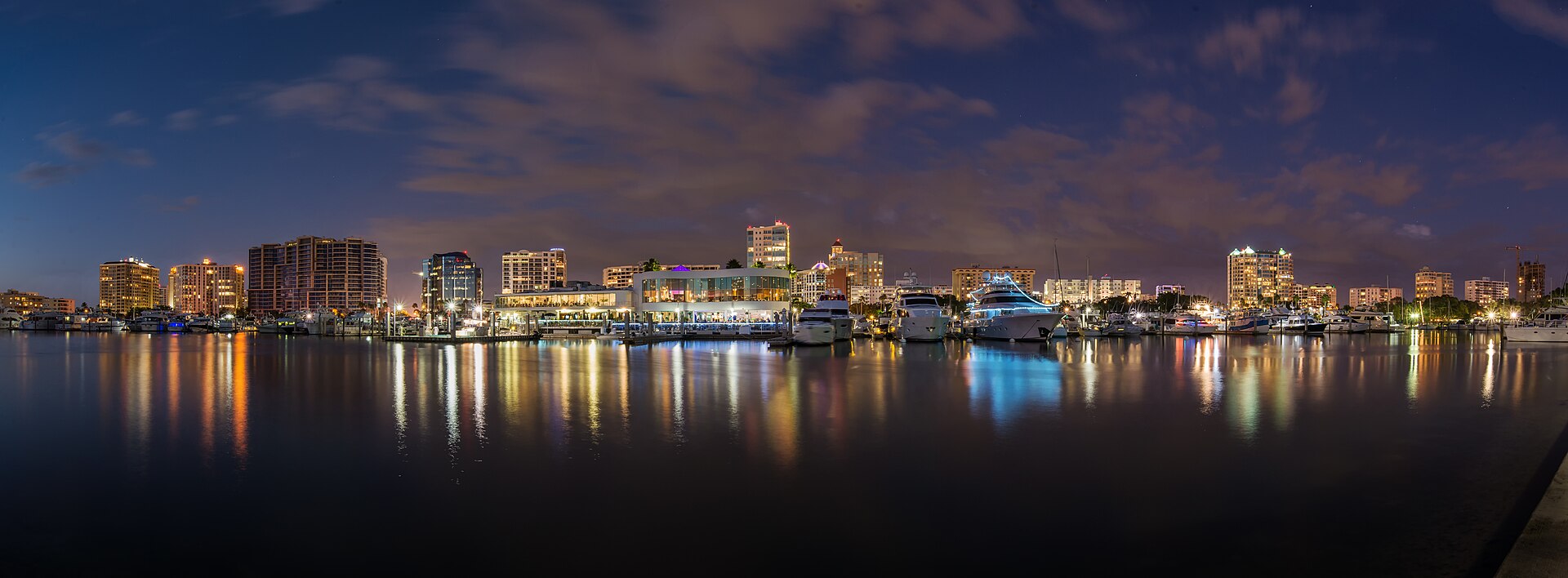
Photo: Gregory Urbano from St. Petersburg, Florida, USA, CC BY 2.0, via Wikimedia Commons.