Chandler, AZ Cost of Living in 2026: Housing, Jobs, Taxes
Chandler’s median household income is $103,691 and median gross rent is $1,806 a month, according to the Census Bureau’s 2019 to 2023 American Community Survey. That puts rent at about 21% of gross income for a median household, before HOA fees, summer cooling bills and the cost of a car, which almost every resident needs. Intel, the city’s largest employer, anchors a job base built around its Chandler chip campuses.
Chandler at a Glance: City, Vibe, and Location
Chandler is an East Valley suburb in the Phoenix metro, with Tempe directly across its northwestern border. With a population of 278,123, it is a full-sized city that still manages to feel like a suburb in the best and worst senses of that word. Streets are wide, parking is plentiful, and downtown Chandler centers on Dr. A.J. Chandler Park, which has a stage plaza and a grassy field used for city special events.
The median age of 37.4 years tracks with what you see on the ground: this is a city of young-to-mid-career professionals, dual-income households, and families with school-age kids. The tech sector is a real presence. Intel, first on the city’s January 2024 leading employer list with 12,000 employees, runs its Ocotillo chip campus in Chandler, TSMC’s chip plant in north Phoenix began production in 2025, and a wave of semiconductor and advanced manufacturing investment has made Chandler a legitimate employment hub rather than just a bedroom community. That helps explain why 46.8% of residents hold a bachelor’s degree or higher, well above the national figure of 35.0% in the same 2019 to 2023 survey.
The unemployment rate sits at 3.6% and the poverty rate is 7.7%. These are not vanity numbers. They reflect a local economy that generates real jobs at decent wages, which in turn sustains the housing prices you are about to read.
Housing Costs: Renting and Buying in 2026
Renting
The Census-verified median gross rent is $1,806 per month. Asking rents depend on the age of the complex and its amenities, and extras such as pet rent and covered parking add to the monthly total.
Buying
The Census-reported median home value is $469,800. That figure was captured in the 2019 to 2023 ACS window, so check current listings before setting a budget.
Chandler’s homeownership rate of 65.6% is meaningful context here. It is in line with the national rate, which the Census Bureau’s Housing Vacancy Survey put at 65.6% for 2024.
Food and Groceries
Grocery options in Chandler include Trader Joe’s on South Arizona Avenue and Sprouts Farmers Market on South Alma School Road.
Eating out is where the bill climbs fast. Restaurant options include the area around Chandler Fashion Center on West Chandler Boulevard, and chains such as Chipotle and Jersey Mike’s have locations in the city.
Transportation
Own a car. That is not a recommendation, it is a requirement for most residents. The city’s bus service is operated by Valley Metro, with 11 routes that connect to Mesa, Tempe and the Valley Metro light rail, which does not run into Chandler. With average highs of 104 to 106 degrees from June through August, cycling to work along the Price Road Corridor is a challenge in summer.
Fuel, insurance, registration and any car payment make up most of the transportation budget, so price them for your own vehicle before you move.
Downtown Chandler’s public garages are free at any time at the Overstreet and Oregon Street garages, and free after 5 p.m. and on weekends at the others, according to the city.
Healthcare
Chandler is well served for a city its size. Chandler Regional Medical Center, a Dignity Health hospital at Frye and Dobson roads, offers cardiovascular and orthopedic services and has a Level I trauma center. Banner Health operates Banner Ocotillo Medical Center, which opened in November 2020 as the city’s second hospital.
For insured residents, costs depend on the plan. Compare marketplace plans for Maricopa County and your employer’s options before you move.
Entertainment and Lifestyle
Chandler’s lifestyle is heavily oriented around outdoor comfort, fitness culture, and family activities. The Desert Breeze Park complex has a railroad, splash pad, and sports courts. The Chandler Center for the Arts is a 1,500-seat regional performing arts venue shared by the city and the Chandler Unified School District. San Tan Mountain Regional Park, a Maricopa County park of about 10,200 acres roughly 30 miles southeast of downtown Phoenix, is used for hiking, cycling and horseback riding.
Whirlwind Golf Club at Wild Horse Pass, just outside Chandler’s southern border in the Gila River Indian Community, has two courses and hosts the LPGA’s Ford Championship each March. LA Fitness has a Chandler club on South Arizona Avenue.
The summer heat is a real lifestyle tax. Average highs reach 104 to 106 degrees from June through August, so most outdoor activities shift to early morning or evening. Pools are essential rather than optional, and summer cooling bills belong in your annual budget math.
How Chandler Compares to Phoenix and Scottsdale
Phoenix has a lower citywide median home value than Chandler, $381,900 versus $469,800 in the Census Bureau’s 2019 to 2023 survey, and a lower median gross rent, $1,458 versus $1,806. Costs vary widely between Phoenix neighborhoods.
Scottsdale is the sharper contrast. Scottsdale’s median home value was $709,900 and its median gross rent $1,910 in the same survey. Old Town Scottsdale, with its restaurants, bars, nightclubs and art galleries, is the area’s main nightlife district, but the housing premium is substantial.
Where Phoenix beats Chandler is rail transit: Valley Metro light rail runs through Phoenix, while Chandler relies on buses that connect to the rail line.
Honest Pros and Cons
Pros
- Strong job market: Intel, Wells Fargo, PayPal, and a deep bench of tech and semiconductor employers create real career optionality without requiring a move to California.
- Relatively affordable for the metro: At a $469,800 median home value and $1,806 median rent, Chandler is cheaper than Scottsdale, where the same survey shows $709,900 and $1,910.
- Low unemployment: At 3.6%, the local labor market is genuinely tight, which matters for job seekers and for the secondary spending that supports local businesses.
- Well-planned infrastructure: Roads are maintained, retail access is excellent, and new development continues to add amenities rather than strain them.
Cons
- Car dependency is total: Without a car, daily life is genuinely difficult. There is no workaround.
- Summer is brutal: Triple-digit heat from June through August is not a quirk, it is a lifestyle constraint. Electricity bills spike, outdoor activity shrinks, and newcomers often underestimate the psychological adjustment.
- HOA culture is pervasive: Subdivisions such as Fulton Ranch and Sun Groves have homeowners associations, which add fees and rules that some residents find restrictive.
- Limited walkability outside downtown: The urban core is small. Most errands require a car even in otherwise convenient neighborhoods.
- Rising home prices: The $469,800 Census median is a trailing figure. Check current listings, and expect first-time buyers to need careful neighborhood selection.
Who Chandler Actually Makes Sense For
The Tech Professional or Dual-Income Couple
If you are in semiconductor, fintech, or software and your employer is on or near the Price Road Corridor, Chandler is a logical base. The median household income of $103,691 reflects the kind of compensation these roles generate, and at that income level the housing costs are manageable.
The Growing Family Seeking School Quality
Chandler is served by Chandler Unified School District, which had 4,900 employees on the city’s January 2024 leading employer list, and parts of the city fall in the Kyrene, Tempe Union, Mesa and Gilbert districts, so check the attendance boundary for any home you consider. Home values are well below Scottsdale’s. The city’s 65.6% homeownership rate suggests a lot of families have made exactly this calculation.
The Phoenix Transplant Seeking More Space
If you have been renting a one-bedroom in central Phoenix and want a two-bedroom with a yard and a garage, Chandler’s rental market is worth a look. The tradeoff is longer commutes to Phoenix’s urban core and less spontaneous nightlife access, but for people who have aged out of bar-hopping proximity, it barely registers.
The Remote Worker Who Wants Sun and Low State Taxes
Arizona’s flat 2.5% income tax rate and Chandler’s combination of newer housing, reliable infrastructure, and outdoor access make it genuinely competitive for remote workers relocating from high-cost coastal metros. Someone earning $120,000 remotely and moving from the Bay Area or Seattle will see a material quality-of-life improvement even accounting for the summer adjustment period.
The Bottom Line
Chandler is not cheap in absolute terms. A comfortable life here means budgeting for one car, a two-bedroom apartment or starter home, groceries, dining out a couple of times a week, and a gym membership. Against a median household income of $103,691, those costs are manageable for many two-income households. The low poverty rate of 7.7% and unemployment rate of 3.6% are signals that Chandler’s economy is generating real opportunity, not just housing demand. For the right household, the numbers add up. The question is whether you are ready to own a car, embrace air conditioning as a lifestyle, and trade urban density for space, schools, and stability.
Frequently Asked Questions
What is the average rent in Chandler AZ in 2026?
Is Chandler AZ expensive to live in compared to Phoenix?
What salary do you need to live comfortably in Chandler AZ?
What are the best neighborhoods in Chandler AZ for families?
How hot does it get in Chandler AZ and how does it affect costs?
Sources & methodology. Demographic and economic figures in this guide are drawn from the U.S. Census Bureau, 2019 to 2023 American Community Survey 5-Year Estimates. A newer 2020 to 2024 release came out on January 29, 2026; this guide still uses the 2019 to 2023 figures. Other figures come from the sources named next to them.
Last reviewed September 2026.
How this guide was made. Figures come from the U.S. Census Bureau ACS 2019 to 2023 5-year estimates and the other sources named next to each number. A first draft was written with the help of an AI language model; every place name, price, date and claim was then checked against primary sources by the Small City Guide editors (see About and Methodology). Last verified: September 26, 2026.
What changed: Fact-checked against primary sources in September 2026: 7 statements corrected, opening rewritten, photo replaced with a credited image of the city.
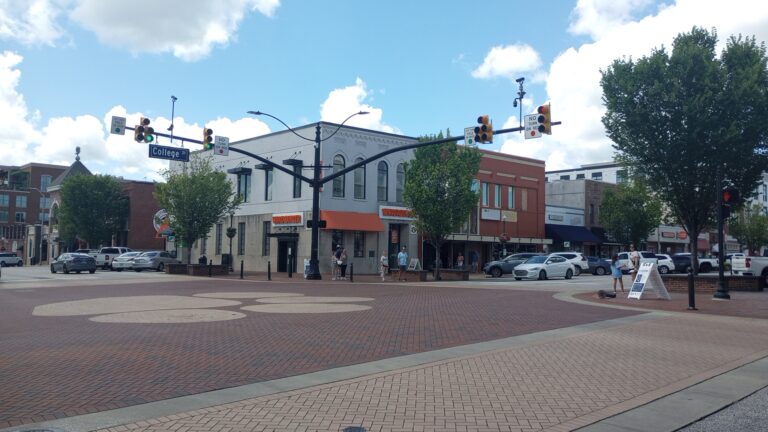
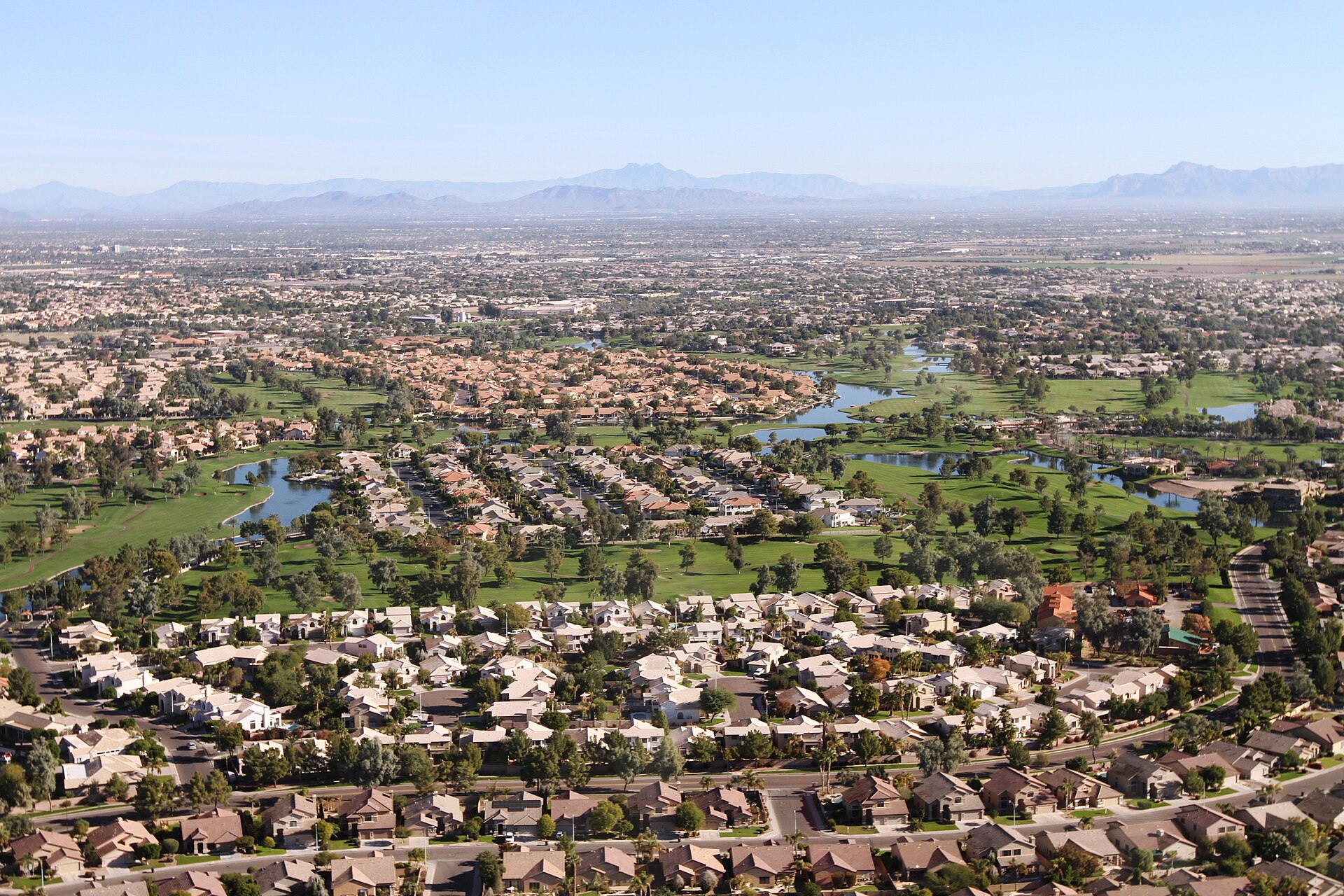
Photo: Chandlernews, CC BY-SA 4.0, via Wikimedia Commons.