Boise, ID Jobs in 2026: Employers, Wages, Where to Look
Boise’s job market in 2026 is anchored by St. Luke’s Health System, Idaho’s largest private employer, and by Micron Technology, headquartered at 8000 S. Federal Way, which is building a new fab, opened a training center in August 2026 and plans a $10 billion research campus in the city. The Boise metro’s unemployment rate was 3.3 percent in July 2026 according to the Bureau of Labor Statistics, and the median software developer here earned $131,590 in the May 2025 BLS wage survey. This guide lists the major employers, what typical roles actually pay, and where local postings show up first.
Boise Job Market Overview 2026
The Boise metro’s unemployment rate was 3.3% in July 2026 (preliminary, not seasonally adjusted), according to the Bureau of Labor Statistics, well below the national rate of 4.4% on the same basis; the 3.8% figure in the box above is the 2019 to 2023 Census survey average, not a current reading. Either way, it reflects a city where most people who want work can find it, but where employers are also competitive about who they hire. This isn’t a market where you can casually drift into a high-paying role without preparation.
The median household income of $81,308 per year tells an interesting story. On paper, that’s a solid middle-class wage. In practice, it goes further than it would in Seattle or Denver, but not as far as it once did. A household earning the median income can reasonably afford a rental without the crushing rent-burden common in coastal metros, but buying a home requires a meaningful down payment and a salary closer to the top of the local range.
That educational density is both an asset and a reality check: competition for professional roles is genuine, and employers here have options. Service-sector and hourly workers face a cost of living that has risen faster than their wages in recent years.
Top 5 Employers in Boise
1. St. Luke’s Health System
St. Luke’s is the largest private employer in the Treasure Valley and arguably the most consequential institution in Boise’s economy. The system employs thousands across its hospitals, clinics, and specialty centers throughout the region. Roles range from registered nurses and surgical technicians to health IT specialists and administrative staff. Its growth mirrors Idaho’s broader population surge and the resulting demand for healthcare infrastructure.
2. Micron Technology
Micron is Boise’s most prominent tech anchor. The semiconductor giant has its global headquarters here, and its presence has been the foundation of the city’s tech identity for decades. Micron employs engineers, data scientists, manufacturing technicians, and supply chain professionals. Its workforce needs are specialized, and salaries at the upper end of Micron’s pay scale significantly outpace the local median. Micron is finishing a $15 billion leading-edge memory fab at its Boise campus (its cleanroom reached the ‘blowdown’ milestone in spring 2026), is seeking annexation of part of its land into the City of Boise as it plans a second fab (the Planning and Zoning Commission recommended approval in July 2026), opened a 60,000-square-foot Micron Training Center in Boise in August 2026, and announced Micron Research Labs, a $10 billion research hub headquartered in Boise with groundbreaking planned for 2027.
3. St. Alphonsus Regional Medical Center (Trinity Health)
The second major healthcare pillar in Boise, St. Alphonsus operates as part of the Trinity Health network and employs a broad clinical and administrative workforce. Competition between St. Luke’s and St. Alphonsus has had a meaningful effect on wages and benefits for healthcare workers in the area, which is good news if you’re entering that field.
4. Boise State University
With an enrollment that has climbed past 25,000, Boise State is a major employer of faculty, researchers, administrators, and support staff. It also functions as an economic engine, spinning off startups, attracting research grants, and training the workforce that local employers need. If you work in higher education or research, BSU is the obvious anchor institution to target.
5. HP Inc. (leaving Boise by end of 2027)
HP Inc., the printing and PC company created in the 2015 Hewlett-Packard split, developed the LaserJet in Boise and still has about 1,100 employees at its Boise site. In March 2026 it announced it will exit the Boise facility by the end of 2027, offering some employees relocation or telework, so treat it as a shrinking employer rather than a long-term anchor.
Fastest-Growing Sectors in 2026
Technology is the obvious headline. The semiconductor ecosystem anchored by Micron has attracted a cluster of suppliers, contract manufacturers, and software firms. But the growth isn’t monolithic. Cybersecurity, cloud services, and software-as-a-service companies have been establishing offices and remote-friendly hubs in Boise, drawn by lower operating costs and the growing local talent pipeline.
Healthcare is the other dominant growth story. Idaho’s population has grown rapidly, and the healthcare system is playing catch-up. Demand for nurses, physician assistants, physical therapists, and behavioral health specialists is acute. That gap between supply and demand has pushed wages up and made Boise one of the more competitive markets for healthcare professionals in the inland West.
Construction and skilled trades are surging, driven directly by population growth and the housing development required to house it. Electricians, HVAC technicians, plumbers, and project managers are in consistent demand. This is one area where a four-year degree is not the gatekeeper, and earnings often surprise people from out of state.
Logistics and distribution have expanded alongside Boise’s role as a regional hub for the Mountain West. E-commerce growth has pushed warehouse, operations, and supply chain roles into meaningful volume. These aren’t always glamorous positions, but they’re stable and, in supervisory roles, decently compensated.
Remote-Friendly Options
Boise has become a genuine destination for remote workers, not just a place people mention in passing. The combination of relatively affordable rent (at $1,359 per month median), outdoor access, and a functioning city infrastructure has made it attractive for people employed by companies based elsewhere. If you’re considering relocating while keeping a remote job, Boise works well logistically: it has a regional airport with direct flights to major hubs and a growing number of coworking options such as Trailhead, the nonprofit startup hub at 408 S. 8th St. that sells coworking memberships.
For those seeking remote-first employers based in Idaho, the tech sector is your best bet. The best-known Boise-headquartered software company is Clearwater Analytics, at 777 W. Main St. downtown. Bodybuilding.com, once a large local employer, now lists a Boca Raton, Florida address and is no longer a Boise company. But be realistic: many of Boise’s largest employers, especially in healthcare and trades, are inherently on-site. Remote work here tends to cluster in tech, finance, and marketing roles.
Typical Salaries by Major Role
Salaries in Boise are meaningfully lower than in San Francisco or Seattle, but so is the cost of living. Here’s an honest range for major categories as of 2026:
- Software Developer: roughly $100,000 to $161,000 per year (25th to 75th percentile), with a median of $131,590 across about 3,240 developers in the Boise metro, per the May 2025 BLS wage survey, depending on experience and employer. Micron anchors the upper range. Startups often pay less in base salary but may offer equity.
- Registered Nurse: roughly $81,000 to $103,000 per year (25th to 75th percentile), with a median of $97,880 and about 8,550 RNs employed in the metro (BLS, May 2025). Travel nurse premiums push some temporary roles higher. The St. Luke’s vs. St. Alphonsus competition has nudged base wages upward in recent years.
- K-12 Teacher: roughly $48,000 to $71,000 per year for elementary teachers and $50,000 to $79,000 for secondary teachers (25th to 75th percentile), with a median near $61,000 in the Boise metro, per the May 2025 BLS wage survey. Idaho’s teacher pay has historically been a sore point, and salaries at the lower end require careful budgeting, especially for anyone carrying student loan debt. This remains one of the more challenging career choices financially in this market.
- Electrician (Journeyman): roughly $49,000 to $82,000 per year (25th to 75th percentile), with a median of $61,610 (BLS, May 2025). Overtime is common and can push take-home pay significantly higher.
- HVAC Technician: roughly $47,500 to $66,000 per year (25th to 75th percentile), with a median of $57,270 (BLS, May 2025), with Idaho’s seasonal temperature swings meaning consistent demand year-round.
- Physical Therapist: roughly $91,000 to $104,000 per year (25th to 75th percentile), with a median of $100,120 (BLS, May 2025). High demand, especially for outpatient clinic roles.
Unemployment Rate and What It Means
A 3.3% metro unemployment rate (BLS, July 2026) is the kind of figure that looks clean in a data table but requires context in real life. In Boise, it reflects a market where layoffs in tech (which hit remote workers here as hard as anywhere else in 2023 and 2024) have largely been absorbed. The healthcare and trades sectors have taken up slack. For someone entering the market mid-career with transferable skills, 3.8% means you’ll likely find something. It doesn’t mean you’ll find the right thing quickly. Specialized roles in semiconductor engineering or healthcare administration can still take months to land.
Where to Look for Jobs in Boise
The obvious national platforms, LinkedIn, Indeed, and Glassdoor, all have active Boise listings. LinkedIn is particularly effective here because Boise’s professional community is small enough that second-degree connections actually matter. A warm introduction from someone at Micron or St. Luke’s carries real weight in a city where people know each other.
For local-specific resources:
- Idaho Department of Labor Job Service: The state job board (labor.idaho.gov) is underused but lists positions from employers who post locally first, especially in trades and government.
- Trailhead Boise: The city’s startup and innovation hub sells coworking memberships, runs the Trail Guides mentorship program and produces Boise Pitch Night and hosts Boise Entrepreneur Week (September 28 to October 2 in 2026). It does not run a public job board, but its events are a way to meet people in Boise’s startup scene.
- Boise State Career Services: Open to alumni and, for some events, community members. Particularly useful for entry-level and mid-career professionals in education, business, and tech.
One LinkedIn tip specific to this market: filter your search to “Boise, Idaho” but also include “Treasure Valley,” as many employers (especially those based in Nampa or Meridian) use that regional label. Setting up job alerts for both terms will prevent you from missing postings.
Commute Considerations
Boise is still largely a car-dependent city. The good news: commutes that would be nightmarish in a larger metro are manageable here. The Treasure Valley is sprawling, though, and drive times from suburbs like Meridian or Eagle, or to jobs in Nampa, grow during the morning rush.
Valley Regional Transit operates bus routes, but honest coverage is limited. For most professional roles, a car is not optional. Cycling infrastructure exists and is genuinely used in good weather, particularly for North End residents commuting to downtown. The Greenbelt path network makes car-free commuting viable for a narrow slice of the population living and working in the right corridors.
For remote or hybrid workers, this matters less. But it’s worth understanding before you choose a neighborhood. Living in the East End and commuting to an employer in Nampa is a fundamentally different daily experience than living in Meridian and working downtown.
Career Profiles: Who Thrives in Boise’s Job Market
Not every professional is equally well-positioned here. Based on the market structure, these are the profiles that tend to do well:
The mid-career tech professional relocating from a high-cost city. If you’re earning a Seattle or Bay Area salary remotely and you move to Boise, your income buys dramatically more. Even at local tech salaries, you’re competing for homes in a market where the median is $456,000, which is expensive by Idaho standards but approachable compared to where you came from.
The healthcare worker with a portable license. Idaho is actively recruiting nurses, PAs, and therapists. If your credentials transfer and you’re willing to work in a growing but still-developing healthcare system, you’ll find competitive offers and, in many specialties, signing bonuses.
The skilled tradesperson. Electricians, plumbers, and HVAC technicians who move here often find immediate work, strong earning potential, and a lower cost of living than comparable markets in the Pacific Northwest.
The educator with realistic expectations. Teachers can build a good life in Boise, but salary constraints are real. Those who thrive here tend to be people for whom quality of life (access to outdoors, short commutes, community feel) genuinely compensates for a salary that wouldn’t stretch in a more expensive city.
Who struggles? Creative professionals in film, music, or fashion will find limited industry infrastructure. Highly specialized legal or finance professionals may find the market shallow for their specific niche. And anyone banking on a startup exit should know that Boise’s startup ecosystem is growing but still early-stage by national standards.
Boise in 2026 is a market that rewards people who come prepared, with specific skills, realistic salary expectations, and a willingness to engage in a community that is still figuring out what it wants to be as it grows. The ceiling, for the right professional, is genuinely high.
Frequently Asked Questions
What is the unemployment rate in Boise, ID in 2026?
What are the highest-paying jobs in Boise, Idaho?
Is Boise, Idaho a good place to find a job in tech?
What is the average salary in Boise, ID?
Where can I find job listings specific to Boise, Idaho?
Sources & methodology. Demographic and economic figures in this guide are drawn from the U.S. Census Bureau, 2019 to 2023 American Community Survey 5-Year Estimates. A newer 2020 to 2024 release came out on January 29, 2026; this guide still uses the 2019 to 2023 figures. Other figures come from the sources named next to them.
Last reviewed September 2026.
How this guide was made. Figures come from the U.S. Census Bureau ACS 2019 to 2023 5-year estimates and the other sources named next to each number. A first draft was written with the help of an AI language model; every place name, price, date and claim was then checked against primary sources by the Small City Guide editors (see About and Methodology). Last verified: September 26, 2026.
What changed: Fact-checked against primary sources in September 2026: 19 statements corrected, 6 off-topic Census sentences removed, opening rewritten, photo replaced with a credited image of the city. On September 27, 2026 every named place and figure was re-checked; details that could not be confirmed from a primary source were removed.
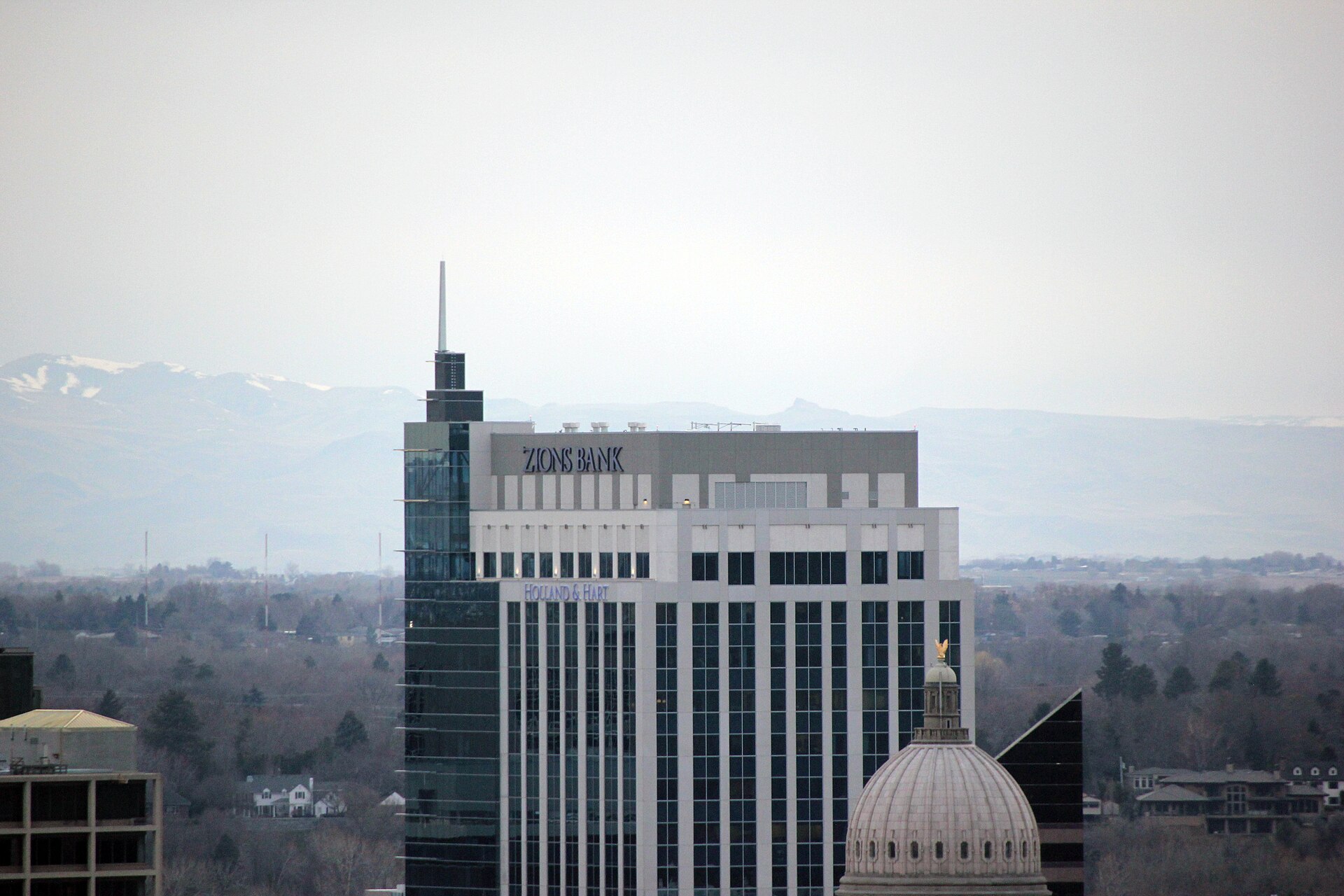
Photo: Ac530, CC BY 4.0, via Wikimedia Commons.