Pueblo, CO Cost of Living in 2026: Rent, Homes, Taxes
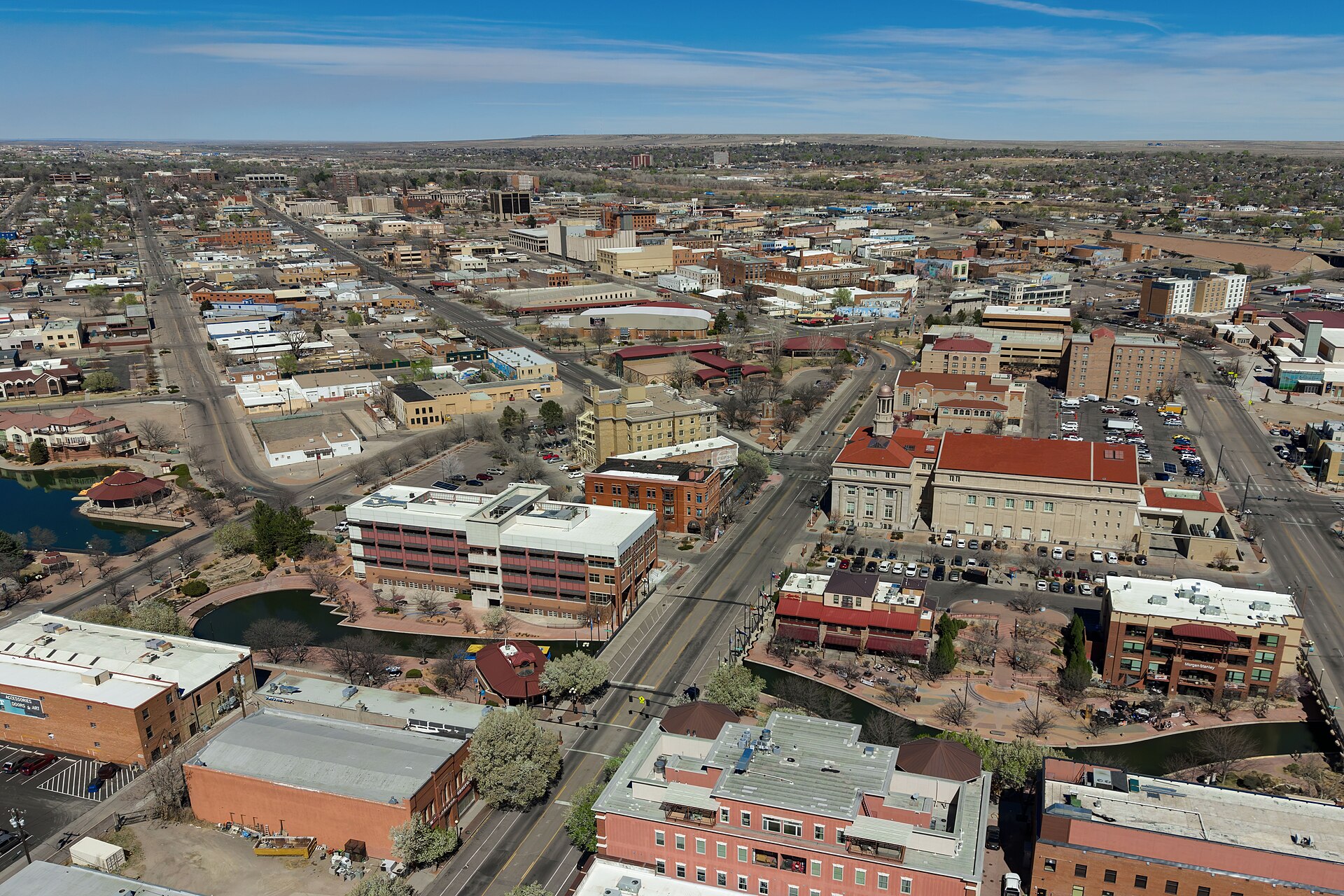
Pueblo is the county seat of Pueblo County and the largest city in it, sitting where Fountain Creek meets the Arkansas River about 112 miles south of the Colorado State Capitol in Denver (Wikipedia). The city counted 111,514 residents in the Census ACS 2019-2023 5-year estimates, and it is home to Colorado State University Pueblo and Pueblo Community College. Its long history as a steel town earned it the nickname “Steel City” (Wikipedia).
For someone leaving a large metro, the short version is that Pueblo’s housing costs sit well below the Colorado average, while incomes are also lower and the local jobless rate runs higher. The figures below come from federal and state sources, and each one links to where it was found.
What Renting in Pueblo Costs Against HUD’s 2026 Benchmarks
The Census puts Pueblo’s median gross rent at $1,020 a month (Census ACS 2019-2023 5-year estimates). Gross rent includes utilities the tenant pays, and because the survey covers 2019 through 2023, it reflects existing leases rather than what a newcomer will be quoted today.
A more current yardstick is HUD’s Fair Market Rent, the figure used for Housing Choice Vouchers. For fiscal year 2026, HUD set these values for the Pueblo, CO metro area, which covers all of Pueblo County (HUD FY2026 FMR schedule):
| Unit size | FY2026 Fair Market Rent | Income needed at 30% of gross pay |
|---|---|---|
| Studio | $875 | $35,000 |
| 1 bedroom | $967 | $38,680 |
| 2 bedrooms | $1,269 | $50,760 |
| 3 bedrooms | $1,617 | $64,680 |
| 4 bedrooms | $1,893 | $75,720 |
The right-hand column is simple arithmetic: monthly rent times 12, divided by 0.30, the common guideline that housing should take no more than 30% of gross income. A household at Pueblo’s median income of $55,305 (Census ACS 2019-2023 5-year estimates) clears the bar for a two-bedroom at $1,269 ($50,760 needed) but falls short for a three-bedroom at $1,617 ($64,680 needed).
HUD marks the Pueblo metro with a plus sign in its schedule, which means Small Area Fair Market Rents are required there for the voucher program (HUD FY2026 FMR schedule). In practice, voucher rent limits are set by ZIP code rather than one countywide number, so anyone moving with a voucher should look up the ZIP-level figure.
Measured against income, rent in Pueblo is not unusually light. The median gross rent of $1,020 equals 22.1% of the median household income ($1,020 x 12 / $55,305), almost identical to Colorado Springs at 22.5% ($1,562 x 12 / $83,198) and the state at 22.0% ($1,693 x 12 / $92,470), all from the same Census ACS 2019-2023 5-year estimates. The dollar amount is lower, but so are paychecks.
Buying a Home in Pueblo With Mortgage Rates Near 7%
Buying is where Pueblo stands apart. The median value of owner-occupied homes is $230,900, and about 61% of occupied housing units are owner-occupied (28,038 of 46,106), per the Census ACS 2019-2023 5-year estimates. Statewide, the median home value is $502,200 (Census ACS 2019-2023 5-year estimates).
Freddie Mac’s Primary Mortgage Market Survey put the average 30-year fixed rate at 7.03% for the week of September 24, 2026 (Freddie Mac PMMS). At that rate, a home priced at the Pueblo median of $230,900 with 20% down leaves a $184,720 loan and a principal-and-interest payment of about $1,233 a month. Property taxes, homeowners insurance and any HOA dues come on top of that, and those vary by property, so they are not included here.
The same math applied to the Colorado Springs median value of $420,700 (Census ACS 2019-2023 5-year estimates) gives a $336,560 loan and roughly $2,246 a month in principal and interest, about $1,013 more each month than the Pueblo example.
Another way to read the gap is the ratio of median home value to median household income. Pueblo comes in at 4.2 ($230,900 / $55,305), Colorado Springs at 5.1 ($420,700 / $83,198) and Colorado as a whole at 5.4 ($502,200 / $92,470), using the Census ACS 2019-2023 5-year estimates. A lower number means homes cost fewer years of the typical local income.
Pueblo’s 7.6% Sales Tax and Colorado’s 4.4% Income Tax
Pueblo collects its own city sales and use tax of 3.7% (City of Pueblo Sales Tax Division). The Colorado Department of Revenue’s rate table for July to December 2026 lists the full stack for the city as the 2.9% state tax, a 1% Pueblo County tax and the 3.7% city tax, for a combined 7.6% (Colorado DOR jurisdiction rate table).
The same table lists 8.2% for Colorado Springs and 9.15% for Denver (Colorado DOR jurisdiction rate table). On $1,000 of taxable purchases, that is $76 in Pueblo, $82 in Colorado Springs and $91.50 in Denver.
Colorado’s individual income tax is a flat rate. The Department of Revenue’s 2025 income tax booklet states that “the income tax rate is currently 4.4%” (Colorado DOR 2025 Book 104), which works out to $440 for every $10,000 of Colorado taxable income.
Hospitals, Colleges and Steel: What Keeps Pueblo Working
A hospital tops the employer list. UCHealth Parkview Medical Center is a nonprofit acute-care hospital with 266 staffed beds and a Level III trauma center, and Wikipedia reports it was the largest employer in the city as of 2024, with 3,000 employees (Wikipedia). St. Mary-Corwin Medical Center, part of the CommonSpirit Health network, has a Flight for Life base and a cancer and stroke center (Wikipedia). The Colorado Mental Health Institute at Pueblo, the former Colorado State Hospital, is another large employer; its Robert L. Hawkins High Security Forensic Institute opened in June 2009 with 200 beds (Wikipedia).
Education is the second pillar. Colorado State University Pueblo reports an enrollment of nearly 4,000 students (CSU Pueblo), and Pueblo Community College has three campuses, in Pueblo, Cañon City and Mancos (Pueblo Community College). Almost all of the city lies within Pueblo School District 60, with small portions in Pueblo County School District 70 (Wikipedia).
Heavy industry is the historic base. For nearly a century the Colorado Fuel and Iron steel mill on the south side was the largest employer in Colorado; after the 1982 steel crash and several bankruptcies it passed to Oregon Steel Mills, and in 2007 Evraz Group agreed to buy the company for $2.3 billion (Wikipedia). Wikipedia lists the steel production (electric furnaces for scrap recycling), rail, rod, bar and seamless tube mills as the parts of the site still operating. The wind tower plant that Vestas built in Pueblo’s industrial park, described as nearly 700,000 square feet, was sold to CS Wind in 2021 (Wikipedia).
The labor market is softer than the state’s. The Bureau of Labor Statistics reports a July 2026 unemployment rate of 6.1% for the Pueblo metro area (preliminary, not seasonally adjusted), against 4.3% for the Colorado Springs metro (preliminary) and 4.1% statewide for the same month (BLS, Pueblo; BLS, Colorado Springs; BLS, Colorado). The Census five-year figure for the city is 5.9% (Census ACS 2019-2023 5-year estimates). For a remote worker keeping a big-metro salary, that matters less; for someone planning to find a local job, it is worth weighing.
Getting Around: Pueblo Transit, I-25 and Fuel Prices
Most households will drive. Interstate 25 and U.S. Route 85 share one north-south expressway through the city, and U.S. Route 50 runs east-west (Wikipedia). AAA’s Colorado page showed an average of $4.07 a gallon for regular in the Pueblo metro on September 27, 2026, compared with $4.22 statewide the same day (AAA, September 27, 2026). On a 15-gallon fill-up, the gap of about 14 cents a gallon ($4.0711 against $4.2153 in AAA’s unrounded figures) comes to about $2.16.
The city runs Pueblo Transit, whose schedule page lists numbered routes 1 through 13, including Eastside, Bessemer, Highland Park, University and North Shopping lines (City of Pueblo bus schedules). The Pueblo Transit Center at 123 Court St. is open Monday through Friday from 6:00 a.m. to 5:30 p.m. and Saturday from 8:00 a.m. to 5:30 p.m., and veterans can register there for a lifetime free pass (Pueblo Transit). The Colorado Department of Transportation’s Bustang Outrider regional buses connect with Pueblo routes at the same transit center (City of Pueblo, Bustang Outrider).
There is no passenger rail. Pueblo’s Union Depot last saw passenger trains in 1971, and Amtrak’s Southwest Chief stops at La Junta, 64 miles east (Wikipedia). Pueblo Memorial Airport lies east of the city (Wikipedia); check current airline service before counting on it for regular trips.
Pueblo Next to Colorado Springs and the State Average
Colorado Springs shares a television market with Pueblo (Wikipedia) and is the obvious big-city comparison. All three columns below use the same Census ACS 2019-2023 5-year estimates.
| Measure | Pueblo | Colorado Springs | Colorado |
|---|---|---|---|
| Population | 111,514 | 483,099 | 5,810,774 |
| Median household income | $55,305 | $83,198 | $92,470 |
| Median home value | $230,900 | $420,700 | $502,200 |
| Median gross rent | $1,020 | $1,562 | $1,693 |
| Homeownership rate | 61% | 61% | 66% |
| Bachelor’s degree or higher | 22.8% | 41.9% | 44.7% |
| Poverty rate | 19.2% | 9.3% | 9.4% |
Pueblo’s median home value is 45% lower than Colorado Springs’ ($230,900 against $420,700), while its median household income is 34% lower ($55,305 against $83,198). Median gross rent is 35% lower ($1,020 against $1,562). HUD’s FY2026 two-bedroom Fair Market Rent is $1,269 in the Pueblo metro and $1,735 in the Colorado Springs area, a gap of $466 a month or $5,592 a year (HUD FY2026 FMR schedule).
The Tradeoffs Behind Pueblo’s Lower Prices
- Cheaper houses, thinner local paychecks. The price-to-income ratio favors Pueblo (4.2 against 5.4 statewide), but the city’s median income and degree rate trail the state by wide margins (Census ACS 2019-2023 5-year estimates). The math works best for people bringing income with them.
- Higher poverty and unemployment. The poverty rate of 19.2% is about double the statewide 9.4% (Census ACS 2019-2023 5-year estimates), and the metro jobless rate was 6.1% in July 2026 (BLS).
- Lower sales tax than the big Front Range cities. The combined 7.6% rate is below Colorado Springs and Denver in the state table (Colorado DOR), though the flat 4.4% state income tax applies the same everywhere in Colorado (Colorado DOR).
- A drier, milder winter than much of Colorado. Pueblo gets about 12 inches of precipitation a year and, sitting in the so-called “Banana Belt”, tends to see less snow than the state’s other major cities (Wikipedia).
- A car is close to required. Local buses exist, but there is no passenger rail and regional trips depend on the highway (Wikipedia).
Frequently Asked Questions
What is the average rent in Pueblo, CO in 2026?
How much income do you need to rent in Pueblo?
What is the sales tax rate in Pueblo, Colorado?
Is Pueblo cheaper than Colorado Springs?
Who are the biggest employers in Pueblo?
How this guide was made. Figures come from the sources named next to each number. A first draft was written with the help of an AI language model; every place name, price, date and claim was then checked against primary sources by the Small City Guide editors (see About and Methodology). Last verified: September 27, 2026.
What changed: New guide, first published October 2026.
Photo: Quintin Soloviev, CC BY 4.0, via Wikimedia Commons.