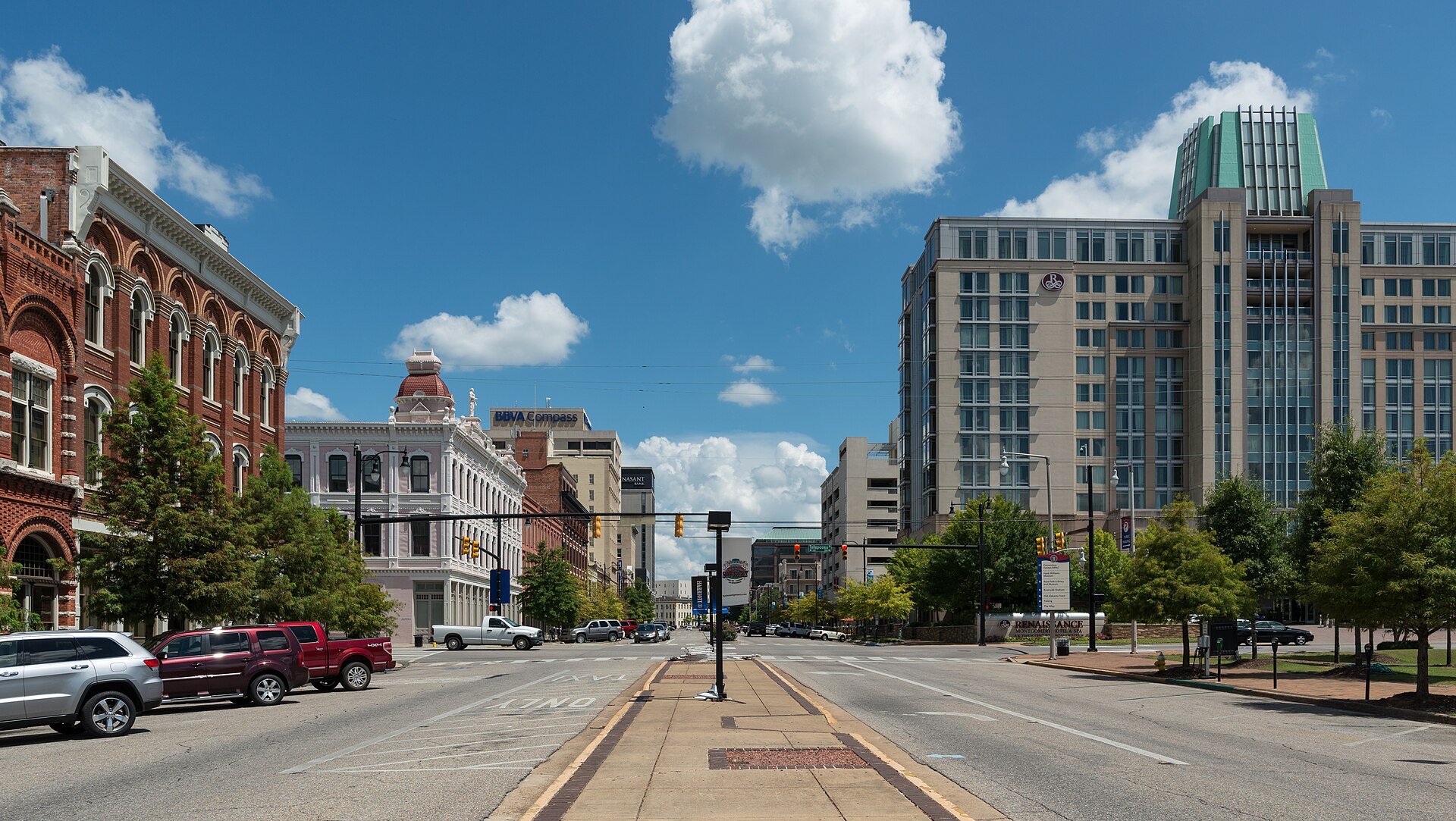
Montgomery, AL Cost of Living in 2026: Housing and Jobs
Montgomery’s median home value is $148,500 and its median gross rent is $1,059 a month, according to the 2019 to 2023 American Community Survey. The median household income is $55,687, and 20.9% of residents live below the poverty line. The biggest employers are Maxwell-Gunter Air Force Base and state government, followed by the school system, hospitals and the Hyundai plant. This guide breaks down housing, food, transportation, healthcare and entertainment costs in Alabama’s capital.
Montgomery at a Glance
Montgomery sits in central Alabama, south of Birmingham and northeast of Mobile. It is the state capital, the seat of Montgomery County, and with a population of 198,440, it hovers just below the 200,000 threshold that tends to shift a city’s density, amenities, and attitude. The median age is 36.2 years, which puts the average resident squarely in early-middle age, not a college-town crowd, not a retirement haven.
The vibe is Southern and slow-paced in a way that genuinely means something. Downtown has real bones: the Alabama State Capitol, the National Memorial for Peace and Justice, the Rosa Parks Museum. These are not minor attractions. They draw serious visitors and give the city a weight that places twice its size sometimes lack. Outside downtown, though, Montgomery spreads into the kind of suburban sprawl that defines mid-size Southern cities: strip malls, chain restaurants, and commercial corridors that blur together.
The poverty rate of 20.9% is the figure that demands the most honest accounting. It is well above the national rate of 12.4% in the same Census survey, and it shapes everything from school quality to neighborhood safety to the type of economy you are moving into. The unemployment rate of 6.4% reinforces the point. Jobs exist, but the labor market is not tight, and wages in many sectors reflect that.
Housing Costs by Neighborhood
This is where Montgomery makes its strongest case. The median home value of $148,500 is not a typo. The national median in the same Census survey is $303,400, so Montgomery’s figure is roughly half of it.
Renting in Montgomery
The median gross rent is $1,059 per month. Rents vary by neighborhood and building age, so compare current listings in the areas you are considering.
Buying in Montgomery
The homeownership rate of 54.3% is well below the national rate of 65.0% in the same Census survey. With a median home value of $148,500, a 20% down payment is roughly $29,700.
Food and Groceries
Martha’s Place Buffet, a soul food buffet now on Atlanta Highway in east Montgomery, is a popular lunch stop. Chris’ Famous Hotdogs downtown has been family owned and operated since 1917.
Transportation
Montgomery is car-dependent. Full stop. The city’s bus system, The M (Montgomery Area Transit System), runs 14 fixed routes within the city limits, from 5:00 a.m. to 9:00 p.m. on weekdays and 7:30 a.m. to 6:30 p.m. on Saturdays, which makes car-free living hard for most residents. If you do not own a car, your job and errand options narrow dramatically.
Alabama’s gas taxes of about 31 cents per gallon (state plus local, as of July 2025) sit near the middle of U.S. states.
Healthcare
Montgomery has meaningful hospital infrastructure for a city its size. Baptist Medical Center South is the largest facility, a 492-bed hospital with the area’s only Level I trauma center. Jackson Hospital, next to Oak Park off Interstate 85, and Baptist Medical Center East, next to the Auburn University at Montgomery campus, are the city’s other main hospitals. Baptist Health and Jackson Hospital & Clinic are the city’s largest healthcare employers.
Alabama has not adopted the Medicaid expansion, so many low-income adults in the city fall into the coverage gap, a serious structural problem in this city’s healthcare landscape.
Entertainment and Lifestyle
Montgomery punches above its weight in cultural infrastructure, specifically around civil rights history, but the broader lifestyle offering is limited compared to peer cities. The Montgomery Museum of Fine Arts is free and genuinely excellent. The Alabama Shakespeare Festival, based here, is among the ten largest Shakespeare festivals in the world.
Outdoor recreation options are real but require driving. Blount Cultural Park, home to the museum and the Shakespeare festival, is pleasant for walking. Montgomery Whitewater, a whitewater park in the city, offers rafting, kayaking and trails. The Robert Trent Jones Golf Trail’s Capitol Hill complex in nearby Prattville has three 18-hole courses.
Nightlife is modest. Montgomery Biscuits minor league baseball games at DABOS Park (the downtown ballpark formerly called Riverwalk Stadium) are a genuine local joy.
You won’t find a deep dining or nightlife scene at the level of Nashville or Austin, but for someone who values history, outdoor access, and affordability over urban density, it works.
How Montgomery Compares to Birmingham and Atlanta
Two larger cities for comparison:
- Birmingham, AL (to the north): In the same 2019 to 2023 Census survey, the city of Birmingham had a median home value of $138,600 and a median gross rent of $1,047 a month, close to Montgomery’s figures.
- Atlanta, GA (to the northeast): In the same Census survey, the city of Atlanta had a median home value of $420,600 and a median gross rent of $1,617 a month, far above Montgomery.
The honest comparison: Montgomery costs about the same as Birmingham for housing and far less than Atlanta. Whether that savings justifies the tradeoffs depends entirely on your career field and lifestyle expectations.
Honest Pros and Cons
The Real Upsides
- Housing affordability is legitimate. A median home at $148,500 and median rent at $1,059/month compare with national medians of $303,400 and $1,348 a month in the same Census survey.
- Rich history and cultural institutions. The civil rights landmarks here are genuinely significant and nowhere else has them.
- Short commutes. The average commute to work in the city is 20.5 minutes, compared with 26.6 minutes nationally, in the same Census survey.
- Mild winters. January’s average temperature is about 48 degrees Fahrenheit. Snow is rare. The cold season is brief.
The Real Downsides
- The job market is weak. A 6.4% unemployment rate and a poverty rate of 20.9% signal a constrained local economy. Remote workers and retirees fare better than job-seekers.
- Summers are brutal. July highs average about 94 degrees, with high humidity, and the hottest days of a typical summer reach the upper 90s. Air conditioning is not optional; it is a utility expense.
- Car dependency is total. Without a car, daily life is very difficult.
- Limited nightlife and dining variety. If a deep food and bar scene matters to you, Montgomery will feel thin.
- Medicaid gap. Alabama’s refusal to expand Medicaid leaves a significant portion of the population underinsured, a structural issue that affects community health outcomes broadly.
Who Montgomery Is Right For
Not everyone. Here are four profiles where the math and lifestyle actually work:
1. The Remote Worker Seeking Ownership
If you earn a remote income and want to own a home, Montgomery may be the most rational financial decision available in 2026. Your dollar goes further here than almost anywhere with comparable infrastructure. Old Cloverdale or the Garden District offer genuine charm and walkability for a fraction of what a similar home costs in Austin, Denver, or Raleigh.
2. The State Government or Military Employee
Alabama state government is headquartered here, and Maxwell Air Force Base sits within the city. For anyone with a government, military, or contractor position attached to either institution, Montgomery’s low cost of living is a direct quality-of-life multiplier. Your stable salary goes significantly further than it would in a larger metro.
3. The History or Nonprofit Sector Professional
Montgomery is home to Bryan Stevenson’s Equal Justice Initiative, the National Memorial for Peace and Justice, and a cluster of civil rights nonprofits. For someone whose career is oriented around social justice, public history, or advocacy, the concentration of significant institutions here is unusual and worth the lifestyle tradeoffs.
4. The Retiree on a Fixed Income
Alabama does not tax Social Security income. Combined with Montgomery’s low housing and daily living costs, a retiree on a steady fixed income can stretch it further here than in most larger metros. The mild winters reduce heating bills. Healthcare infrastructure is adequate for routine needs. This profile fits Montgomery well.
Final Verdict
Montgomery is not a city trying to be something it is not. It does not have a booming tech sector or an exploding restaurant row. What it has is real and specific: genuinely low housing costs, a median rent of $1,059 that actually reflects the market, a $148,500 median home value that puts ownership within reach of median earners, and a daily cost of living that takes the financial pressure off in a way that larger cities simply cannot replicate.
The challenges are equally real. A 20.9% poverty rate and 6.4% unemployment rate are not background noise; they are the structural condition of the city’s economy. Anyone moving here for job opportunities should research specific sectors carefully before committing. The heat, car dependency, and limited nightlife are not dealbreakers for everyone, but they eliminate Montgomery from contention for certain lifestyles entirely.
For the right person, Montgomery in 2026 represents something increasingly rare: a place where a moderate income can fund a stable, affordable life with room left over. That is not nothing. In fact, for a growing number of people priced out of larger metros, it might be exactly enough.
Frequently Asked Questions
What is the average rent in Montgomery AL in 2026?
Is Montgomery AL a cheap place to live?
What is a good salary to live comfortably in Montgomery AL?
What are the safest neighborhoods in Montgomery AL?
How does Montgomery AL compare to Birmingham AL for cost of living?
Sources & methodology. Demographic and economic figures in this guide are drawn from the U.S. Census Bureau, 2019 to 2023 American Community Survey 5-Year Estimates. A newer 2020 to 2024 release came out on January 29, 2026; this guide still uses the 2019 to 2023 figures. Other figures come from the sources named next to them.
Last reviewed September 2026.
How this guide was made. Figures come from the U.S. Census Bureau ACS 2019 to 2023 5-year estimates and the other sources named next to each number. A first draft was written with the help of an AI language model; every place name, price, date and claim was then checked against primary sources by the Small City Guide editors (see About and Methodology). Last verified: September 26, 2026.
What changed: Fact-checked against primary sources in September 2026: 9 statements corrected, opening rewritten, photo replaced with a credited image of the city.
Photo: DXR, CC BY-SA 4.0, via Wikimedia Commons.