Pros and Cons of Living in Tucson, AZ (2026)
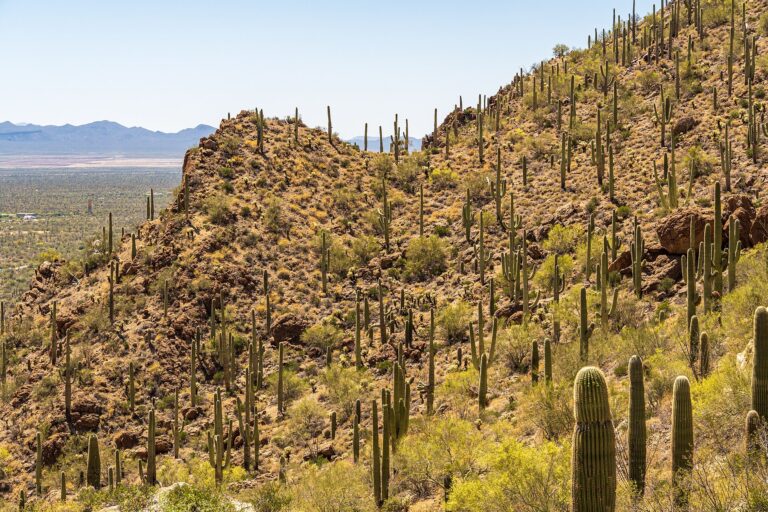
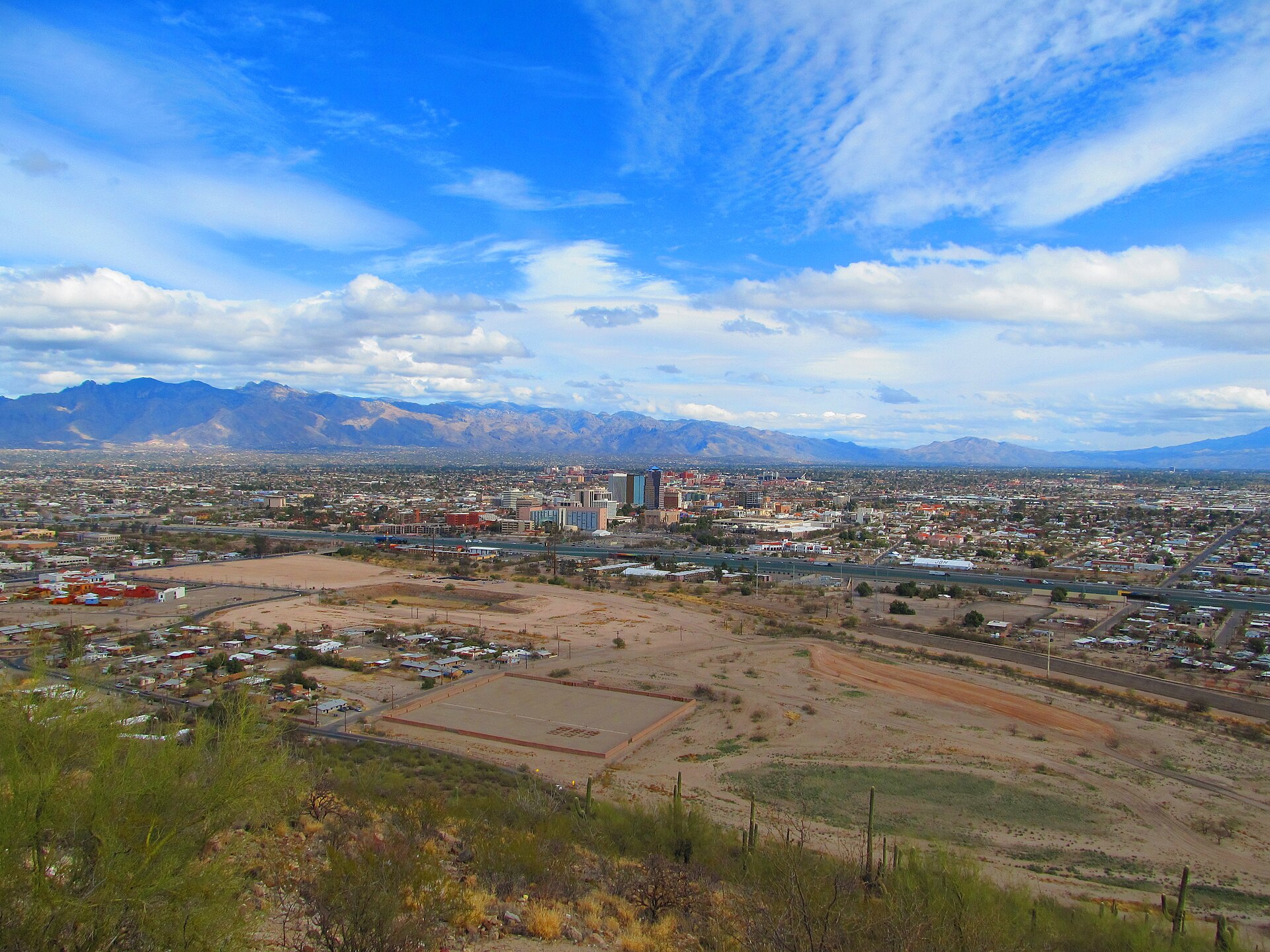
Tucson sits at about 2,400 feet in the Sonoran Desert, ringed by the Santa Catalina, Rincon and Tucson mountains, with Saguaro National Park on both sides of town. It was the first U.S. city named a UNESCO City of Gastronomy (2015), its buses have been fare-free since 2020, and Arizona does not tax Social Security. The tradeoffs are June highs that average above 100 degrees, a narrower private job market and a car-dependent layout.
The Pros of Living in Tucson
1. The Climate (Most of the Year) Is Genuinely Exceptional
Tucson averages more than 300 sunny days per year. That’s not tourism-brochure math; the city sits at 2,389 feet in elevation, which takes the edge off the desert heat compared to lower-elevation Phoenix. From October through April, the weather is flat-out spectacular: crisp mornings, warm afternoons, and cool nights that make eating outside feel like a privilege. The “dry heat” cliche is real here in a way that matters. A 95-degree day in Tucson feels different from a 95-degree day in Houston because the air is dry: NOAA normals put average relative humidity at about 21 to 27% from April through June, the hot months before the monsoon.
Winter is the city’s secret weapon. While much of the country shovels snow, Tucson sees highs in the 65 to 70 degree range from December through February. Snowbirds figured this out decades ago. If you work remotely and tolerate heat for three months of the year, the climate math here is hard to beat.
2. Housing Costs That Still Make Sense
The median home value in Tucson is $242,200, according to Census Bureau data. Renters are in reasonable shape too. The median gross rent is $1,079 per month.
That said, “affordable” is relative. The median household income here is $54,546 per year, which works out to roughly $4,545 per month before taxes. Spending $1,079 on rent is about 24% of gross income for the median household, which is actually within the traditional 30% threshold. The numbers can work. But there is not a lot of financial cushion if anything goes wrong.
3. Outdoor Access That Rivals Anywhere in the Country
Tucson is ringed by five distinct mountain ranges, each with its own character. Saguaro National Park sits literally on both the east and west edges of the city. Sabino Canyon, a creek-fed canyon in the Santa Catalina Mountains and Coronado National Forest just north of the city, is a popular recreation area for residents. Mount Lemmon, the southernmost ski area in the continental U.S., tops out at 9,171 feet and sits at the end of the 27-mile Catalina Highway, which begins at Tanque Verde Road in Tucson. On a single weekend, you can mountain bike the 50-Year Trail and ride a ski lift. Very few cities of Tucson’s size offer that range.
Trail access is not just recreational, it’s cultural. Residents use these spaces constantly and year-round. The hiking and cycling community here is active, serious, and not gatekeeping about it. If outdoor access is a top priority, Tucson overdelivers.
4. A Food Scene That Punches Above Its Weight
In 2015, Tucson became the first U.S. city designated a UNESCO City of Gastronomy. That designation was not honorary. Tucson’s food identity is rooted in Sonoran cuisine, the regional Mexican cooking tradition that predates the border and produces dishes you genuinely cannot find most other places. The Sonoran hot dog, wrapped in bacon and topped with pinto beans, tomato, onion, and mayo, is the local signature. El Guero Canelo on South 12th Avenue is the original and still worth the wait.
Beyond Sonoran food, the city has developed a real independent restaurant culture. Barrio Bread, on South Eastbourne Avenue, bakes bread from Sonoran Desert grains and is open Tuesday through Saturday from 9 a.m. until 1 p.m. or until the bread runs out. Elvira’s, sometimes grouped with Tucson restaurants, is actually in Tubac, south of the city on I-19. Heirloom Farmers Markets run year-round, including Rillito Park on Sundays and Morris K. Udall Park on Fridays, with local produce and prepared food vendors.
5. The University of Arizona’s Cultural Engine
The University of Arizona enrolled 54,384 students in fall 2025 and employs 15,764 staff, including 3,374 faculty, according to fall 2025 university figures. For the city, this matters in ways that go beyond football games. The UA drives a live music scene centered on Congress Street and Fourth Avenue, and supports a year-round lecture and arts calendar.
The university also means the city never fully empties out culturally. Even in the brutal summer months, there are film festivals, gallery openings, and free public lectures happening. For a city that is not a major metro, the baseline cultural offering is high.
6. The Monsoon Season Is Actually Spectacular
From late June through mid-September, Tucson’s monsoon season transforms the desert. Afternoon thunderstorms build over the mountains, turning the sky into something cinematic. The air smells like petrichor and creosote. The Sonoran Desert blooms. Saguaros fill with stored water and turn visibly plump. If you have spent time here during monsoon, you understand why long-term residents genuinely love it rather than simply tolerate it.
This is a real quality-of-life feature that outsiders underestimate. The monsoon breaks the heat, transforms the landscape, and gives the summer a rhythm that makes it survivable.
7. A Strong Sense of Place and Local Identity
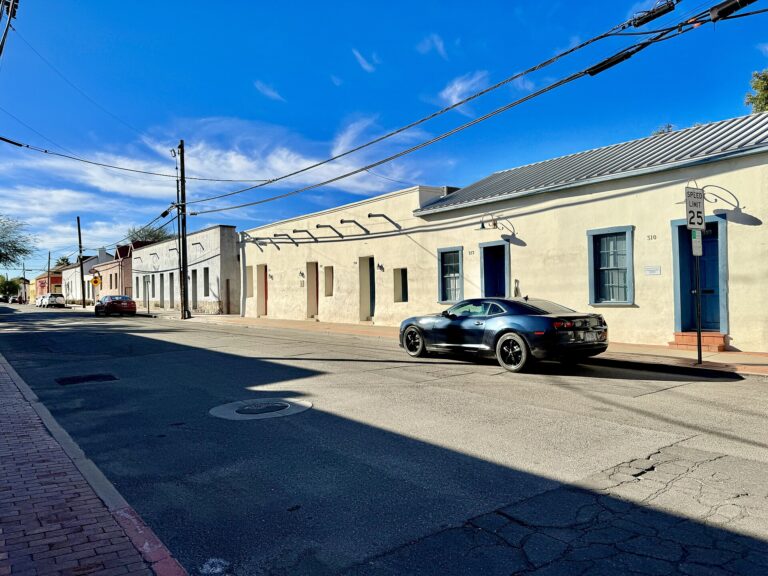
Tucson has not been consumed by the generic Sun Belt growth machine the way Chandler or Surprise or Goodyear have. The older neighborhoods, Barrio Viejo, Sam Hughes, Armory Park, Dunbar Spring, have character and scale. Residents here are fierce about supporting local businesses, local food, and local culture in a way that feels earned rather than performative. The city has its own aesthetic: exposed adobe, drought-resistant landscaping, hand-painted murals, covered front porches. It looks like Tucson, not like Anywhere, USA.
The Cons of Living in Tucson
1. Summer Is Genuinely Brutal
June is the cruelest month. Before the monsoon arrives, Tucson regularly hits 105 to 110 degrees with low humidity, direct sun, and no relief after dark because the ground radiates stored heat through the night. July and August bring the monsoon but also add humidity. If you are someone who goes outside regularly, you will need to restructure your entire daily schedule around weather from June through September. Early morning or after sunset, that’s it. Everything else is a negotiation with your own tolerance for discomfort. Some people adapt; others never do.
2. The Job Market Has Real Gaps
Census survey data for 2019 to 2023, a period that includes the 2020 pandemic spike, put Tucson’s unemployment rate at 6.4%. That five-year figure is not directly comparable to the current national rate, which the Bureau of Labor Statistics put at 4.1% in August 2026. Tucson’s economy leans heavily on the University of Arizona, Davis-Monthan Air Force Base, Raytheon (an RTX business), Banner Health, and government employment. These sectors are stable but do not create the breadth of private-sector opportunity that a diverse metro economy provides. If you work in finance, tech, or advanced manufacturing and need a deep local job market, Tucson will disappoint you. Remote work has changed this calculus for some people, but those who need to find local employment should go in with clear eyes.
More university-tied professional jobs are emerging, but the white-collar job market is thinner than in comparable-sized cities.
3. Poverty and Its Real Effects
A poverty rate of 18.8% is not a statistic to gloss over. It means a significant portion of the city is under serious financial stress, and that stress is visible. This is not unique to Tucson, but it is more pronounced here than in higher-income metros. It also creates a persistent tax base problem, limiting what the city can fund in terms of infrastructure and services.
4. Arizona’s Tax Structure Has a Catch
Arizona moved to a flat 2.5% income tax rate, which benefits higher earners. But the state’s overall tax picture is not uniformly favorable. Arizona does not tax Social Security benefits at all, which works in favor of retirees considering the move. If you are comparing the tax environment to Texas or Florida, it is not as clear a win as brokers sometimes suggest.
5. Traffic and Infrastructure Are Showing Their Age
Tucson’s street grid is wide and the city is sprawling. You will almost certainly need a car; public transit is the Sun Tran bus network plus the 3.9-mile Sun Link streetcar, both fare free since 2020, and neither replaces a car for most residents.
6. Rent and Home Values Are Climbing
The Census figures here reflect 2019 to 2023 survey data. Rents and prices in 2026 listings can run above those survey medians, so check current listings before budgeting.
7. Limited Entertainment for Big-City Expectations
Tucson does not have a major professional sports team. The Tucson Convention Center’s 8,962-seat arena, home of the American Hockey League’s Tucson Roadrunners, books concerts and shows, but it is not stadium-sized. Residents frequently make the 116-mile drive to Phoenix for stadium events, major retail, or specialized medical care. If your baseline for satisfaction requires a certain density of big-city options, Tucson’s ceiling will frustrate you. It is a genuine mid-sized city with mid-sized city limitations.
Who Should Move to Tucson
Tucson is a strong fit for remote workers who want a low cost of living, reliable sun, and serious outdoor access. It works well for retirees who can tolerate summer and want winters that do not require a coat. University-affiliated professionals, academics, researchers, and healthcare workers will find a relatively robust local ecosystem for their fields. Artists, musicians, and food-obsessed people will find a scene that rewards engagement. First-time homebuyers priced out of coastal markets should look seriously at the $242,200 median home value. And anyone who genuinely loves the Sonoran Desert, not as a backdrop but as a place they want to be in regularly, will be happy here.
Who Should Not Move to Tucson
If you need a deep private-sector job market and are not working remotely, Tucson’s 6.4% unemployment rate and narrower industry base are real barriers. People who struggle with heat and are not willing to restructure their daily lives around it for four months should be honest with themselves. Families placing heavy priority on school quality should research districts carefully, as underfunding is a consistent issue in parts of the city. Anyone expecting a dense, walkable urban experience will be disappointed by a city designed around cars and single-family housing.
Final Verdict: 7 out of 10
Tucson earns a 7 out of 10 for the right type of mover. The combination of genuine affordability, world-class outdoor access, a strong local food identity, and 300-plus sunny days makes it one of the more compelling mid-sized cities in the American West. But it earns that score with an asterisk. The summer heat is a serious lifestyle constraint, not a minor inconvenience. The job market is thin. The poverty rate creates real civic challenges that affect the quality of public services and the character of certain neighborhoods.
What Tucson offers, it offers authentically. The food culture is real. The mountains are genuinely there, right at the city’s edge, every single day. The rents are still reasonable relative to most Western cities, even as they rise. If you go in knowing what you are getting, Tucson can be an exceptional place to live. Go in expecting it to be something it is not, and you will be on a moving truck back to wherever you came from by October.
Frequently Asked Questions
What is the average rent in Tucson, AZ in 2026?
Is Tucson, AZ a good place to retire?
How does Tucson’s job market look in 2026?
Is Tucson, AZ affordable to buy a home in 2026?
What are the worst months to live in Tucson, AZ?
Sources & methodology. Demographic and economic figures in this guide are drawn from the U.S. Census Bureau, 2019 to 2023 American Community Survey 5-Year Estimates. Cost estimates combine these official figures with current local listings and are rounded for readability.
Last reviewed September 2026.
How this guide was made. Figures come from the U.S. Census Bureau ACS 2019 to 2023 5-year estimates and the other sources named next to each number. A first draft was written with the help of an AI language model; every place name, price, date and claim was then checked against primary sources by the Small City Guide editors (see About and Methodology). Last verified: September 26, 2026.
What changed: Fact-checked against primary sources in September 2026: 14 statements corrected, 5 off-topic Census sentences removed, opening rewritten, photo replaced with a credited image of the city.
Photo: John Diebolt, CC0, via Wikimedia Commons.