Birmingham, AL Cost of Living in 2026: Real Numbers
Birmingham is the center of Alabama’s largest metro area, with about 1.19 million people, and its housing is cheap by national standards: the Census Bureau puts the city’s median home value at $138,600 and median gross rent at $1,047 a month. Those savings come with costs a budget should include, including a 2% to 5% state income tax and a transit system that leaves most residents needing a car. This guide walks through housing, food, transportation, healthcare and taxes for 2026.
Here is what it actually costs to live in Birmingham, Alabama in 2026.
Overview: The City at a Glance
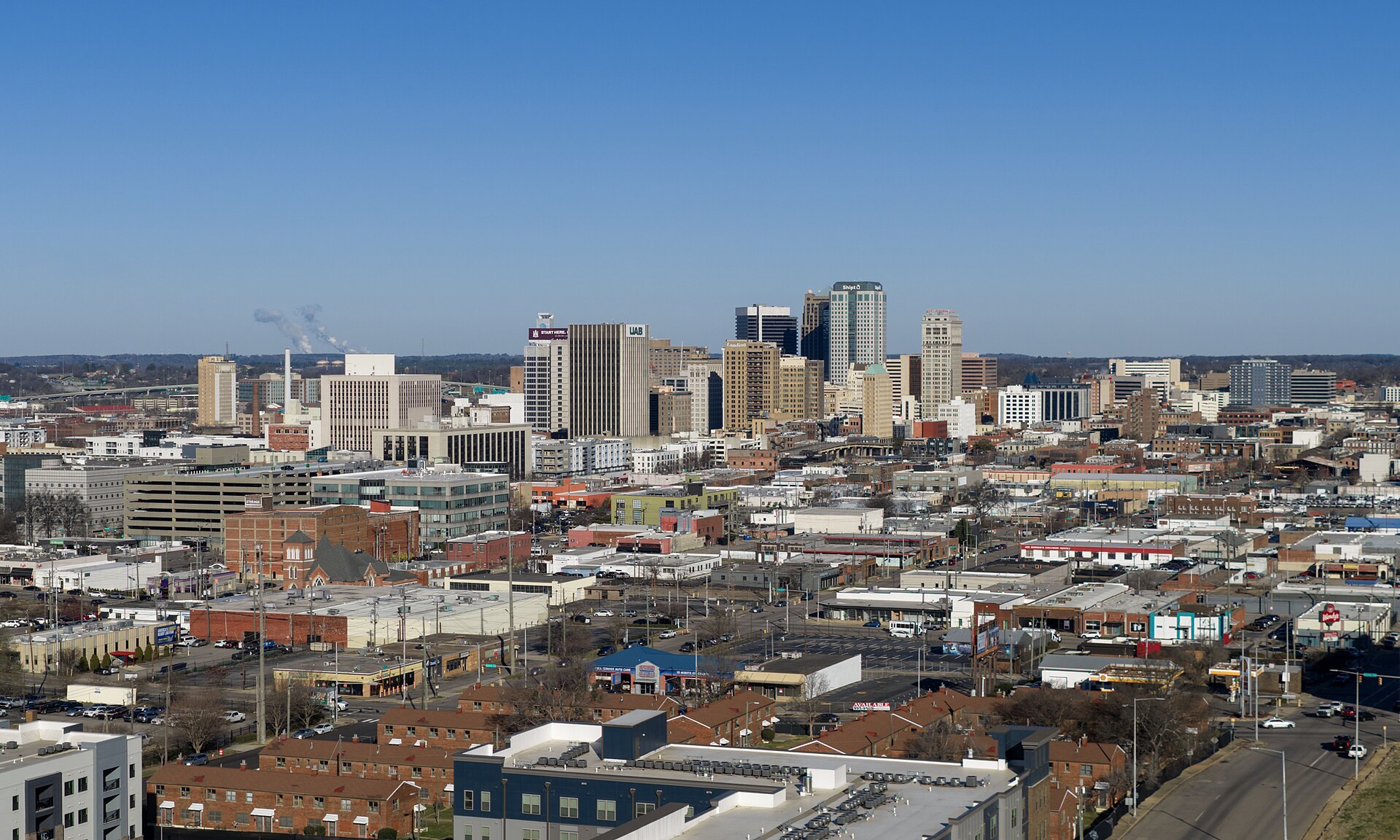
Birmingham is the center of Alabama’s largest metro area, though Huntsville passed it as the state’s largest city after the 2020 census. It sits in the north-central part of the state in Jones Valley, flanked by the Appalachian foothills. The metro area population is about 1.19 million, but the city proper clocks in at 199,322 residents according to U.S. Census Bureau data. That puts it firmly in mid-size city territory, large enough to have real cultural infrastructure.
The median age is 35.9 years. UAB (University of Alabama at Birmingham) is a dominant force here, both as an employer and as a cultural engine. UAB Hospital alone has a staff of more than 20,000.
The vibe in Birmingham is difficult to pin down with one label. Avondale has a craft brewery and live music scene that would feel at home in Asheville or Portland. Cahaba Heights, part of neighboring Vestavia Hills, leans suburban and family-oriented. Woodlawn is in the middle of a slow, genuine revitalization. The city has texture, which is more than you can say for a lot of Sun Belt metros that have grown too fast to develop a real identity.
The honest caveat: Birmingham’s poverty rate of 25.2% and unemployment rate of 6.1% are both significantly above national averages. These numbers reflect persistent structural inequality, and they shape the city in ways that anyone relocating here should understand rather than ignore. The low cost of living is partly a function of those underlying economic realities.
Housing Costs by Neighborhood
This is where Birmingham’s value proposition becomes very real. The Census Bureau puts the median home value at $138,600 and the median gross rent at $1,047 per month. For context, the national median gross rent was $1,348 per month and the national median home value was $303,400 in the same 2019 to 2023 ACS data.
Renting in Birmingham
Rents vary by neighborhood around that $1,047 median, so compare current listings in the specific areas you are considering. UAB and Children’s of Alabama are on the Southside, and the city’s nightlife is clustered around Five Points South and Lakeview. Mountain Brook, Homewood, Hoover and Vestavia Hills are separate suburban cities in the metro.
Buying in Birmingham
The homeownership rate sits at 45.1%, which is lower than you might expect given how affordable purchase prices are. Part of that reflects the income gap and credit access challenges for lower-income residents. But for someone moving here with savings and stable income, the buying opportunity is genuinely unusual.
At the median value of $138,600, a 20% down payment is roughly $27,720, and a 30-year fixed mortgage at 7.03% (the Freddie Mac weekly average as of September 24, 2026) puts the monthly principal and interest payment around $740, before property taxes and insurance.
Food and Groceries
For bulk shopping, there is a Costco warehouse in Hoover.
Farmers markets are present but not dominant. The Pepper Place Saturday Market runs on Saturdays from January 31 through December 12, 2026, from 7 a.m. to noon, rain or shine. It has connected Alabama farmers and producers with Birmingham-area shoppers since 2000.
Eating out is where Birmingham stands out for a city its size. For Southern cooking, Niki’s West, a steak and seafood restaurant on Finley Avenue West, has served home-cooked Southern food at affordable prices since 1957.
Transportation
The Birmingham-Jefferson County Transit Authority, branded MAX Transit, runs bus routes and the Birmingham Xpress, a bus rapid transit line that opened in 2022 between Woodlawn and the Birmingham Crossplex. Outside that corridor the network is limited in coverage and frequency, and car ownership is effectively a requirement for most residents. Budget for it accordingly.
Alabama’s state gas tax is 31 cents per gallon, which sits in the middle of state rates.
Commute times for city residents average about 21.5 minutes, according to the Census Bureau’s 2019 to 2023 ACS.
Healthcare
Healthcare is one of Birmingham’s legitimate strengths. UAB Medicine is the academic medical center of UAB, which describes itself as the largest single employer in Alabama. It brings research-grade care to the region in a way that most comparable-sized cities simply cannot match. Children’s of Alabama, on the city’s Southside and affiliated with the UAB School of Medicine, is ranked by U.S. News and World Report among the nation’s best children’s hospitals for 2026-2027.
Alabama has not expanded Medicaid under the Affordable Care Act, so many low-income adults earn too much for Medicaid but too little for subsidized marketplace coverage, a situation known as the coverage gap. Access to care for the city’s large uninsured and underinsured population remains an ongoing challenge that shapes the city’s healthcare landscape in ways beyond just price.
Entertainment and Lifestyle
Birmingham’s entertainment economy punches above its weight. The Alys Stephens Performing Arts Center hosts national touring acts and classical performances. The Sloss Furnaces National Historic Landmark is one of the more unusual cultural sites in the South, a preserved blast furnace that doubles as a concert venue and art space. Railroad Park, a 19-acre green space in the heart of downtown, has become the city’s gathering point and connects pedestrian-friendly trails to the broader Red Rock Trail System.
For live music, both the BJCC and Avondale Brewing host concerts.
College football is not optional in Alabama. It is the dominant cultural touchpoint, and regardless of your team allegiance, the Crimson Tide and Auburn Tigers schedule will shape your social calendar from September through January whether you plan for it or not. UAB Blazers football plays at Protective Stadium, part of the BJCC complex downtown.
Birmingham vs. Atlanta and Nashville
If you are weighing Birmingham against the two closest larger metros, here is the honest comparison.
Atlanta, GA
In the same 2019 to 2023 Census data, Atlanta’s median home value was $420,600, about three times Birmingham’s, and its median gross rent was $1,617 a month. Atlanta has MARTA rapid rail, a substantially larger job market, and significantly more Fortune 500 headquarters. What you give up in Birmingham is corporate career density and transit access. What you gain is lower housing costs, with a median gross rent $570 a month below Atlanta’s in that data.
Nashville, TN
Nashville has grown so fast that its affordability story is largely historical. In the 2019 to 2023 Census data, Nashville’s median home value was $383,100 and its median gross rent was $1,486 a month. Tennessee has no state income tax on wages. Alabama does: a graduated individual income tax of 2% to 5%, with the 5% rate applying to taxable income over $3,000 for single filers. For remote workers or self-employed individuals, Birmingham’s lower housing costs can outweigh Alabama’s state income tax, but the math depends on income.
The honest summary: Birmingham is significantly more affordable than both cities. The tradeoff is a smaller job market, a longer runway to see the full results of its ongoing revitalization, and the underlying economic inequality reflected in that 25.2% poverty rate.
Honest Pros and Cons
Pros
- Housing costs are genuinely exceptional. At a median home value of $138,600 and median rent of $1,047, the entry point to ownership or a rental is far below the national medians of $303,400 and $1,348.
- World-class healthcare through UAB Medicine and Children’s of Alabama.
- A food scene that includes long-running, affordable Southern restaurants and the Pepper Place Saturday Market.
- Outdoor access is underrated. The Appalachian foothills mean hiking, mountain biking, and trail running are close to the city.
- Shorter commutes than Atlanta, Charlotte, or Nashville: 21.5 minutes on average, versus 24.9 to 26.8 minutes in those cities (Census ACS 2019 to 2023).
Cons
- You need a car. Full stop. Budget for it, maintain it, and insure it properly.
- The job market is limited outside of healthcare, education, and local government. Remote workers fare much better here than those dependent on local corporate hiring.
- Poverty and inequality are visible and real. The 25.2% poverty rate is not just a statistic; it shapes neighborhood conditions, school quality, and public services in ways that matter to daily life.
- Summers are hot. Birmingham has a humid subtropical climate, so plan for air conditioning costs in the summer months.
- The revitalization is real but uneven. Some neighborhoods that looked promising five years ago have stalled. Research specific blocks, not just zip codes.
Who Birmingham Is Right For
Not every city fits every life stage or career situation. Here are four profiles for whom Birmingham makes genuine sense in 2026.
The remote worker or freelancer: If your income is location-independent and above the city’s $44,376 median household income, Birmingham is an extraordinary arbitrage opportunity. Earning a national-market salary while paying local-market rent or a sub-$200,000 mortgage is a wealth-building combination that few mid-size cities can match right now.
The early-career healthcare professional: UAB Medicine, Children’s of Alabama, UAB St. Vincent’s, and other clinics create real career pathways in nursing, allied health, and research support.
The first-time homebuyer priced out elsewhere: If you have been saving for a down payment in Nashville or Atlanta and the math keeps not working, Birmingham is the place to run new numbers. A $27,000 down payment on a median-priced home is achievable on a timeline that would feel laughable in most Sun Belt metros.
The retiree or near-retiree on a fixed income: Alabama does not tax Social Security, and payments from defined benefit pension plans, military retirement pay, and Alabama state retirement system benefits are exempt from state income tax, and the combination of low housing costs and accessible healthcare infrastructure makes Birmingham a genuinely strong option for people whose income is stable but not growing.
The Bottom Line
Birmingham is not perfect. Its poverty rate of 25.2% is about twice the national rate of 12.4%, its public transit is inadequate, and its job market requires more creativity than a straightforward corporate move would demand. Those are real costs, even if they don’t show up on a rent receipt.
What Birmingham offers in return is a cost structure that gives you room to breathe. Median rent at $1,047 per month, median home values at $138,600, short commutes, excellent medical care, and a food and culture scene that is delivering at a level well above what the price tag suggests. For the right person with the right situation, that combination is hard to beat anywhere in the South in 2026.
Frequently Asked Questions
What is the average rent in Birmingham, AL in 2026?
Is Birmingham, AL a good place to live for remote workers?
How does Birmingham’s cost of living compare to Atlanta?
What are the safest neighborhoods in Birmingham, AL?
What is the median household income in Birmingham, AL?
Sources & methodology. Demographic and economic figures in this guide are drawn from the U.S. Census Bureau, 2019 to 2023 American Community Survey 5-Year Estimates. A newer 2020 to 2024 release came out on January 29, 2026; this guide still uses the 2019 to 2023 figures. Other figures come from the sources named next to them.
Last reviewed September 2026.
How this guide was made. Figures come from the U.S. Census Bureau ACS 2019 to 2023 5-year estimates and the other sources named next to each number. A first draft was written with the help of an AI language model; every place name, price, date and claim was then checked against primary sources by the Small City Guide editors (see About and Methodology). Last verified: September 26, 2026.
What changed: Fact-checked against primary sources in September 2026: 16 statements corrected, opening rewritten, photo replaced with a credited image of the city.
Photo: Quintin Soloviev, CC BY 4.0, via Wikimedia Commons.