Cost of Living in Juneau, AK (2026): Rent, Taxes, Travel
Juneau has no road link to the rest of North America, so groceries, cars and building materials arrive by barge or plane, and residents leave by ferry or Alaska Airlines. The Census Bureau puts the median home value at $432,500 and median gross rent at $1,462 a month, against a median household income of $100,513. There is no state income or sales tax, though the city charges a 5% local sales tax that has exempted groceries since November 2025.
If you are weighing a move to Juneau in 2026, you need specific numbers, not travel-blog enthusiasm. This guide gives you both the real figures and the honest interpretation of what they mean for your wallet.
Juneau at a Glance: Population, Vibe, and Location
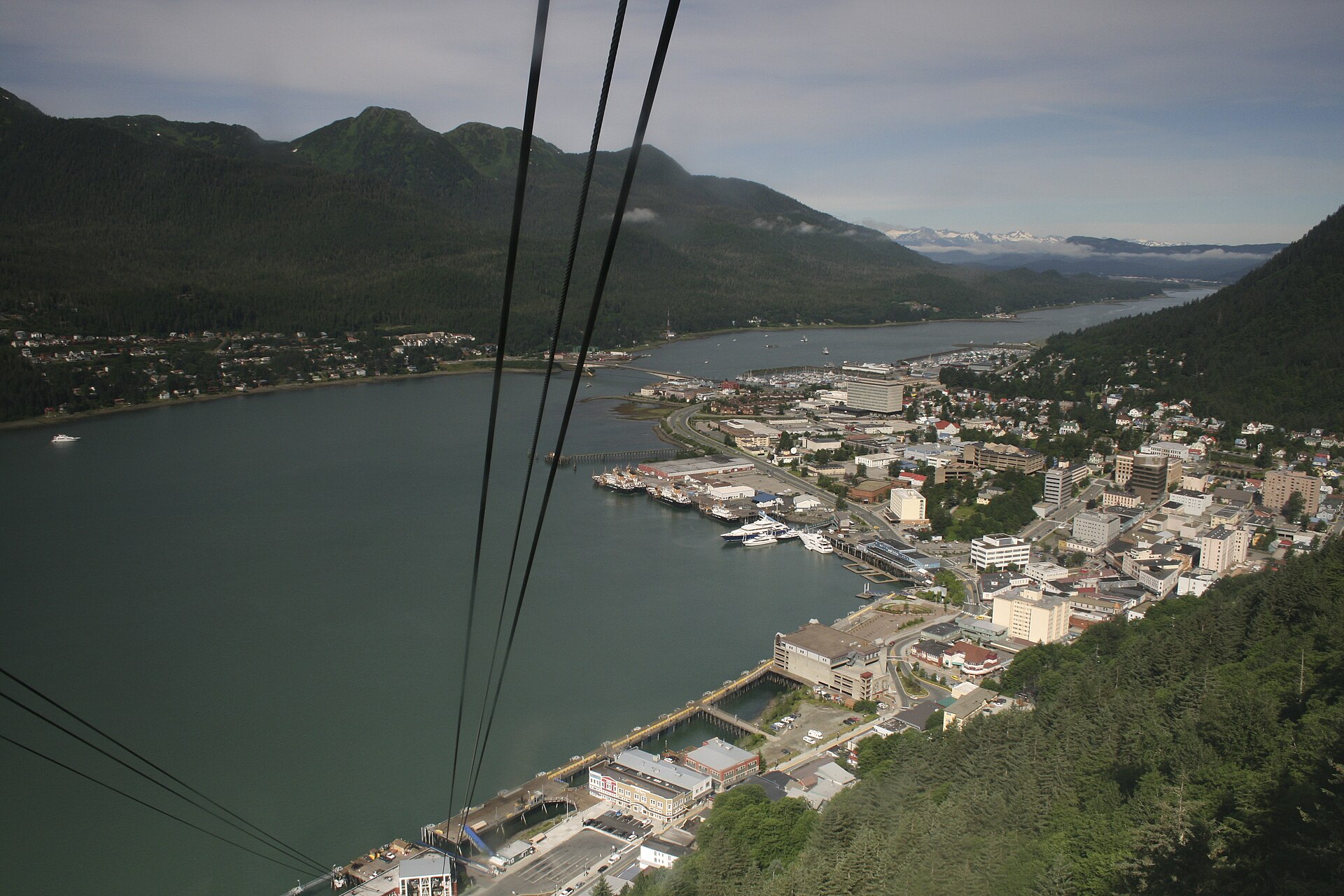
Juneau sits in the Alaska Panhandle, sandwiched between the Tongass National Forest and the Gastineau Channel. With a population of 31,969, it is a small city by any standard, yet it covers about 3,250 square miles, roughly 2,700 of them land, which makes it the largest U.S. state capital by land area and second only to Sitka among U.S. cities. Most of that land is wilderness. Most residents live in a surprisingly compact urban core.
The median age is 39.8 years, which skews slightly older than the national average. The workforce is dominated by state government jobs, fishing and maritime industries, tourism, and a year-round hospital sector. Education levels are notably high: 40.5% of residents hold a bachelor’s degree or higher, well above the national average of roughly 35%. The poverty rate sits at 8.2%, and the unemployment rate as of the most recent data is 4%, both fairly healthy numbers for a remote Alaskan city.
The vibe is hard to categorize. Juneau feels like a Pacific Northwest waterfront town that got picked up and dropped at the base of a glacier. It rains roughly 230 days a year. The summers are spectacular and fleeting. The winters are dark, wet, and long. Locals either make peace with that or they leave. The ones who stay tend to be fiercely attached to the hiking, the fishing, and the community that forms when you are genuinely cut off from everywhere else.
Housing Costs by Neighborhood: Rent and Buy in 2026
The Census Bureau’s most recent five-year estimates put the median gross rent in Juneau at $1,462 per month and the median home value at $432,500. Those numbers carry a lot of context. A $1,462 median rent sounds reasonable until you realize that supply is extremely tight, inventory turns over slowly, and quality varies enormously at that price point.
Renting in Juneau
Downtown and the Flats is the most walkable area, close to government buildings and the waterfront. Rent here runs at the higher end of the range for the space you get. Douglas Island, connected by bridge, is a popular alternative with a slightly more neighborhood feel. Rents are comparable but you pick up a short commute across the channel. Mendenhall Valley, which begins about 10 miles from downtown, is the closest thing Juneau has to suburbs. You get more space per dollar, but you are car-dependent and you will sit in the only real traffic corridor in the city. Lemon Creek and Glacier Highway corridors offer the most affordable rentals, typically at the lower end of market rates, in exchange for older building stock and longer drives.
Buying in Juneau
The median home value of $432,500 is striking given the city’s size. This is not a frothy speculation market driven by remote workers chasing scenery. Juneau home values reflect genuine supply constraint: you cannot build outward onto mountainsides and wetlands, permitting is slow, and construction costs in a place accessible only by sea or air are punishing. The homeownership rate of 64.4% is actually higher than many coastal cities, which suggests that long-term residents do find paths to ownership, often through time and stable government employment.
At the Freddie Mac 30-year fixed average of 7.03% (week of September 24, 2026), a $432,500 home with 10% down carries a principal and interest payment of roughly $2,600 per month, before property taxes and insurance. Budget accordingly.
Food and Groceries: The Real Cost of Eating in Juneau
This is where Juneau’s isolation hits hardest. Most food arrives by barge or cargo plane. Prices reflect that reality without apology.
Grocery stores in Juneau include Fred Meyer on Glacier Highway, Foodland IGA and Superbear IGA.
One genuine saving grace: if you fish, hunt, or know people who do, you can supplement your food budget significantly with wild salmon, halibut, and venison. Many Juneau households do exactly that, and it materially changes the economics of food.
Transportation: Getting Around Without a Road Out
Juneau is car-dependent for most daily errands, despite having a reasonable local bus system called Capital Transit. If you live in Mendenhall Valley, a car is essentially mandatory. Downtown residents can get by on foot for some needs, but grocery runs, medical appointments, and anything in the Valley requires wheels.
Vehicle maintenance costs more than on the mainland. Getting a car here means either shipping it by barge or Alaska Marine Highway ferry, or buying locally. Local car inventory is thin and prices reflect that scarcity.
The Alaska Marine Highway System is the other transportation reality. Ferries connect Juneau to Sitka, Haines, Skagway, Ketchikan, and eventually to Bellingham, Washington. Alaska Airlines serves Juneau International Airport year-round.
Healthcare: Access and Costs
Bartlett Regional Hospital is Juneau’s main acute-care facility, a 57-bed community hospital that handles the majority of inpatient and emergency needs. It is the only hospital in Juneau and has the city’s only emergency department.
Out-of-pocket costs for routine care are in line with national norms, but specialist wait times can be long, and availability of certain specialties is limited. Dental care and mental health services have meaningful gaps in local availability. Telehealth has improved access for some services, but it does not replace in-person specialty care.
Entertainment and Lifestyle: What Your Free Time Looks Like
Juneau’s entertainment options are narrow by big-city standards and exceptional by outdoor recreation standards. That sentence is the entire summary for anyone deciding if they fit here.
The Mendenhall Glacier is about 12 miles from downtown. Alaska State Parks maintains the Juneau Trail System, and part of the Tongass National Forest lies within the borough. A resident annual sport fishing license costs $20, plus $10 for the king salmon stamp, and the access to king salmon, halibut, and Dungeness crab is genuinely world-class. Skiing at Eaglecrest on Douglas Island costs $85 for an adult full-day ticket in the 2026/2027 season, and the mountain is small but uncrowded.
The bar scene is lively for a city this size, fueled partly by tourism in summer and partly by the cabin-fever social dynamics of winter. The Hangar on the Wharf and Alaskan Hotel Bar are Juneau institutions. There is a small but active arts community, a reasonable selection of local restaurants, and a tight-knit social fabric that forms quickly when people share the same geographic isolation.
Streaming subscriptions, home gym setups, and personal outdoor gear become meaningful budget items. Quality rain gear, hiking boots, and outdoor clothing are not optional lifestyle expenses in Juneau. They are functional necessities.
How Juneau Compares to Anchorage and Seattle
The two most natural comparison points are Anchorage (the state’s largest city) and Seattle (the nearest major Pacific coast hub).
Anchorage has a population of roughly 290,000 and far more retail and restaurant diversity. Crucially, Anchorage is connected to the state highway system, which matters enormously for road trips, vehicle shipping, and the psychological sense of being connected.
Seattle has median home values well above $800,000 and a median gross rent of $1,858 for a one-bedroom (Census ACS 2019 to 2023). On raw housing numbers, Juneau looks affordable by comparison. But when you factor in the cost of flights to maintain relationships and access specialty services, the food premium, and the vehicle logistics, the gap narrows considerably. Seattle offers incomparably more in career diversity, healthcare access, cultural amenities, and climate (damp, but less so). Juneau wins on nature access and community feel. It loses on almost every other livability metric a large urban area provides.
Honest Pros and Cons of Living in Juneau
What Works in Your Favor
- No state income tax and no state sales tax. Juneau itself charges a 5% local sales tax, but groceries for home consumption have been exempt since November 20, 2025. Alaska’s tax structure is genuinely favorable for residents, and the Permanent Fund Dividend ($1,200 in 2026, including a $200 energy relief payment, after $1,000 in 2025 and $1,702 in 2024) puts cash back in residents’ pockets annually.
- Strong median income. At $100,513 per year, the median household income reflects the concentration of well-paying government, healthcare, and maritime jobs. This is not a low-wage economy.
- Outdoor access that is almost impossible to replicate. The Tongass, the glaciers, the water. If this is why you’re moving, it delivers completely.
- Tight, genuine community. Isolation breeds real social bonds. People show up for each other here in ways that can surprise transplants.
Real Downsides to Weigh
- The rain and the dark. Juneau averages about 67 inches of precipitation a year at the airport and close to 90 inches downtown (NOAA 1991-2020 normals). Seasonal affective disorder is not a cliche here; it’s a clinical reality that affects a meaningful portion of the population.
- Grocery and goods prices. The island-supply-chain premium is real and relentless.
- Healthcare gaps. Specialty care requires travel. For families with chronic conditions or complex medical needs, this is a serious consideration.
- Limited housing inventory. Good rentals and reasonably priced homes sell or rent fast. The market is small and not forgiving of hesitation.
- Career ceiling for some fields. If you are not in government, healthcare, tourism, or maritime industries, Juneau’s job market is narrow. Remote work has opened this up, but not for every profession.
- Getting out costs money. This is a real recurring cost that mainland small cities don’t impose.
Who Is Juneau Right For?
Not everyone. Probably not most people. But for specific profiles, it fits unusually well.
The government or state employee. Alaska state jobs offer competitive salaries, strong benefits, and employer-sponsored health insurance that cuts one of Juneau’s biggest cost disadvantages. If you’re offered a state position here, the economics make much more sense than they do for someone piecing together private-sector income.
The serious outdoor recreationist. If hiking, fishing, skiing, kayaking, or hunting are central to your identity rather than occasional hobbies, the access Juneau provides is hard to price. You will pay more for groceries and flights, but you will also step out your door into a level of wilderness access that most people have to travel far to reach.
The remote worker with a stable income. If you earn a mainland salary remotely, Juneau’s median income of $100,513 and the Alaska PFD make the cost premiums manageable. The no-income-tax benefit helps. The key is that your income must be truly location-independent, because local private-sector opportunities are limited.
The person who values community depth over urban breadth. Juneau’s 31,969 residents form a town where you recognize faces, where neighbors actually know each other, and where people are thrown together by circumstance in ways that build genuine connection. If you’ve found large cities anonymous and alienating, Juneau’s enforced intimacy can feel like relief.
Final Verdict
Juneau is not an affordable city. It is a city with a strong median income ($100,513) that partially offsets its high costs. The median rent of $1,462 per month and median home value of $432,500 sit at levels that require either dual incomes, government employment, or a remote work setup that brings outside money into a local economy.
What Juneau offers in exchange is specific and genuine: extraordinary natural environment, no state income tax, a 5% local sales tax that no longer applies to groceries, a real community, and a pace of life that urban refugees often describe as the thing they didn’t know they needed. What it costs beyond the rent check, including groceries, flights, healthcare logistics, and the psychological weight of darkness and rain, is real and should be budgeted honestly.
Move here for the right reasons, with realistic numbers, and Juneau can be one of the most rewarding places in North America to live. Move here chasing a romantic idea without running the math, and the isolation and expense will make the exit feel inevitable. The city doesn’t change for newcomers. It’s been this way for a long time, and it’s not apologetic about it.
Frequently Asked Questions
What is the average rent in Juneau, AK in 2026?
Is Juneau, Alaska expensive to live in compared to other Alaskan cities?
What is the average salary in Juneau, AK?
How much does it cost to buy a home in Juneau, AK in 2026?
What are the biggest downsides of living in Juneau, Alaska?
Sources & methodology. Demographic and economic figures in this guide are drawn from the U.S. Census Bureau, 2019 to 2023 American Community Survey 5-Year Estimates. A newer 2020 to 2024 release came out on January 29, 2026; this guide still uses the 2019 to 2023 figures. Other figures come from the sources named next to them.
Last reviewed September 2026.
How this guide was made. Figures come from the U.S. Census Bureau ACS 2019 to 2023 5-year estimates and the other sources named next to each number. A first draft was written with the help of an AI language model; every place name, price, date and claim was then checked against primary sources by the Small City Guide editors (see About and Methodology). Last verified: September 26, 2026.
What changed: Fact-checked against primary sources in September 2026: 11 statements corrected, opening rewritten, photo replaced with a credited image of the city.
Photo: User:Chriseaves, CC BY 2.5, via Wikimedia Commons.