Yuma, AZ Cost of Living in 2026: Housing, Gas, Heat
Yuma’s Census median home value is $209,100, well under Phoenix ($381,900) and Tucson ($242,200), and its median gross rent of $1,085 a month is on par with Tucson’s $1,079. At 2026 mortgage rates near 7 percent, principal and interest on a median home with 10 percent down comes to about $1,250 a month. The tradeoffs are summer highs averaging 104 to 108 degrees from June through August and a local job market built on agriculture, the military and border trade.
Overview: What Kind of City Is Yuma?
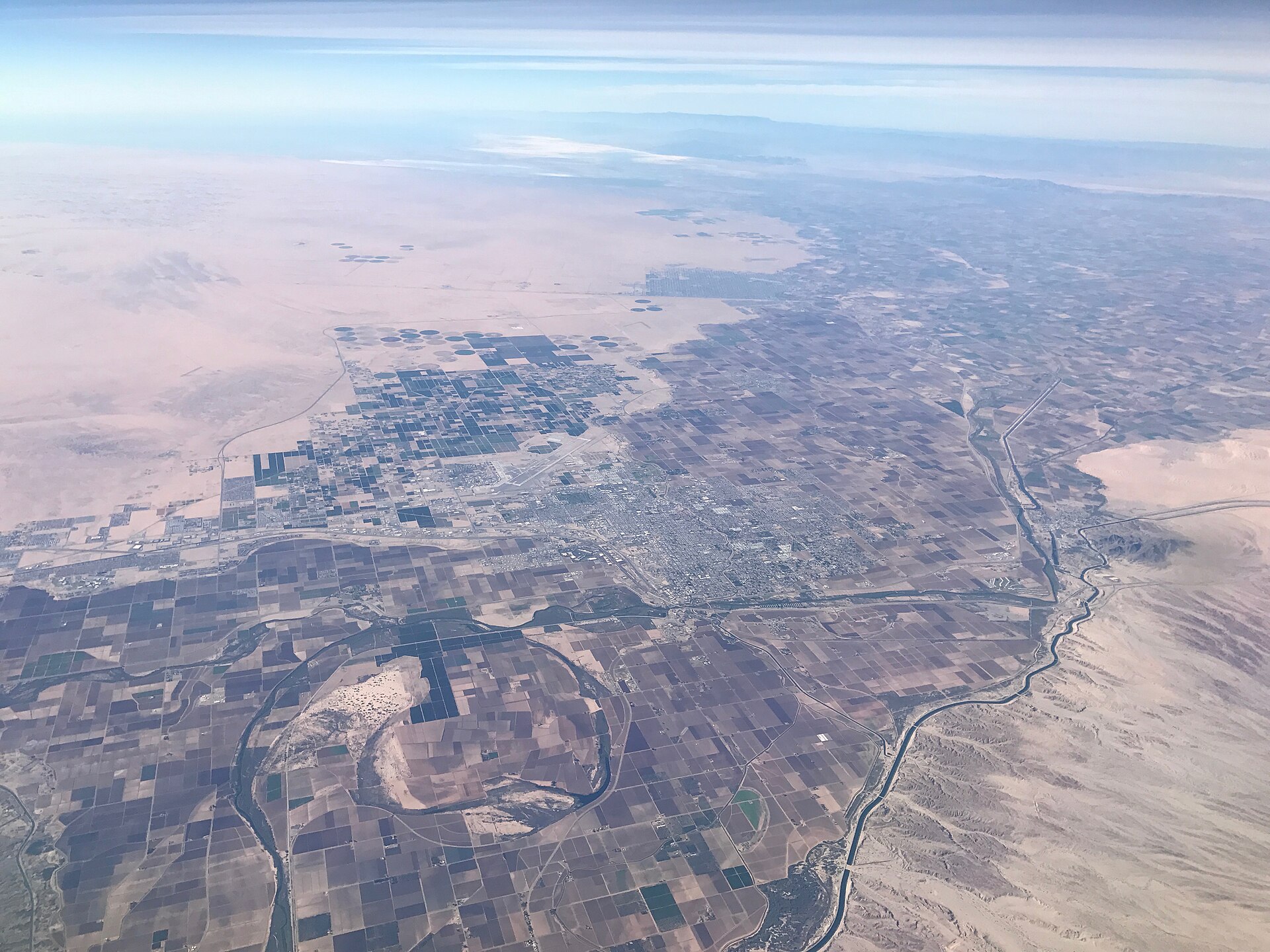
Yuma sits at the southwestern corner of Arizona, right where the state meets California and Mexico. The Colorado River cuts through the edge of town, and beyond that it’s open desert in every direction. The U.S. Census Bureau’s 2019-2023 American Community Survey puts the population at 98,461, which makes Yuma a medium-sized city by Arizona standards, larger than Prescott, smaller than Flagstaff’s metro, and nowhere near the Phoenix or Tucson orbit.
The median age of 32.1 years tells an interesting story. This is not a retirement enclave (though 70,000 to 85,000 out-of-state visitors spend the winter here). It skews young, driven partly by the military presence at Marine Corps Air Station Yuma and a sizable agricultural labor workforce. Yuma County grows about 90 percent of the leafy vegetables produced in the United States from November to March, which is worth knowing because it shapes the local economy in fundamental ways.
The median household income of $62,546 is below the Arizona statewide median of $76,872 and well below the national figure. A 15.3 percent poverty rate and a 7.5 percent unemployment rate both sit higher than national averages. That context matters. Yuma is not a boomtown. It is an affordable, functional desert city with real economic pressures, and anyone moving here should factor that into their job search before arrival.
Only 20.5 percent of residents hold a bachelor’s degree or higher, which reflects the economy’s reliance on agriculture, military, and trade with Mexico rather than a knowledge-sector workforce. If you are a remote worker or military family, that stat is largely irrelevant to you. If you are hoping to land a professional-track job locally, the market is thin.
Housing Costs by Neighborhood: Rent and Buy
Housing is genuinely Yuma’s strongest card. The Census-verified median home value of $209,100 is striking when you compare it to the Census median home value of $381,900 in Phoenix or $242,200 in Tucson. At the 7.03 percent average 30-year rate Freddie Mac reported on September 24, 2026, a 30-year loan with 10 percent down on that median Yuma home works out to about $1,256 per month in principal and interest. Property taxes and homeowners insurance come on top of that.
The homeownership rate of 65.3 percent reflects that reality. Nearly two-thirds of Yuma households own rather than rent, close to the national rate of 65.0 percent in the same survey.
The Census median rent of $1,085/month reflects the market-wide average including older units and long-term tenants.
Food and Groceries
Fry’s Food Stores (Kroger) has two grocery stores in Yuma. There is a Sprouts Farmers Market in the Foothills area and another on 4th Avenue for those who want more organic selection.
Transportation
Yuma is car-dependent. Full stop. The city’s transit system, Yuma County Intergovernmental Public Transportation Authority (YCIPTA), runs the Yuma County Area Transit (YCAT) bus routes. If you are moving here without a car, check the YCAT route map before you arrive.
Gas prices in Yuma run well below California prices. On September 27, 2026, AAA put Yuma’s average for regular unleaded at about $4.75 a gallon, against about $6.39 in San Diego and $6.35 across California, a gap of about $1.60 a gallon.
Healthcare
Onvida Health (known as Yuma Regional Medical Center until October 2024) is the anchor of local healthcare, a health system with a hospital of over 400 inpatient beds, 40+ outpatient clinics and two emergency departments. Anyone with a chronic condition should confirm that the specialists they need practice locally before moving.
Sunset Health operates community health centers across Yuma County with a sliding fee discount program, which matters given the city’s 15.3 percent poverty rate.
Military families at MCAS Yuma are covered by TRICARE, the Department of Defense health care program.
Entertainment and Lifestyle
This is the section where honest writing matters most, because Yuma’s lifestyle is genuinely niche. If you thrive outdoors and do not mind heat, it delivers. If you want urban culture, craft beer bars every other block, or a performing arts scene, you will be disappointed.
The Yuma Crossing National Heritage Area along the Colorado River includes riverfront parks connected by a multi-use path, restored wetlands and two state historic parks. The Imperial Sand Dunes, a 45-mile dune field west of Yuma that includes the Glamis area, draw off-road enthusiasts mostly in the cooler months, with the biggest crowds on winter holiday weekends. The Gulf of California (Sea of Cortez) is roughly 60 miles away, and Los Algodones, just across the border about five miles west of downtown, is known for its many dental offices.
Summers are brutal. Average daily highs run 104 to 108 degrees Fahrenheit in June, July and August, and the hottest day of those months typically reaches 113 to 115. Air conditioning runs constantly and utility bills rise with it. The flip side: from November through March average highs run from about 70 to 81 degrees, and 70,000 to 85,000 out-of-state visitors spend the winter in Yuma.
Yuma’s last professional baseball team, the Yuma Scorpions, played its final season at Desert Sun Stadium in 2011. Major concerts, professional sports, and museum-level cultural institutions require a road trip.
How Yuma Compares to Nearby Cities
Yuma vs. Tucson, AZ
Tucson’s Census median home value is $242,200, roughly 16 percent higher than Yuma’s $209,100. Median gross rent is nearly identical: $1,079/month in Tucson versus $1,085 in Yuma. Tucson offers a major research university (University of Arizona), a more developed job market, significantly better healthcare infrastructure, and a richer arts and dining scene. The tradeoff is meaningfully higher housing costs and a larger, more congested city. For remote workers, the Yuma savings are real. For local job seekers, Tucson’s opportunity set is considerably deeper.
Yuma vs. El Centro, CA
El Centro, the county seat of Imperial County in California, is smaller (population roughly 45,000) and in many ways Yuma’s economic cousin. Imperial County has California’s highest unemployment rate, consistently above 15 percent. Home values in El Centro run higher than in Yuma (a Census median of $291,100 versus $209,100), although its median gross rent is lower ($992 versus $1,085). California state income tax alone makes a significant difference for higher earners.
Honest Pros and Cons
Pros
- Housing affordability is real. A $209,100 median home value is well under Phoenix ($381,900) and Tucson ($242,200).
- Low cost of daily life. Arizona has a low state income tax, a flat 2.5 percent.
- Mild winters. From November through April, average daily highs run from about 70 to 88 degrees.
- Border proximity. Los Algodones, just across the border, has hundreds of dental offices.
Cons
- Summer heat is extreme and unavoidable. Roughly four months of 100-plus-degree weather is not a minor inconvenience. It changes how you live, where you can go, and what you pay for electricity.
- Limited professional job market. The 7.5 percent unemployment rate and low rate of college-educated workers (20.5 percent) reflect a local economy that does not have many white-collar rungs to climb.
- Cultural and entertainment ceiling. What’s here is genuinely enjoyable, but there is a ceiling. Major city amenities require driving hours to access.
Who Is Yuma Right For?
Military Families at MCAS Yuma
This is the most straightforward fit. TRICARE healthcare, BAH (Basic Allowance for Housing) and home values well under Phoenix and Tucson make Yuma work well for service members and their families. The assignment is finite for many, which takes the long-term career concerns off the table.
Remote Workers Priced Out of Coastal Markets
If you are earning a California or Pacific Northwest salary remotely and are willing to trade proximity to a major city for a mortgage under $1,500/month, Yuma makes a compelling case.
Retirees Who Prioritize Affordability and Winter Sun
Yuma’s median home value of $209,100 and median gross rent of $1,085 keep housing costs below Phoenix and Tucson, and the winters are warm and sunny.
Agricultural Industry Workers and Business Owners
If your livelihood ties into the agricultural supply chain, produce distribution, or cross-border trade with Mexico, Yuma is not just affordable, it is strategically well-placed. The logistics of Yuma’s economy favor people operating within it rather than trying to import a career from somewhere else.
Final Verdict
Yuma is not for everyone, and it does not try to be. The heat alone will disqualify it for plenty of people, and that is fine. But the financial case for specific households is strong and specific: a median home under $210,000 and rents anchored around $1,085.
The honest caveat is this: if you are expecting Yuma to grow into something it is not, the friction will wear on you. Accept it for what it is, a functional, affordable, sun-drenched border city with a young population and real economic limitations, and it will likely exceed your expectations.
Run the numbers against your specific income, job situation, and lifestyle priorities. For the right household, the housing numbers are hard to match in Arizona’s two largest cities.
Frequently Asked Questions
What is the average rent in Yuma, AZ in 2026?
Is Yuma, AZ a good place to retire?
What is the cost of buying a home in Yuma, AZ?
How does Yuma, AZ compare to Tucson for cost of living?
What salary do you need to live comfortably in Yuma, AZ?
Sources & methodology. Demographic and economic figures in this guide are drawn from the U.S. Census Bureau, 2019 to 2023 American Community Survey 5-Year Estimates. A newer 2020 to 2024 release came out on January 29, 2026; this guide still uses the 2019 to 2023 figures. Other figures come from the sources named next to them.
Last reviewed September 2026.
How this guide was made. Figures come from the U.S. Census Bureau ACS 2019 to 2023 5-year estimates and the other sources named next to each number. A first draft was written with the help of an AI language model; every place name, price, date and claim was then checked against primary sources by the Small City Guide editors (see About and Methodology). Last verified: September 26, 2026.
What changed: Fact-checked against primary sources in September 2026: 20 statements corrected, opening rewritten, photo replaced with a credited image of the city.
Photo: AddisWang, CC BY-SA 4.0, via Wikimedia Commons.