Sacramento, CA Cost of Living 2026: Rent, Homes, Gas
Sacramento is California’s capital. Census figures (ACS 2019-2023) put the median gross rent at $1,694 a month and the median home value at $484,600, against a median household income of $83,753. Fuel and borrowing costs are the pressure points in 2026: the EIA’s California average for regular gas passed $6.00 a gallon in late September, and Freddie Mac’s 30-year mortgage average was 7.03%.
Sacramento at a Glance
With a population of 524,802 and a median age of 35.7 years, Sacramento is the seat of California’s state government. The median household income sits at $83,753 per year, which sounds comfortable until you run it against California’s cost structure. About 36.4% of residents hold a bachelor’s degree or higher. The largest employers are the State of California, UC Davis Health, Sacramento County and Kaiser Permanente.
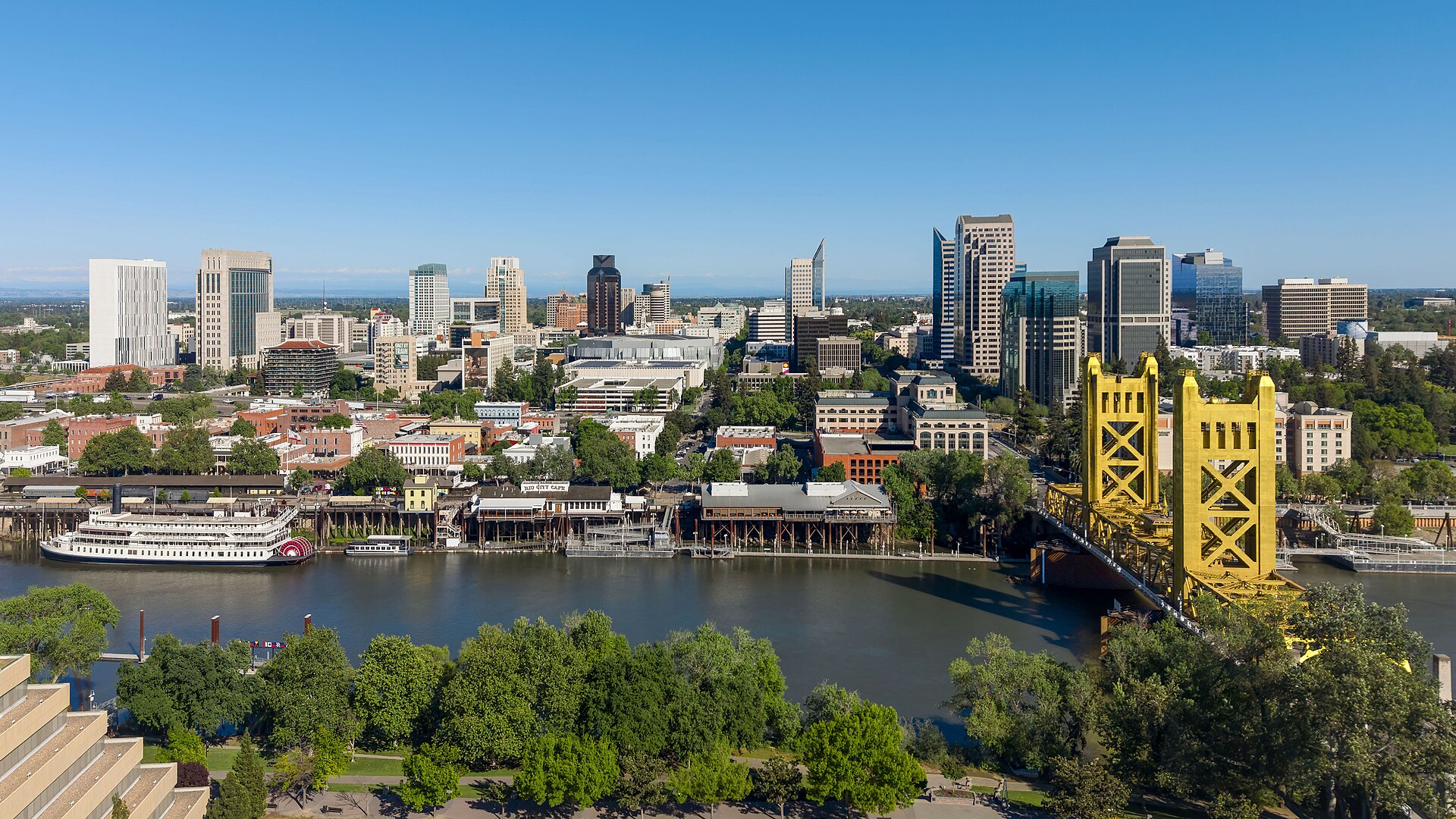
The Sacramento River runs through the western edge of downtown. The American River Parkway, a 32-mile recreation area along the American River from Discovery Park near downtown out toward Folsom, is genuinely one of the best urban outdoor amenities in the state. Summers are brutal, routinely hitting 100°F or above. Winters are mild and foggy, with a phenomenon locals call “Tule fog” that can make driving dangerous and mornings deeply gray. The city’s 14.4% poverty rate and 6.2% unemployment rate signal that not everyone here is thriving, and certain neighborhoods reflect that gap sharply.
Housing Costs: Renting and Buying in 2026
The Census-verified median gross rent in Sacramento is $1,694 per month, and actual rents vary by neighborhood.
Buying in Sacramento in 2026
The Census-verified median home value of $484,600 puts homeownership within reach for dual-income households, though barely. With a 20% down payment of roughly $97,000 and a 30-year fixed mortgage at Freddie Mac’s national average of 7.03% (late September 2026), your monthly principal and interest payment would run approximately $2,590/month before property taxes and insurance.
The homeownership rate of 51.5% suggests this city is roughly split between owners and renters, which means competition for entry-level homes is real. Elk Grove and Rancho Cordova, separate cities just outside Sacramento’s limits, are other options for buyers.
Food and Groceries
Sacramento is surrounded by farms, and the region has many certified farmers’ markets. The Sunday morning Central Sacramento Certified Farmers’ Market, under the freeway across from Southside Park, and the Saturday morning Midtown Farmers’ Market are both worth building your weekly routine around.
Safeway has eight stores in Sacramento, and Raley’s is headquartered next door in West Sacramento. Grocery Outlet, a discount chain, has several Sacramento stores. Whole Foods has a Sacramento store at 4315 Arden Way.
Dining out is where Sacramento stands out. The city markets itself as “America’s Farm-to-Fork Capital” because many of its restaurants source food from surrounding farms, and the region had more than 60 microbreweries as of 2017.
Transportation
Sacramento is car-dependent. That’s the honest answer. SacRT light rail exists and connects downtown to Rancho Cordova and Folsom, but it does not reach Sacramento International Airport (a Green Line extension there is still only proposed). Blue and Gold Line trains run every 15 minutes on weekdays and every 30 minutes on weekday evenings, weekends and holidays. If you live in Midtown and work downtown, you can genuinely walk or bike. Everyone else probably needs a car.
Gas in California runs well above the national average. The EIA’s statewide average for regular was $5.46/gallon in August 2026, against $4.06 nationally, and it passed $6.00 in late September 2026. For a driver putting 1,000 miles/month on a midsize vehicle getting 28 mpg, that’s roughly $195 to $215/month in fuel alone.
For those who can avoid a car, a monthly RT transit pass runs $100. Biking is viable in the flat, grid-layout parts of the city, and Sacramento’s relatively mild winters (the fog aside) mean cycling is a year-round option for the committed.
Healthcare
Sacramento has solid healthcare infrastructure for a city its size. UC Davis Medical Center, inside Sacramento between the Elmhurst, Tahoe Park and Oak Park neighborhoods, is the region’s academic medical center and a Level I adult and pediatric trauma center. Mercy General Hospital in East Sacramento and Sutter Medical Center, Sacramento are also in the city. Kaiser Permanente, one of the area’s largest employers, runs hospitals in Sacramento County.
For someone without employer-sponsored insurance, WellSpace Health offers medical, dental and behavioral health care and accepts Medi-Cal, Medicare and uninsured patients, which is relevant given the 14.4% poverty rate.
Entertainment and Lifestyle
The Golden 1 Center downtown is home to the Sacramento Kings of the NBA. Sacramento Republic FC plays in the USL Championship.
The Old Sacramento Waterfront has tourist-trap energy but is genuinely fun for a night walk. Midtown, officially the grid between 16th Street and 30th Street just east of downtown, hosts the Saturday farmers market and Second Saturday events.
Outdoor recreation is free and nearby. The Jedediah Smith Memorial Trail runs 32 miles along the American River Parkway from Discovery Park to Folsom, and the river is popular for kayaking and boating. U.S. Highway 50 heads east from Sacramento toward South Lake Tahoe. For people who measure quality of life partly by what’s accessible on a Saturday, Sacramento’s location is a genuine asset.
How Sacramento Compares to San Francisco and Los Angeles
San Francisco is the obvious comparison. In the same Census survey, San Francisco’s median gross rent was $2,419 a month against Sacramento’s $1,694, and its median home value was $1,380,500, nearly three times Sacramento’s $484,600. The tradeoff is real though: San Francisco offers a denser job market, better public transit, and a more cosmopolitan energy that Sacramento genuinely cannot replicate.
Los Angeles is a less direct comparison geographically but useful for perspective. In the same Census survey, Los Angeles had a median gross rent of $1,879 a month and a median home value of $879,500. Sacramento is cheaper on both counts, though it has no beach and no entertainment industry to match LA’s.
The median household income in Sacramento ($83,753/year) goes considerably further here than the same income would in either of those cities, which is the core of the argument for moving here.
The Honest Pros and Cons
What Sacramento Gets Right
- Relative affordability: The median rent of $1,694/month and median home value of $484,600 are well below San Francisco’s and Los Angeles’s in the same Census survey.
- Food and outdoor culture: The farm-to-fork restaurant scene and proximity to the American River and the Delta make lifestyle quality higher than the price tag suggests.
- State government stability: The State of California is the largest employer, with 113,610 employees in 2024, which gives the local economy a stable base.
- Grid layout and bikeability: In Midtown and East Sacramento, the flat street grid makes it one of the more walkable and bikeable California cities.
What Sacramento Gets Wrong
- Summers are genuinely hard: 100°F days from June through September are not an exaggeration. Air conditioning is not optional, and it shows up on summer utility bills.
- Visible inequality: The 14.4% poverty rate and 6.2% unemployment rate show up unevenly across neighborhoods, and the difference from one area to the next can feel jarring.
- Car dependence outside the core: If you don’t live in Midtown, you will need a car, and California’s fuel prices make that expensive.
- Limited tech job market: If your career is in tech, Sacramento has some presence but not the density of the Bay Area. Remote work has softened this, but it’s still a real constraint for some job seekers.
Who Sacramento Is Right For
The Bay Area refugee with remote work: If you earn a Bay Area salary remotely, moving to Sacramento is a straightforward financial upgrade. Census median gross rent is $2,419 a month in San Francisco and $1,694 in Sacramento.
The state government or healthcare professional: Sacramento’s two dominant stable employment sectors are government and healthcare. If you work for a state agency, CalPERS, or one of the major hospital systems, this city was essentially built for you.
The young family priced out of the Bay: Sacramento’s suburbs, including Elk Grove, Folsom and Roseville, sit within the Sacramento metropolitan area, and SacRT’s Gold Line runs to Historic Folsom.
The outdoor lifestyle seeker: The American River is popular for kayaking and recreational boating, and the 32-mile American River Parkway is free to use. U.S. Highway 50 runs east from Sacramento toward South Lake Tahoe.
The Verdict
Sacramento is not cheap. Regular gas passed $6.00 a gallon statewide in late September 2026, and the 30-year mortgage average was 7.03%.
What Sacramento offers is a version of California living that doesn’t require you to sacrifice your financial future to afford it. The median household income of $83,753/year stretched against a median rent of $1,694/month leaves breathing room that San Francisco and Los Angeles simply do not. The city has real problems, uneven neighborhood quality, extreme summer heat, and a car-dependent infrastructure outside its walkable core. But for the right person, and there are several distinct profiles who fit, Sacramento in 2026 makes more sense than it ever has.
Frequently Asked Questions
What is the average rent in Sacramento CA in 2026?
Is Sacramento CA affordable compared to San Francisco?
What is a good salary to live comfortably in Sacramento in 2026?
How hot does Sacramento get in summer and does it affect living costs?
What are the best neighborhoods to live in Sacramento for young professionals?
Sources & methodology. Demographic and economic figures in this guide are drawn from the U.S. Census Bureau, 2019 to 2023 American Community Survey 5-Year Estimates. A newer 2020 to 2024 release came out on January 29, 2026; this guide still uses the 2019 to 2023 figures. Other figures come from the sources named next to them.
Last reviewed September 2026.
How this guide was made. Figures come from the U.S. Census Bureau ACS 2019 to 2023 5-year estimates and the other sources named next to each number. A first draft was written with the help of an AI language model; every place name, price, date and claim was then checked against primary sources by the Small City Guide editors (see About and Methodology). Last verified: September 26, 2026.
What changed: Fact-checked against primary sources in September 2026: 8 statements corrected, opening rewritten, photo replaced with a credited image of the city.
Photo: Quintin Soloviev, CC BY 4.0, via Wikimedia Commons.