Best Neighborhoods in Boise, ID: 2026 Area Guide
Boise’s neighborhoods sit on distinct ground: the North End and East End under the foothills, downtown on the flats by the river, the Bench on a plateau above it, and Southeast Boise running from Boise State toward Micron. Each has its own housing stock, school assignments, and price band, and the differences matter more with Ada County’s median sale price at $595,000 in August 2026. This guide walks through seven areas plus one lesser-known pocket, with addresses for the schools that actually serve each one. It also flags two things buyers should track this year: the Boise School District’s 2026 long-range facilities master plan and Micron’s fab construction on the southeast side.
Start with the basics. Boise sits at the edge of the high desert, with the Boise River cutting through the south side of downtown and the foothills rising sharply to the north. The general layout breaks down like this: downtown and its immediate surroundings anchor the center; the historic North End stretches up toward the foothills; the Bench is a working-class plateau southwest of downtown; East Boise and Southeast Boise push out along the river toward Lucky Peak and the Micron campus; West Boise is suburban and newer and runs toward Meridian and Nampa; Garden City is a quirky, independent municipality tucked along the river. Each of these areas has its own price range, personality, and trade-offs.
The city’s median household income sits at $81,308 per year, and the median home value is $456,000. That puts the typical home at roughly 5.6 times median income, which is tight but not catastrophically unaffordable by 2026 West Coast standards. Renters face a median gross rent of $1,359 per month, though that Census figure (from the 2019 to 2023 ACS) lags current market conditions, and actual asking rents in desirable neighborhoods run noticeably higher. With that framing in place, here is where to actually live.
The 7 Best Neighborhoods in Boise for 2026
1. North End
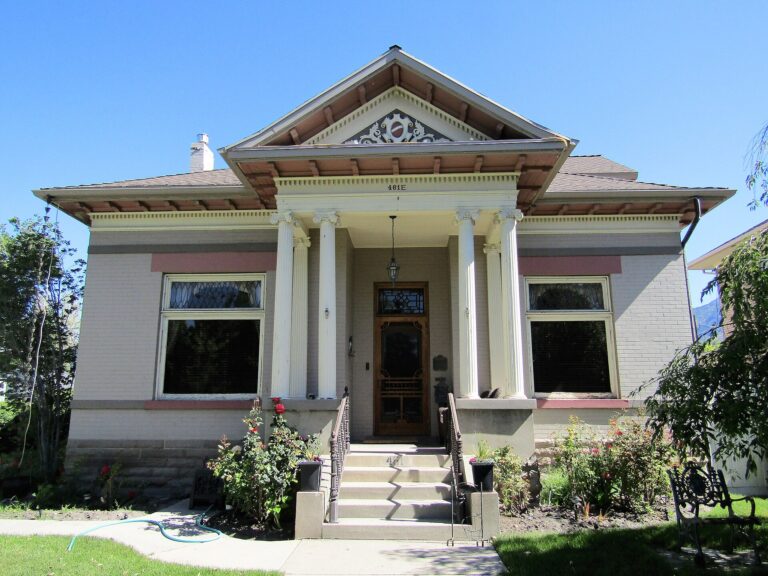
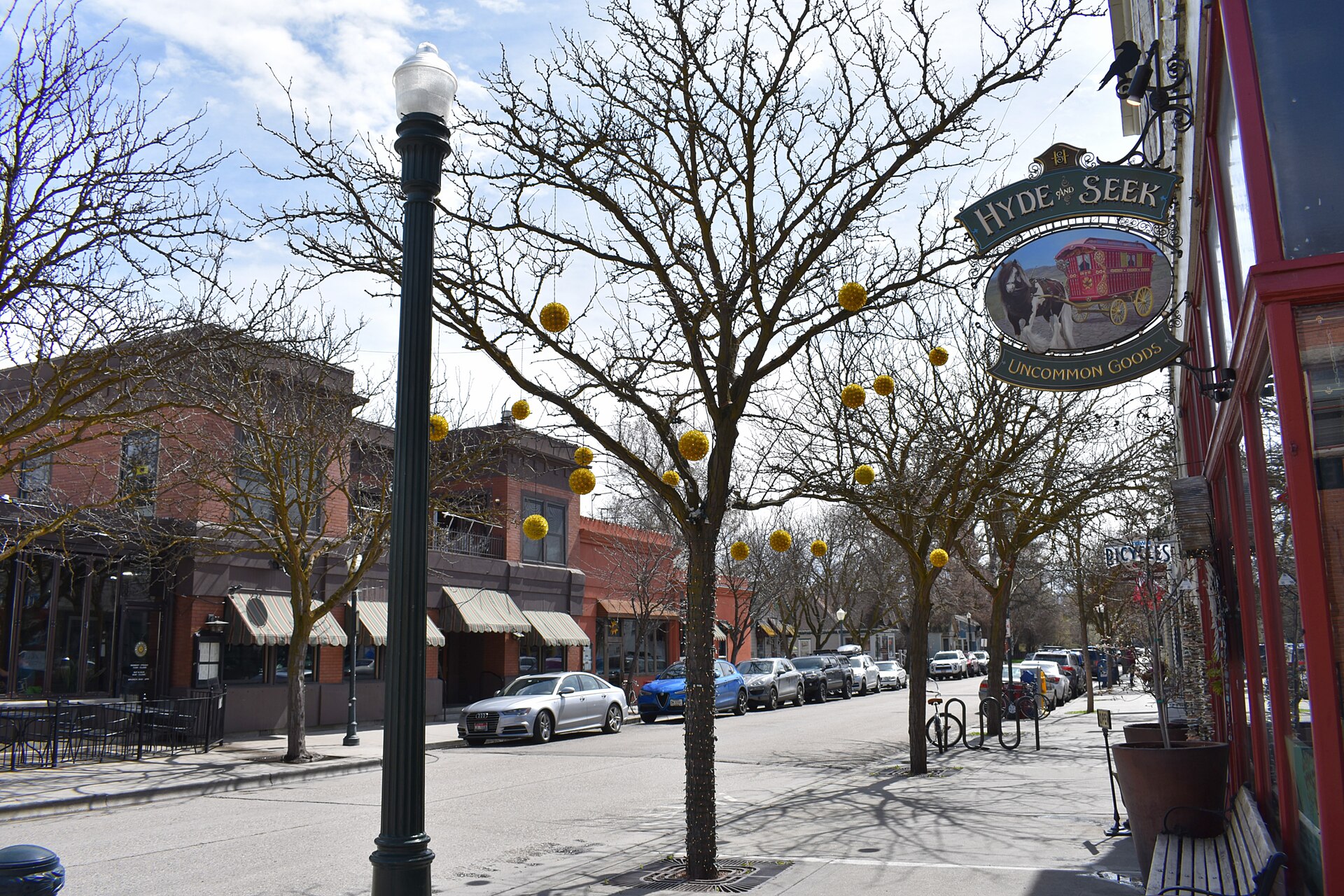
The North End is Boise’s most recognizable neighborhood, and it earns that reputation. Craftsman bungalows and brick Tudors line streets shaded by enormous mature elms, and the whole area sits within a short ride of Hyde Park, the commercial strip on 13th Street with restaurants and other businesses. Camel’s Back Park gives direct access to the foothills trail system, which is a genuine differentiator for outdoor types.
Walkability: High by Boise standards. Many errands can be done on foot or by bike.
Best for: Established professionals, retirees who want character and walkability, outdoor enthusiasts.
Schools: Longfellow Elementary and North Junior High are well-regarded in the Boise School District. Longfellow Elementary (1511 N. 9th St.) and North Junior High (1105 N. 13th St.) are the neighborhood schools; both feed Boise High.
Downside: Supply is extremely limited. Homes here sell fast and rarely have modern layouts. If you need a three-car garage and an open floor plan, you will be disappointed.
2. Downtown Boise (including the North End Fringe)
Downtown Boise has filled in considerably over the past decade. The stretch along 8th Street, the Basque Block, and the downtown blocks and clubs that host Treefort Music Fest each spring (its Main Stage sits in Julia Davis Park; the 2027 festival runs March 31 to April 4) give it a legitimate urban energy. Still, it is a small downtown. That intimacy is the point for some people, a limitation for others.
Walkability: Walk Score does not rate downtown as its own neighborhood; the nearby North End scores 65, second in the city.
Best for: Young professionals, remote workers who want to be near coffee shops and coworking spaces, people relocating from denser cities who want a soft landing.
Schools: Not a primary draw for families. Public elementary options are serviceable but not exceptional. Most families with kids gravitate away from the core.
Downside: Noise, limited green space at street level, and HOA fees on top of condo payments. Parking is a genuine hassle.
3. Southeast Boise
Southeast Boise is where a lot of the growth has landed. The area south of the Boise River between Federal Way and the river, running from Boise State University east past ParkCenter and Bown Crossing toward Micron, mixes mid-century ranches with newer infill construction. It has access to the Greenbelt, Boise River, and the Boise State University campus at its western end. It is quieter than the North End but still feels connected to the city.
Walkability: Low; Walk Score gives Southeast Boise 32, below the city average of 38. Bike-friendly along the Greenbelt, car-dependent for most errands.
Best for: Families, first-time buyers who got priced out of the North End, people who prioritize outdoor access over nightlife proximity.
Schools: Riverside Elementary and East Junior High serve parts of the area, and the Boise School District serves the whole of it.
Downside: Flood risk in lower-lying pockets near the river. Some blocks feel transitional, with investment properties mixed in among owner-occupied homes.
4. Bown Crossing / Southeast Foothills Area
This is the newer, more polished sibling of Southeast Boise proper. Bown Crossing, near Parkcenter Boulevard, is a planned mixed-use development with restaurants, small shops, a Boise Public Library branch (2153 E. Riverwalk Dr.), and paved paths directly connecting to the Greenbelt. The homes are newer, the streets feel cleaner, and there is a distinct suburb-in-the-city feel to it.
Walkability: The mixed-use center is usable on foot, but Walk Score rates Southeast Boise as a whole at 32, below the city average of 38.
Best for: Dual-income households with kids, people who want new construction character without moving to Meridian.
Schools: The elementary school next to Bown Crossing is Riverside (2100 E. Victory Rd.), and the area’s junior highs are Les Bois (4150 E. Grand Forest Dr.) and East (5600 E. Warm Springs Ave.), both feeding Timberline High; confirm your address with the Boise School District, which is working on a long-range facilities master plan in 2026.
Downside: The planned-community feel can be sterile. It lacks the organic character of the North End.
5. The Bench
The Bench is Boise’s most misunderstood neighborhood. It sits on a plateau above downtown, roughly bounded by Federal Way to the east, Cole Road to the west, and the rim above the river and Garden City to the north, with Vista Avenue and Overland Road as its main commercial spines. It includes older residential areas such as the Central Rim, Morris Hill and Depot Bench neighborhoods, and the commercial strips along Federal Way and Vista are unglamorous but functional.
Home prices: Across Ada County, homes older than 20 years sold for a median closer to $500,000 in August 2026, against a resale median of $579,900, according to Boise Regional REALTORS.
Walkability: Varies. On Walk Score, Morris Hill (69) and Depot Bench (63) are among the most walkable neighborhoods in Boise.
Best for: Budget-conscious buyers, investors, people who prioritize square footage over location prestige.
Schools: Research specific campuses carefully before committing.
Downside: Higher crime rates in isolated pockets, particularly around the commercial corridors. Limited green space. The neighborhood’s identity is still in transition.
6. West Boise (including the Collister Area)
West Boise is broadly suburban, with newer subdivisions radiating out from Cole Road and Ustick Road. The Collister area, closer to the city center, has a slightly older and more established feel. Families dominate the demographics here. Streets are wide, yards are generous, and the whole thing is extremely car-dependent.
Walkability: Low. This is quintessential drive-everywhere territory.
Best for: Families with young children, people who work in West Boise or Nampa, buyers who want a newer home without moving to Meridian or Nampa.
Schools: The Boise School District serves parts of West Boise, with schools like Cynthia Mann Elementary. Some areas fall into the West Ada School District.
Downside: Traffic on Eagle Road and Cole Road during rush hour is genuinely bad. The neighborhood has no clear center. On weekends, it can feel anonymous.
7. Garden City
Garden City is technically its own municipality, an independent city nearly surrounded by Boise, strung along Chinden Boulevard and the Boise River northwest of downtown. It has undergone a dramatic identity shift over the past decade, and in the 2010s it became a haven for artists’ studios. Residential options are still limited and eclectic.
Walkability: Moderate along the river and brewery corridor; low elsewhere.
Best for: Creative professionals, people in their 30s who want proximity to both downtown and outdoor recreation, buyers looking for value relative to adjacent Boise ZIP codes.
Schools: Most of Garden City is in the Boise School District, with a portion in the West Ada School District. School quality is adequate but not a primary draw.
Downside: Still industrial in pockets. Some streets feel unfinished. City services lag behind Boise proper. Flood insurance is required in lower-lying areas near the river.
Hidden Gem: Warm Springs Mesa
Most people driving through Warm Springs Mesa mistake it for another quiet suburb. They are missing something. It sits minutes from the Warm Springs Golf Course and the Greenbelt. It is not a bargain next to the North End, and it is not walkable (Walk Score 5). What it offers instead is a genuinely residential, uncrowded character close to the Greenbelt.
Neighborhoods to Approach with Caution
No guide is honest without this section. Certain parts of Boise carry higher risk of property crime or are in the early (and uncertain) stages of gentrification. This does not mean you should never consider these areas, but go in with eyes open, talk to neighbors, and check current crime data through the Boise Police Department’s public dashboard before signing a lease or making an offer.
How to Actually Choose
Here is the honest framework. If you are remote or work in tech, healthcare, or finance, you have maximum flexibility. If your job is location-specific, start with commute time and work outward.
The median gross rent of $1,359 per month reflected in the Census data understates current asking prices in desirable neighborhoods by a meaningful margin. Plan for roughly $500,000 to $600,000 if you are buying; Ada County’s median sales price was $595,000 in August 2026 ($579,900 for resale homes), and homes older than 20 years run closer to $500,000.
It is a city of working adults and young families, and the neighborhood mix reflects that. Families cluster in Southeast Boise, West Boise, and Bown Crossing. Singles and couples without kids gravitate toward the North End, downtown, and Garden City. Retirees often land in the North End or Warm Springs Mesa.
Final Pick by Lifestyle
- Young professional or remote worker: Downtown or North End. Pay the premium for walkability and proximity to the city’s social fabric.
- Family with school-age kids: Southeast Boise or Bown Crossing for Greenbelt access and space, but follow the Boise School District’s 2026 long-range facilities master plan, which will guide future decisions about school buildings.
- First-time buyer on a tight budget: The Bench, which has some of the most walkable pockets in the city on Walk Score and older housing close to the core.
- Creative professional or outdoor-first person: Garden City. The arts scene and river access make it the most interesting option in the metro right now.
- Retiree wanting character and calm: Warm Springs Mesa or the quieter parts of the North End near Camel’s Back Park.
- Suburban family needing space and good schools: West Boise or the Collister area, especially if your work takes you west toward Nampa or Caldwell.
People come, find a neighborhood that fits, and stay. The work is in finding the right one before you sign anything. Use this guide as a starting point, then spend a weekend walking each neighborhood you are seriously considering. The gap between what a place looks like on a map and what it feels like on a Tuesday afternoon is real, and in Boise, that gap is often the whole decision.
Frequently Asked Questions
What is the average rent in Boise, ID in 2026?
What is the most affordable neighborhood in Boise for buyers in 2026?
Is Boise, ID a good place to raise a family in 2026?
What neighborhood in Boise has the best walkability?
How does Boise’s cost of living compare to other Western cities in 2026?
Sources & methodology. Demographic and economic figures in this guide are drawn from the U.S. Census Bureau, 2019 to 2023 American Community Survey 5-Year Estimates. A newer 2020 to 2024 release came out on January 29, 2026; this guide still uses the 2019 to 2023 figures. Other figures come from the sources named next to them.
Last reviewed September 2026.
How this guide was made. Figures come from the U.S. Census Bureau ACS 2019 to 2023 5-year estimates and the other sources named next to each number. A first draft was written with the help of an AI language model; every place name, price, date and claim was then checked against primary sources by the Small City Guide editors (see About and Methodology). Last verified: September 26, 2026.
What changed: Fact-checked against primary sources in September 2026: 15 statements corrected, 9 off-topic Census sentences removed, opening rewritten, photo replaced with a credited image of the city. On September 27, 2026 every named place and figure was re-checked; details that could not be confirmed from a primary source were removed.
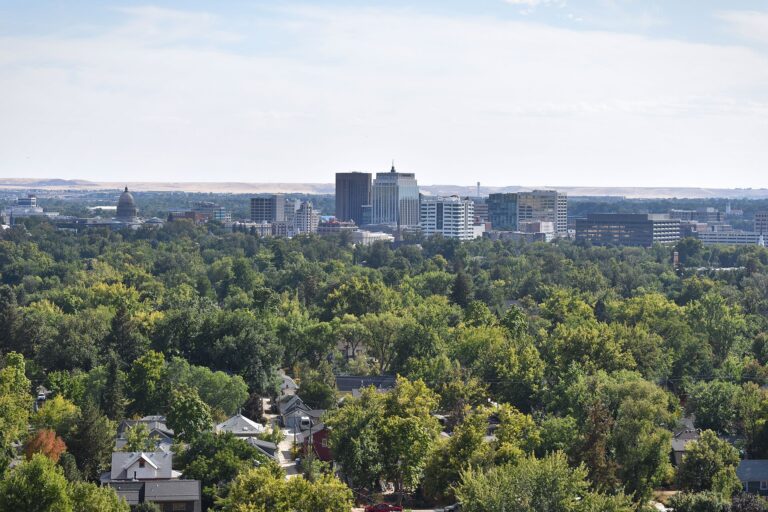
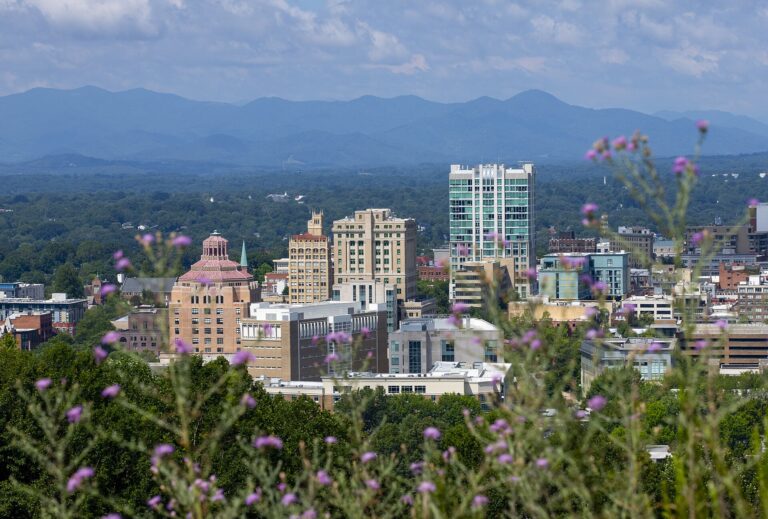
Photo: Tamanoeconomico, CC BY-SA 4.0, via Wikimedia Commons.