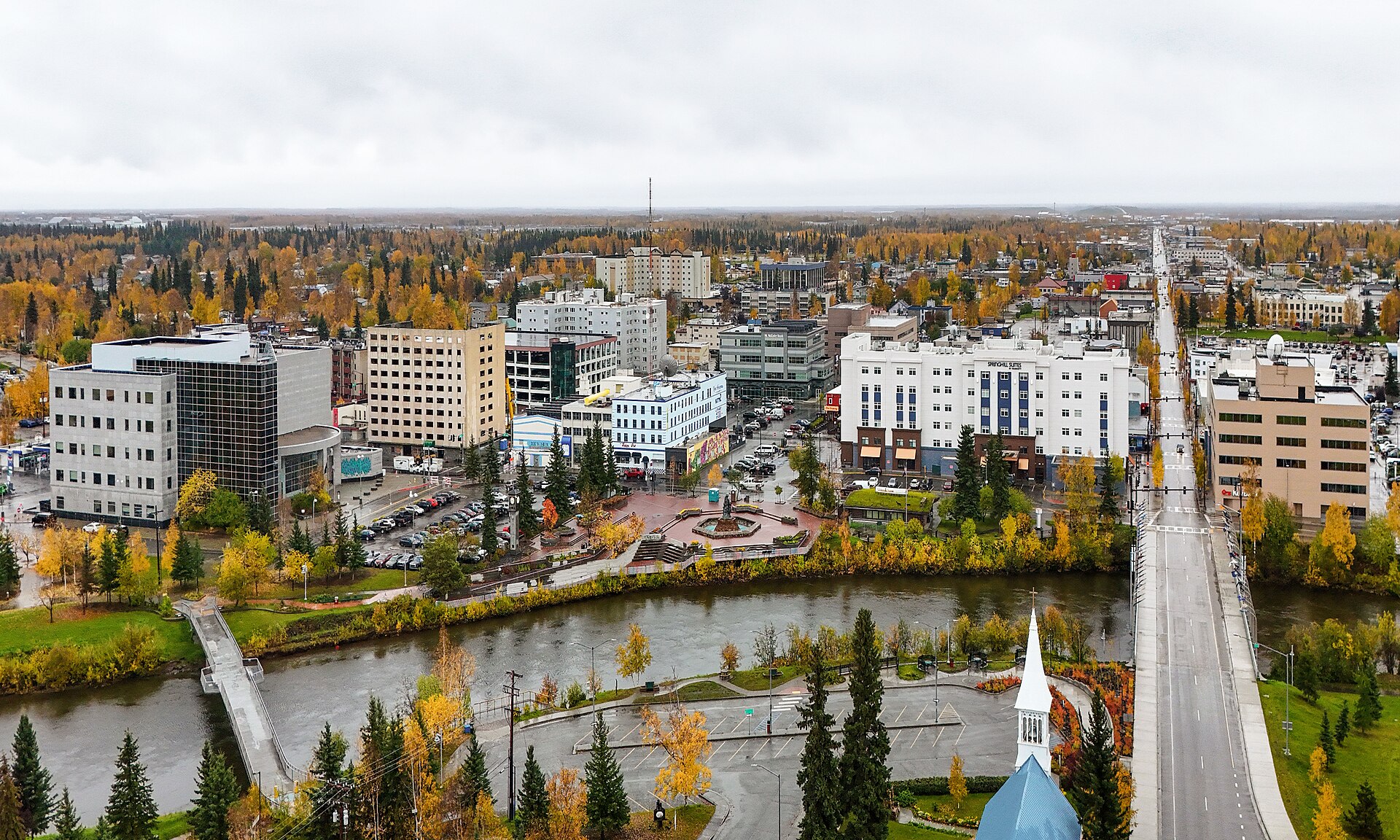
Cost of Living in Fairbanks, AK in 2026
Fairbanks is an Interior Alaska city of 32,242 people, anchored by the University of Alaska Fairbanks and Fort Wainwright. The Census puts median gross rent at $1,470 a month and the median home value at $255,700, but fuel, heat and groceries raise the monthly budget. In late September 2026, AAA put regular gasoline in Fairbanks at $5.05 a gallon, about 57 cents above the national average.
Fairbanks sits roughly 360 miles north of Anchorage, accessible by the Parks Highway or the Alaska Railroad. It is not a city that accidentally became expensive. It is a city that is expensive on purpose, because getting anything here requires logistics most of the Lower 48 never thinks about. Understanding that reality is the first step to figuring out whether it fits your budget and your personality.
Fairbanks at a Glance: Population, Vibe, and What the Numbers Reveal
The Census Bureau’s 2019-2023 American Community Survey puts Fairbanks’s population at 32,242, with a median age of just 28.6 years. That is strikingly young for a remote city, and it makes sense once you factor in the University of Alaska Fairbanks (UAF) and the consistent military presence at Fort Wainwright. Those two institutions cycle younger residents in and out constantly.
The median household income of $72,077 per year looks reasonable on paper. It is actually a bit misleading. Alaska’s Permanent Fund Dividend (an annual payment from Permanent Fund earnings to eligible residents who lived in Alaska for the full prior calendar year) adds to household income, but fuel costs more here than the national average, as the AAA figures below show.
The homeownership rate is 40.5 percent, which is low. For context, the Census Bureau put the national homeownership rate at 65.0 percent in the second quarter of 2026. Part of that is the transient student and military population. Part of it is that buying a home in Alaska’s interior requires serious commitment, both financial and personal. Only 26.5 percent of residents hold a bachelor’s degree or higher, which reflects the trade-heavy, resource-industry economy more than any lack of ambition. The unemployment rate sits at 5.8 percent, above the national rate of 5.2 percent in the same survey, which is worth noting if you’re moving here without a job already lined up. The poverty rate of 9.6 percent is below the national 12.4 percent.
Housing Costs by Neighborhood: Rent and Buy in 2026
The Census-verified median gross rent in Fairbanks is $1,470 per month. In practice, what that buys depends heavily on which part of town you’re in and how recently the building was insulated.
Downtown and the Cushman Street Corridor
Downtown Fairbanks is compact and walkable by local standards, though “walkable” in January means something different than it does in Portland. Older buildings dominate, so ask about heating costs before signing a lease.
College Neighborhood (Near UAF)
Renters near the University of Alaska Fairbanks share the area with students. Proximity to the university also means access to campus amenities, events, and a slightly more connected social scene than other parts of town.
North Pole
Yes, North Pole is a real place, a small incorporated city about 13 miles southeast of Fairbanks on the Richardson Highway, with 2,243 residents at the 2020 census. It is car-dependent even by Fairbanks standards.
Buying a Home in Fairbanks
The Census-verified median home value is $255,700. Asking prices vary widely with a home’s age, insulation and heating system, so compare recent local sales before making an offer.
A critical thing buyers overlook: permafrost. Large areas of Alaska sit on permafrost, and improper foundation construction leads to sinking, tilting, or cracked structures. Always hire an inspector with specific Alaska experience. Heating system condition is equally non-negotiable. A failing boiler in January is not an inconvenience, it is an emergency.
With a homeownership rate of 40.5 percent, most households here rent. That said, quality varies enormously. Inspect carefully and ask specifically about insulation R-values and heating fuel costs before signing anything.
Food and Groceries: What a Typical Month Actually Costs
Fred Meyer (Kroger-owned) and Safeway both have grocery stores in Fairbanks.
Hunting, fishing and berry picking are all possible near Fairbanks. Salmon is less dependable than it used to be: ADF&G closed the Tanana River drainage, which includes the Chena, to king salmon sport fishing for the 2026 season. Most of the area right around Fairbanks is a state nonsubsistence area, so hunting and fishing near town fall under general hunting regulations and sport or personal use fishing rules rather than subsistence rules.
Transportation: You Will Need a Car (A Good One)
Public transit in Fairbanks is minimal. MACS Transit operates a few bus routes, but coverage is limited and service frequency is low. For practical daily life, a personal vehicle is not optional, it is infrastructure.
Gas prices in Fairbanks run above the national average. On September 27, 2026, AAA put the Fairbanks average for regular at $5.05 a gallon, about 57 cents above the national average of $4.48. Prices swing with oil markets: the Fairbanks average for regular was $3.88 in September 2025, and the local record is $5.63, set in June 2022.
Cold weather is hard on batteries, belts, fluids, and tires. Block heaters (electric heating elements in the engine, plugged into outlets at parking spaces) are used to help engines start in deep cold.
Flying out of Fairbanks International Airport (FAI) is how most residents connect to the rest of the country. Alaska Airlines flies to Anchorage and Seattle, with seasonal flights to Portland, Oregon. Delta flies to Seattle year-round and to Minneapolis/St. Paul in season, and United adds seasonal flights to Chicago and Denver. If you travel frequently for work or family, build airfare into your annual budget as a real line item.
Healthcare: Coverage, Costs, and Access Realities
Fairbanks has better healthcare infrastructure than most remote Alaskan communities, but it is still limited compared to urban centers. Foundation Health Partners runs Fairbanks Memorial Hospital on Cowles Street. Bassett Army Community Hospital at Fort Wainwright serves military personnel and their dependents. A handful of clinics and specialty practices operate in town.
For anything complex, cardiac surgery, advanced oncology, complex orthopedic procedures, patients are typically flown or driven to Anchorage (360 miles south) or even Seattle. That medical travel adds cost and stress that urban residents rarely consider. Medical evacuation insurance is something Fairbanks residents discuss seriously, not as a paranoid what-if, but as a practical planning tool.
If you are comparing job offers, look closely at the health benefits. Employer-sponsored plans through the university, state government, or military are far more reasonable. Getting a job with good benefits is not just financially smart here, it is a healthcare access strategy.
Entertainment and Lifestyle: What You Actually Do Here
The lifestyle in Fairbanks is heavily outdoor-oriented, and that is not a tourism brochure talking point. It is how residents genuinely cope with and enjoy the extremes. Winter offers cross-country skiing on the Birch Hill ski trails, ice fishing, dog mushing (the Yukon Quest Alaska sled dog race starts in Fairbanks), snowmobiling, and northern lights viewing on clear nights. Summer brings the midnight sun, with 21 hours and 49 minutes of sunlight at the summer solstice, hiking in the White Mountains National Recreation Area and the Chena River State Recreation Area, and berry picking.
HooDoo Brewing Co. brews and pours beer in Fairbanks. The Fairbanks Summer Arts Festival has run for more than 45 years; the 2026 festival ran from July 19 to August 2.
If you rely on concerts, professional sports, or major cultural institutions for your quality of life, Fairbanks will feel isolating. That is an honest tradeoff worth naming.
Fairbanks vs. Anchorage and Seattle: How the Costs Stack Up
Anchorage, Alaska’s largest city with 291,247 residents at the 2020 census, is the obvious comparison. On September 27, 2026, AAA put regular gasoline at $5.00 a gallon in Anchorage and $5.05 in Fairbanks. Compare current rents, home prices and job offers in both cities before deciding.
The tradeoffs in Fairbanks are real: fuel above the national average, long winters, limited specialist healthcare, and geographic isolation. For the right person, that math works. For others, it does not.
The Honest Pros and Cons
Pros
- A median home value of $255,700, according to the Census figures above.
- Alaska Permanent Fund Dividend. Eligible residents receive an annual dividend once they have lived in Alaska for a full calendar year: $1,000 in 2025 and $1,200 in 2026, including a $200 energy relief payment. It offsets some living costs.
- No state income tax and no state sales tax. Alaska and New Hampshire are the only two states with neither.
- Outdoor recreation access, from the northern lights to the midnight sun to hunting and fishing.
- Strong trades and military job market. Pipeline work, construction, government, and university employment provide real economic anchors.
Cons
- Extreme cold that is not metaphorical. On average, Fairbanks temperatures reach -40°F on about seven days a year. It affects your vehicle, your home, your mental health, and your daily logistics in ways you cannot fully anticipate until you have lived through a full winter.
- Fuel costs more than the national average. On September 27, 2026, AAA put Fairbanks regular gasoline at $5.05 a gallon, about 13 percent above the national average of $4.48.
- Healthcare access limitations. Specialist care, elective procedures, and complex medical situations often require travel to Anchorage or beyond.
- Geographic isolation. You are about 360 miles by road from Anchorage. Social and professional networks are small.
- The 5.8 percent unemployment rate is higher than the national rate of 5.2 percent in the same 2019 to 2023 survey. Moving here without a job secured is a genuine financial risk.
- Heating costs are a serious budget line, not a footnote. Fuel oil prices fluctuate and a hard winter in an older home can bring large heating bills.
Who Should Actually Move to Fairbanks?
The Military Family or Government Employee
Fort Wainwright is in Fairbanks and Eielson Air Force Base is nearby. If you are coming with a military assignment or a federal or state government job, you have the income stability, the healthcare access (through TRICARE or federal plans), and often the housing support that makes Fairbanks work financially. This is probably the clearest “yes” profile for the city.
The Outdoors-First Remote Worker
If you have a fully remote job and your primary life goals involve skiing, dog mushing, northern lights photography, or wilderness access, Fairbanks delivers on those terms in ways that few places on earth can match. The isolation that drives others away is your feature, not your bug.
The University of Alaska Student or Early-Career Researcher
UAF is a genuinely strong research university, with research units such as the Geophysical Institute and the International Arctic Research Center. The median age of 28.6 years signals a young population that makes the social scene more accessible for students and young professionals than the raw size of the city might suggest. If your career is oriented toward Arctic research or resource industries, being here for a few years makes real professional sense.
The Trades Professional or Pipeline Worker
The Trans-Alaska Pipeline and associated infrastructure, plus construction and energy sectors, pay well and provide consistent work for electricians, welders, heavy equipment operators, and similar trades. The combination of no state income tax, a modest mortgage (achievable on that $255,700 median), and a high hourly rate can build wealth surprisingly quickly if your spending is disciplined.
The Verdict
Fairbanks is not for everyone, and it knows it. The city does not try to be. With a median rent of $1,470 per month, no state income tax, and some of the most extraordinary natural environment on the planet, it offers a real value proposition for a specific kind of person. That person is practical, cold-tolerant, either employed or highly employable in the local economy, and genuinely motivated by what Alaska’s interior has to offer.
If you are chasing lower costs without lifestyle sacrifice, Fairbanks will disappoint you. The grocery bills, heating costs, and healthcare limitations are real friction. But if you go in with clear eyes, a secured job, and genuine enthusiasm for what Interior Alaska actually is, the numbers can work, and the life can be extraordinary.
Frequently Asked Questions
What is the average rent in Fairbanks, AK in 2026?
How much does it cost to heat a home in Fairbanks, Alaska?
Is Fairbanks, Alaska affordable compared to Anchorage?
What is a good salary to live comfortably in Fairbanks, AK?
What is the job market like in Fairbanks, Alaska in 2026?
Sources & methodology. Demographic and economic figures in this guide are drawn from the U.S. Census Bureau, 2019 to 2023 American Community Survey 5-Year Estimates. A newer 2020 to 2024 release came out on January 29, 2026; this guide still uses the 2019 to 2023 figures. Other figures come from the sources named next to them.
Last reviewed September 2026.
How this guide was made. Figures come from the U.S. Census Bureau ACS 2019 to 2023 5-year estimates and the other sources named next to each number. A first draft was written with the help of an AI language model; every place name, price, date and claim was then checked against primary sources by the Small City Guide editors (see About and Methodology). Last verified: September 26, 2026.
What changed: Fact-checked against primary sources in September 2026: 13 statements corrected, opening rewritten, photo replaced with a credited image of the city.
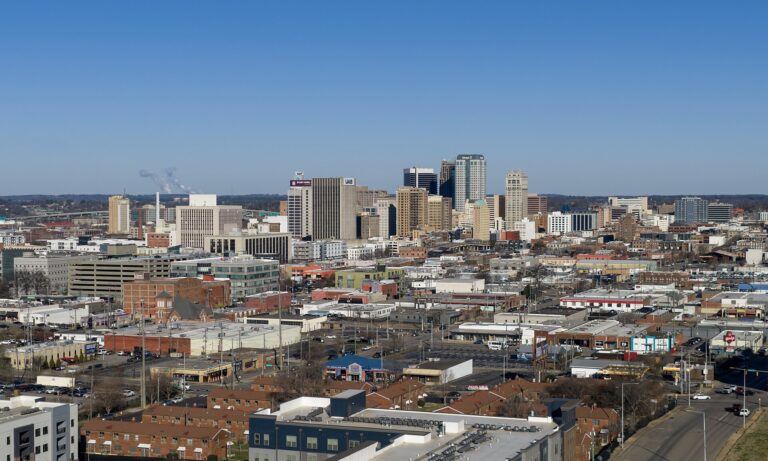
Photo: Quintin Soloviev, CC BY 4.0, via Wikimedia Commons.