Asheville NC Schools 2026: City vs County, Grades, Tuition
Families moving to Asheville often ask about the schools first, and for good reason. You want to know whether the school system justifies the investment. The honest answer: it depends heavily on which school your child attends, which neighborhood you buy or rent in, and what your expectations look like coming from larger metro areas.
Asheville’s overall educational culture skews toward the well-educated. According to the U.S. Census Bureau’s 2019 to 2023 American Community Survey, 52% of residents hold a bachelor’s degree or higher. That’s a number that shapes everything from PTA engagement to the demand for advanced coursework. It also means competition for seats at the most sought-after public schools is real.
How the Asheville School District Is Structured
Here’s the first thing many newcomers get wrong: Asheville has two separate public school systems operating within the same geographic area. Students are assigned to Asheville City Schools or Buncombe County Schools based on their address, and parts of the city are served by Buncombe County Schools. Confirm the assigned district for a specific address with both school systems before buying or renting.
Asheville City Schools is a smaller district, enrolling about 3,800 to 4,000 students (3,768 average daily membership in 2024-25; NCES counts 3,960) across eight schools: five elementaries, Asheville Middle, Asheville High and SILSA, plus a preschool program and an alternative campus. Enrollment has fallen by about 500 since 2019-20. Its smaller size is an advantage in some ways: district leadership is more accessible, and per-pupil spending is higher than the state average. Buncombe County Schools, by contrast, enrolls about 21,700 students across 45 schools, down from roughly 23,400 in 2019-20, giving families far more variety but also more variability in quality.
That diversity plays out differently across schools, and it’s worth understanding before you assume your zip code guarantees a particular experience.
Top Public Elementary Schools
Ira B. Jones Elementary (Asheville City Schools)
Located at 544 Kimberly Avenue in North Asheville, Ira B. Jones has a loyal parent following, though on state report cards it has earned a C for three straight years (score 56 in 2024-25, while meeting its growth target), roughly on par with the district’s other elementary schools. It draws a notably engaged parent community and is Asheville City Schools’ ‘Global Scholars’ magnet elementary (its pillars include project-based learning, service learning, Paideia discussion and world cultures); the arts-integration magnet is Claxton Elementary School of Arts and Humanities.
Claxton Elementary (Asheville City Schools)
Claxton sits at 241 Merrimon Avenue. North Carolina school performance grades have put Claxton at a C for three straight years (score 67 in 2024-25, the highest among city elementaries that year except Lucy S. Herring), and it missed its growth target in 2023-24 and 2024-25.
Weaverville Elementary (Buncombe County Schools)
If you’re open to living slightly outside city limits, Weaverville Elementary in the small town of Weaverville (about 10 miles north of downtown) is one Buncombe County option. The school has earned a B on state performance grades three years running (76 in 2024-25) and exceeded its growth target each year. Note that Weaverville Elementary covers only grades 2 through 4; younger children attend Weaverville Primary (pre-K through 1st) on the same street.
Top Public Middle and High Schools
Asheville Middle School
The only middle school in the Asheville City Schools district, Asheville Middle serves grades 6 through 8 at 211 South French Broad Avenue, just west of downtown. Its academic performance is solid, with mixed results on state tests: in 2024-25, 54.9% of students were proficient in reading (state average 52.5%) but only 47.2% in math (state 56.7%). The school earned a C performance grade and did not meet its growth target that year. The school offers band, art and career and technical education electives. The single-school structure means most ACS elementary students feed here automatically, which builds real continuity.
Asheville High School
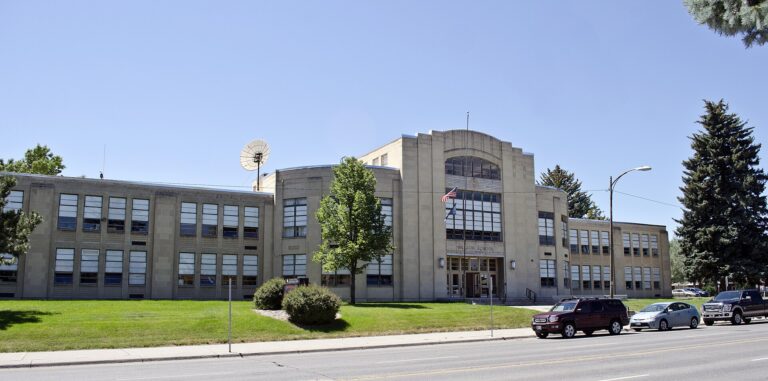
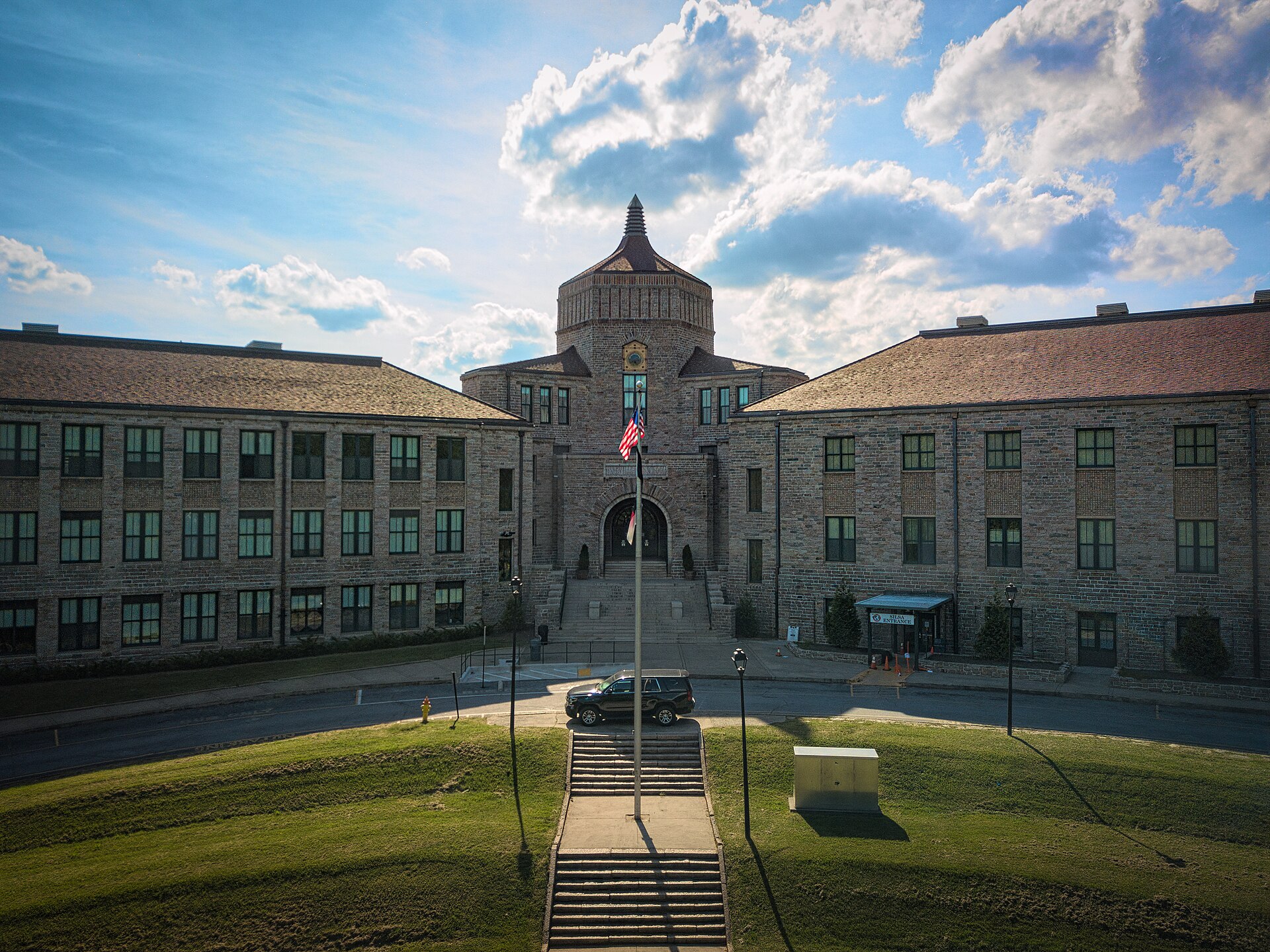
Asheville High, located at 419 McDowell Street in the landmark 1929 Douglas Ellington building, with A-B Tech’s campus directly behind it, is the flagship public high school within city limits. Its academic edge is Advanced Placement: the school’s 2023-24 profile lists 18 AP courses (AP Biology, Calculus AB, Chemistry, Computer Science, both AP English courses, Environmental Science, Physics 1 and 2, Statistics, U.S. History, World History, U.S. Government and others) and dual-enrollment agreements with A-B Tech, whose campus sits directly behind the school, and UNC Asheville. Asheville High does not offer the International Baccalaureate. Graduation rates hover around 89 to 91%. SAT averages for the school’s graduating classes were roughly 1,150 to 1,190 for the classes of 2021 through 2023 (for example 605 reading and writing, 548 math for the class of 2023), comfortably above the national average of about 1,030; mean ACT composites ran 21 to 23.
TC Roberson High School (Buncombe County Schools)
Located at 250 Overlook Road in South Asheville, TC Roberson has earned a B performance grade from the state every year from 2021-22 through 2024-25 (74 in 2024-25).
Erwin High School (Buncombe County Schools)
Erwin, at 60 Lees Creek Road, is the high school for Buncombe County Schools’ Erwin district. It has faced more challenges around test scores and state performance grades than Roberson, and the state data show no turnaround yet: Erwin earned a C in each of the last three years, with its score slipping from 59 to 55, and it did not meet growth expectations in any of those years. Its four-year graduation rate was 86.1% in 2024-25.
Private School Options
Several strong options exist across different educational philosophies.
Carolina Day School
Carolina Day enrolls about 625 students (pre-K through 12, NCES 2023-24) on its campus at 1345 Hendersonville Road in Biltmore Forest, just south of downtown Asheville. It’s a college-prep institution with its own college counseling program. Tuition for 2026-27 runs from $23,100 for preschool and junior kindergarten to $40,100 for grades 11 and 12 (the Key School program for students with dyslexia is $54,900), which is a significant commitment even on a $67,221 median household income. Most families enrolling here are well above the city median.
Asheville School
A small boarding and day school for grades 9 through 12 on a 300-acre campus, Asheville School offers an intimate college-prep environment with a strong emphasis on outdoor education and character development alongside academics. Day student tuition is about $47,660 per year, and boarding tuition about $76,950. It has a student body of around 300 and draws from both local families and out-of-state boarding students.
Asheville Waldorf School
For families drawn to a developmental, arts-integrated approach to education, Asheville Waldorf School serves Pre-K through 8th grade. The school uses tier-based tuition and offers tuition assistance. It’s a genuinely different educational model, and parents tend to feel strongly about it in both directions. Worth visiting in person before committing.
Montessori Schools
Asheville’s private Montessori schools are small and mostly for young children: Asheville Montessori School (360 Weaverville Road, North Asheville, ages 3 to 6), Hawthorn Montessori School (871 Riverside Drive) and Julia Street Montessori School (15 Julia Street, preschool and kindergarten). The tuition-free public option is Mountain City Public Montessori, a charter school at 27 Church Street downtown serving kindergarten through 7th grade. (Sources: NCES PSS 2023-24; amshq.org; nces.ed.gov CCD 370507103642).
Charter and Magnet Alternatives
North Carolina has a relatively open charter school environment, and Asheville has a few worth knowing about. Buncombe County’s charter schools are Evergreen Community Charter School (K-8, an environmental-education school on Bell Road), Francine Delany New School for Children (K-8, Brevard Road), ArtSpace Charter School (K-8, arts-integrated, in Swannanoa), The Franklin School of Innovation (grades 5-12, expeditionary learning), IC Imagine (K-12, the county’s largest charter), Asheville PEAK Academy (K-6) and Mountain City Public Montessori (K-7). All are tuition-free and admit by lottery when applications exceed seats.
Within Asheville City Schools, Asheville Primary School, the district’s former early-childhood campus on Haywood Road, closed in 2022; pre-K is now offered through the Asheville City Schools Preschool Program, and elementary students attend one of the district’s five elementary schools. ACS also operates the Education and Career Academy at the William Randolph Campus (90 Montford Avenue), an alternative program for middle and high school students who need smaller classes and more individual support.
Buncombe County Schools’ countywide choice options are the Martin L. Nesbitt Jr. Discovery Academy (a STEM magnet high school), Buncombe County Early College and the Center for Career Innovation on the A-B Tech campus, and a K-12 Virtual Academy.
Higher Education Near Asheville
Families relocating here should know that this matters not just for themselves, but for their children’s eventual options after high school.
University of North Carolina Asheville (UNCA)
UNCA is a liberal arts-focused UNC system school located just north of downtown on a compact, well-maintained campus. With about 3,000 students (3,056 in NCES College Navigator), it’s a small university by any measure. Its most popular majors include psychology, art, environmental science, biology, business and English. In-state tuition plus fees runs approximately $7,500 to $8,500 per year, making it genuinely accessible for local families.
AB Tech (Asheville-Buncombe Technical Community College)
AB Tech is one of the most important educational institutions in the region, though it often gets overlooked in favor of the four-year schools. It enrolled about 6,500 credit students in fall 2024 (NCES), plus continuing education students, and offers associate degrees, workforce development programs, and transfer pathways. Its healthcare, culinary arts, and skilled trades programs are particularly strong. For families where a four-year degree isn’t the immediate goal, AB Tech provides a credible and affordable route to stable employment in Asheville’s economy. Tuition for in-state residents runs around $2,900 per year before financial aid.
Warren Wilson College
Located in Swannanoa, east of Asheville, Warren Wilson is a small liberal arts college known for its work-study-service model. Every student works an on-campus job as part of their education. It’s distinctive, and it attracts a particular kind of motivated, unconventional student. Enrollment is small, about 800 students, and the campus is genuinely striking in the Swannanoa Valley.
What Local Parents Actually Say
Talk to parents who have relocated to Asheville from cities like Atlanta, Charlotte, or Washington D.C., and you’ll hear two recurring themes. First, many are pleasantly surprised by the depth of programming in Asheville City Schools, particularly the AP and dual-enrollment options at Asheville High and SILSA. Second, nearly all of them mention the district’s resource constraints and the degree to which active parent fundraising fills gaps that public funding doesn’t cover.
That’s not a criticism, it’s context. Parents describe a school culture that takes equity seriously, sometimes in ways that shape curriculum and resource allocation decisions in ways incoming families don’t always anticipate.
Parents in Buncombe County schools tend to be more varied in their experience. Families in schools serving lower-income parts of the county have a more mixed picture. The variability is real, and the address you choose matters.
Best Neighborhoods for School Access
For families prioritizing Asheville City Schools, North Asheville and the area around Merrimon Avenue are your clearest options. North Asheville has two city elementary schools, Claxton and Ira B. Jones, and like every ACS address feeds Asheville Middle on South French Broad Avenue and Asheville High or SILSA on McDowell Street within a single district.
West Asheville has become increasingly attractive for younger families, with Hall Fletcher Elementary (Ridgelawn Road) and Lucy S. Herring Elementary (Sulphur Springs Road) as the neighborhood’s two city elementary schools. The neighborhood has strong walkability and a local commercial strip on Haywood Road that makes daily life genuinely pleasant.
South Asheville, much of which lies in the Buncombe County Schools district even where it is inside city limits, offers newer construction, larger lots, and access to T.C. Roberson High School.
For families prioritizing private schooling, North Asheville’s proximity to Asheville Catholic School (Culvern Street), Asheville Montessori School (Weaverville Road), Hanger Hall and the French Broad River Academy campuses matters; Carolina Day School and Asheville Waldorf School are both on Hendersonville Road south of downtown, and Asheville School is in West Asheville, so families targeting them usually look elsewhere. The tradeoff is higher housing costs and a somewhat car-dependent lifestyle outside the immediate neighborhood core.
The Real Picture for Relocating Families
Asheville’s schools are genuinely better than the city’s relatively modest size might suggest, especially within Asheville City Schools where the AP catalog (18 courses), dual enrollment with A-B Tech and UNC Asheville, Asheville High’s 91.8% four-year graduation rate (2024-25) create real advantages.
The honest caveats: test scores are solid but not exceptional, class sizes in some high school courses reach the mid-20s, and district budgets are stretched. And the two-district structure, ACS versus BCS, means your specific address determines your options more than the city’s overall reputation does.
Do the research on your specific street before you sign a lease or close on a home. It’s the most important school-related step you can take before moving to Asheville.
Frequently Asked Questions
What school district serves Asheville NC in 2026?
Does Asheville High School have an IB program?
What are the best private schools in Asheville NC?
What colleges and universities are near Asheville NC?
Which Asheville neighborhoods have the best school access for families?
Sources & methodology. Demographic and economic figures in this guide are drawn from the U.S. Census Bureau, 2019 to 2023 American Community Survey 5-Year Estimates. A newer 2020 to 2024 release came out on January 29, 2026; this guide still uses the 2019 to 2023 figures. Other figures come from the sources named next to them.
Last reviewed September 2026.
How this guide was made. Figures come from the U.S. Census Bureau ACS 2019 to 2023 5-year estimates and the other sources named next to each number. A first draft was written with the help of an AI language model; every place name, price, date and claim was then checked against primary sources by the Small City Guide editors (see About and Methodology). Last verified: September 26, 2026.
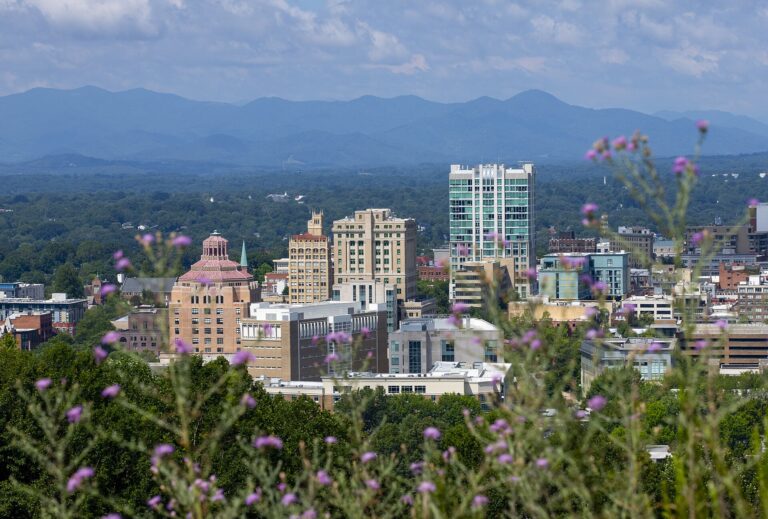
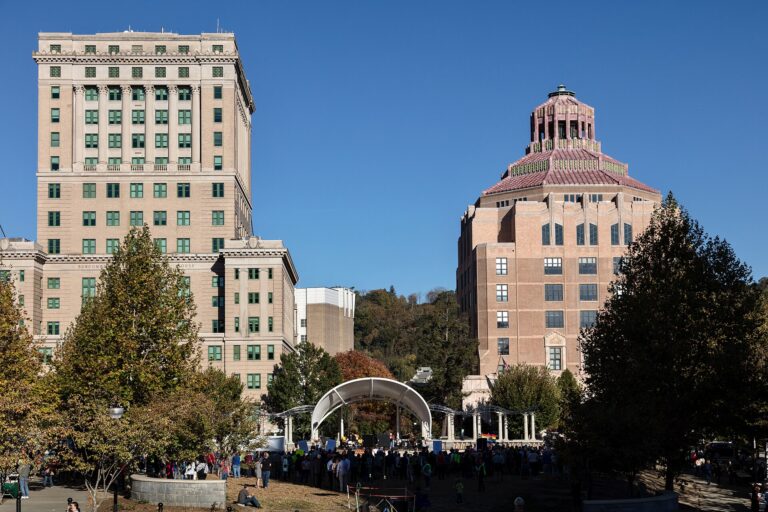
What changed: Fact-checked against primary sources in September 2026: 41 statements corrected, 12 off-topic Census sentences removed, opening rewritten, photo replaced with a credited image of the city. On September 27, 2026 every named place and figure was re-checked; details that could not be confirmed from a primary source were removed.
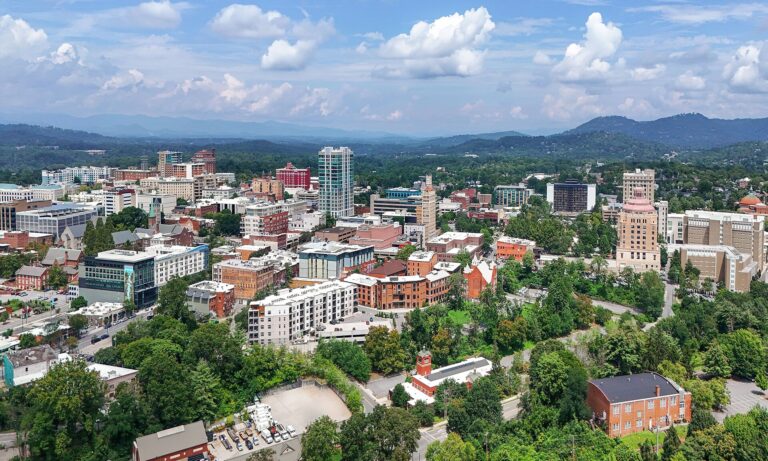
Photo: Elizabeth H. Jones, CC BY-SA 4.0, via Wikimedia Commons.