Tempe, AZ Cost of Living in 2026: Rent, Homes, Transit
Tempe’s median gross rent is $1,623 a month and its median home value is $421,900, according to the Census Bureau’s 2019 to 2023 American Community Survey. The city of about 186,000 sits between Phoenix, Scottsdale, Mesa and Chandler, with Arizona State University’s main campus, Valley Metro light rail and the S Line streetcar at its core. This guide breaks down 2026 housing, food, transportation, healthcare and summer utility costs, and how they compare with Phoenix and Scottsdale.
Tempe at a Glance
Tempe is bordered by Phoenix to the west, Scottsdale to the north, Mesa to the east, and Chandler to the south. It covers roughly 40 square miles and holds a population of 186,419, according to the U.S. Census Bureau’s 2019 to 2023 American Community Survey. That makes it the ninth-largest city in Arizona, even though it often plays second fiddle to its neighbors in reputation.
The median age of 29.9 years is the number that shapes everything here. Tempe feels young because it is young. Mountain America Stadium, the former Sun Devil Stadium, sits on the ASU campus in north Tempe, and ASU’s main campus bleeds directly into Mill Avenue, the city’s primary commercial corridor. On any given Thursday night, Mill Avenue is loud and crowded. On a Sunday in July, when the average high is about 106 degrees, it is almost empty.
That heat is the single biggest lifestyle factor to understand before you move here. Average daily highs top 100 degrees from June through September, and May averages about 95. Everything, from your electric bill to your weekend plans, gets organized around the heat.
The median household income of $77,643 per year sits just below the national median of $78,538 in the same survey, and Tempe’s 16.2% poverty rate tells a more complicated story. The university creates a large population of students living on limited budgets, which pulls the poverty rate up. The 5.6% unemployment rate reflects a job market that is competitive but not exceptional.
Housing Costs by Neighborhood
Tempe’s homeownership rate of 41.6% is notably low, which makes sense given the renter-heavy student population. The median home value of $421,900 is a real number, but it masks significant variation across neighborhoods. Here is how the main areas differ.
Renting in Tempe
The Census-verified median gross rent of $1,623 per month is a useful anchor, but specific neighborhoods pull hard in both directions.
- Mill Avenue and University District: The closest neighborhoods to ASU come with more noise. The trade is walkability and a very active social scene.
- Tempe Town Lake area: Office and residential high-rises such as Hayden Ferry Lakeside line the lake.
- South Tempe: Quieter, more suburban, and more family-oriented. You are trading proximity to nightlife for actual parking and a yard.
Buying in Tempe
The median home value of $421,900 puts ownership out of reach for a significant portion of Tempe residents, particularly when you factor in current mortgage rates. At the 7.03% average 30-year fixed rate Freddie Mac reported for late September 2026, with 10% down on a $421,900 home, principal and interest alone come to about $2,530 a month before property taxes, homeowners insurance and mortgage insurance. At the city’s median household income of $77,643, or about $6,470 a month, that payment alone is about 39% of gross income, above the common guideline that housing costs stay under 30% of income.
Solo buyers at median income will likely find it a stretch.
Food and Groceries
Fry’s Food and Drug, a Kroger-owned supermarket chain with a major presence in Arizona, is the familiar regional grocery name. Trader Joe’s has two Tempe stores, on East University Drive near ASU and on South McClintock Drive in south Tempe, and a Whole Foods on South Ash Avenue near downtown serves higher-budget shoppers.
Eating out is genuinely one of Tempe’s strengths. The city punches above its weight for food diversity, driven partly by ASU’s international student population. Mill Avenue is a shopping and entertainment strip popular with students, and Tempe Marketplace on East Rio Salado Parkway is a large shopping and dining center.
Transportation
Tempe is more transit-friendly than most of the Phoenix metro, but calling it a walkable city outside the immediate university area would be generous. A car is effectively required for most residents.
The Valley Metro Light Rail is the real transit asset here. The line runs through central Tempe and connects directly to downtown Phoenix and Mesa, making it genuinely useful for commuters headed into the urban core. With Valley Metro’s Smart Fare on a Copper card or the app, rides cost $2 each and local bus and rail fares stop at $64 per calendar month. If you live near a light rail station and work in downtown Phoenix or the ASU area, you can meaningfully reduce your car dependence, though you will not eliminate it entirely.
Parking in the university area is a real cost and a real headache.
Healthcare
Tempe is well-served by the broader Phoenix metro healthcare network. Dignity Health St. Joseph’s Hospital and Medical Center in Phoenix is a Level I trauma center. Closer to home, Banner Desert Medical Center in Mesa, next to the Tempe border, is also a Level I trauma center. Valleywise Health, the county’s public health system, runs community health centers throughout Maricopa County.
ASU students have access to ASU Health Services, which offers primary care, same-day appointments and other services on campus.
Entertainment and Lifestyle
Tempe Town Lake is the city’s defining outdoor amenity. Boating by permit or day rental and a path along the south bank make it popular, even in summer (with an early morning start). Papago Park, shared by Tempe and Phoenix, offers desert hiking minutes from central Tempe. The Tempe Center for the Arts, with a 600-seat theater, sits on the lake.
Harkins runs its Tempe Marketplace 16 cinema at the Tempe Marketplace shopping center, and ASU’s Sun Devil athletic events add to the calendar.
The bar and nightlife scene on Mill Avenue is active but skews young. If you are 35 and looking for a sophisticated cocktail bar scene, you will probably end up driving to Scottsdale most weekends. Tempe has a few genuinely good spots, but they are not the city’s dominant offering.
Factor in Diamondbacks or Suns games in Phoenix, and your entertainment budget can climb quickly.
How Tempe Compares to Phoenix and Scottsdale
Phoenix, immediately to the west, has a lower median gross rent ($1,458 a month in the same 2019 to 2023 Census survey) but significantly more sprawl and less walkability. Phoenix has more job centers, especially in healthcare and government, but the commutes are often brutal. For someone who works in North Phoenix or the Deer Valley corridor, living in Tempe adds unnecessary drive time.
Scottsdale, to the north, is a different conversation entirely. Scottsdale’s median gross rent is $1,910 a month and its median home value is $709,900, in the same Census survey. You get better restaurants, a more polished retail experience, and more nightlife options aimed at adults. You also pay significantly more for the privilege, and the lifestyle feels more suburban luxury than urban energy.
Tempe occupies the middle ground, more walkable and transit-accessible than Phoenix, more affordable and youthful than Scottsdale. That positioning is genuinely useful if it matches your life stage. It is less useful if you are firmly on one end of either spectrum.
Honest Pros and Cons
Pros
- Light rail and streetcar access makes car-free commuting feasible for certain job locations.
- Strong job market for tech and education sectors, anchored by ASU’s research and innovation ecosystem and proximity to the region’s semiconductor employers, including Intel in Chandler and TSMC’s fabs in north Phoenix.
- Genuinely diverse food scene at a range of price points, driven by the university population.
- Outdoor recreation is close at hand, from Tempe Town Lake to South Mountain Park, one of the largest municipal parks in the U.S.
- No state income tax on Social Security benefits.
Cons
- The summers are brutal and long. Four months of average highs above 100 degrees, June through September, is not a minor inconvenience, and air conditioning costs rise with it.
- The 16.2% poverty rate reflects real inequality, and certain pockets of the city show visible signs of economic stress.
- Noise and parking near ASU are ongoing quality-of-life issues if you live in the Mill Avenue corridor. The party does not stop on a Tuesday night in September.
- Buying a home is genuinely hard on a median income. At $421,900 median home value, a single earner at $77,643 per year faces a tight debt-to-income ratio at current rates.
- Car dependency outside the light rail corridor means transportation costs add up fast for anyone living in South Tempe or the suburban eastern edges.
Who Tempe Actually Makes Sense For
The Young Tech or Healthcare Professional
Someone in their late 20s earning $70,000 to $95,000, working in biotech, software, or healthcare, who wants a walkable apartment near the light rail and an active social life will find Tempe nearly ideal. Tempe’s median gross rent of $1,623 is manageable at that income, and the city’s energy fits this life stage well.
The Graduate Student or Academic
ASU’s graduate programs draw people from across the country and internationally. A graduate stipend is tight in Tempe, but manageable with a roommate. The university’s transit access and affordable food options make it workable in a way that Scottsdale or North Scottsdale simply would not be.
The Dual-Income Family Eyeing Ownership
A household earning $130,000 to $160,000 combined can realistically buy in South Tempe, which is served by the Tempe Union High School District. This profile benefits from Intel’s Chandler manufacturing campus nearby and the outdoor recreation access without paying Scottsdale prices.
The Remote Worker Relocating from a High-Cost Metro
Someone coming from San Francisco, Seattle, or New York earning a remote salary of $100,000 or more will find Tempe genuinely affordable by comparison. The $421,900 median home value looks expensive until you have been shopping in the Bay Area. The tradeoff is the heat and a cultural adjustment from coastal urban life to a Sun Belt college town.
The Honest Verdict
Tempe is a good city with a specific personality, and the costs make sense if that personality matches yours. The median rent of $1,623 per month is not cheap, but it is not San Diego either. The median home value of $421,900 is a genuine barrier for lower-income buyers, and the 16.2% poverty rate is a reminder that the ASU energy and tech-worker prosperity do not reach every corner of the city.
If you are young, professionally ambitious, heat-tolerant, and willing to trade a quiet suburban life for proximity to a genuinely active mid-size city, Tempe delivers solid value in 2026. If you hate summer heat, prioritize peace and quiet, or are a single earner trying to buy a home on median income, the math gets harder and other Phoenix-area cities may serve you better.
Know what you are trading for. In Tempe, you are trading extreme summer heat and a younger-skewing social scene for light rail access, a genuinely diverse food culture, and a price point that is measurably better than Scottsdale’s. For the right person, that is a very good deal.
Frequently Asked Questions
What is the average rent in Tempe, AZ in 2026?
Is Tempe, AZ affordable to live in?
How hot does it get in Tempe, AZ, and how does it affect living costs?
What are the best neighborhoods to live in Tempe, AZ?
How does the cost of living in Tempe compare to Scottsdale, AZ?
Sources & methodology. Demographic and economic figures in this guide are drawn from the U.S. Census Bureau, 2019 to 2023 American Community Survey 5-Year Estimates. A newer 2020 to 2024 release came out on January 29, 2026; this guide still uses the 2019 to 2023 figures. Other figures come from the sources named next to them.
Last reviewed September 2026.
How this guide was made. Figures come from the U.S. Census Bureau ACS 2019 to 2023 5-year estimates and the other sources named next to each number. A first draft was written with the help of an AI language model; every place name, price, date and claim was then checked against primary sources by the Small City Guide editors (see About and Methodology). Last verified: September 26, 2026.
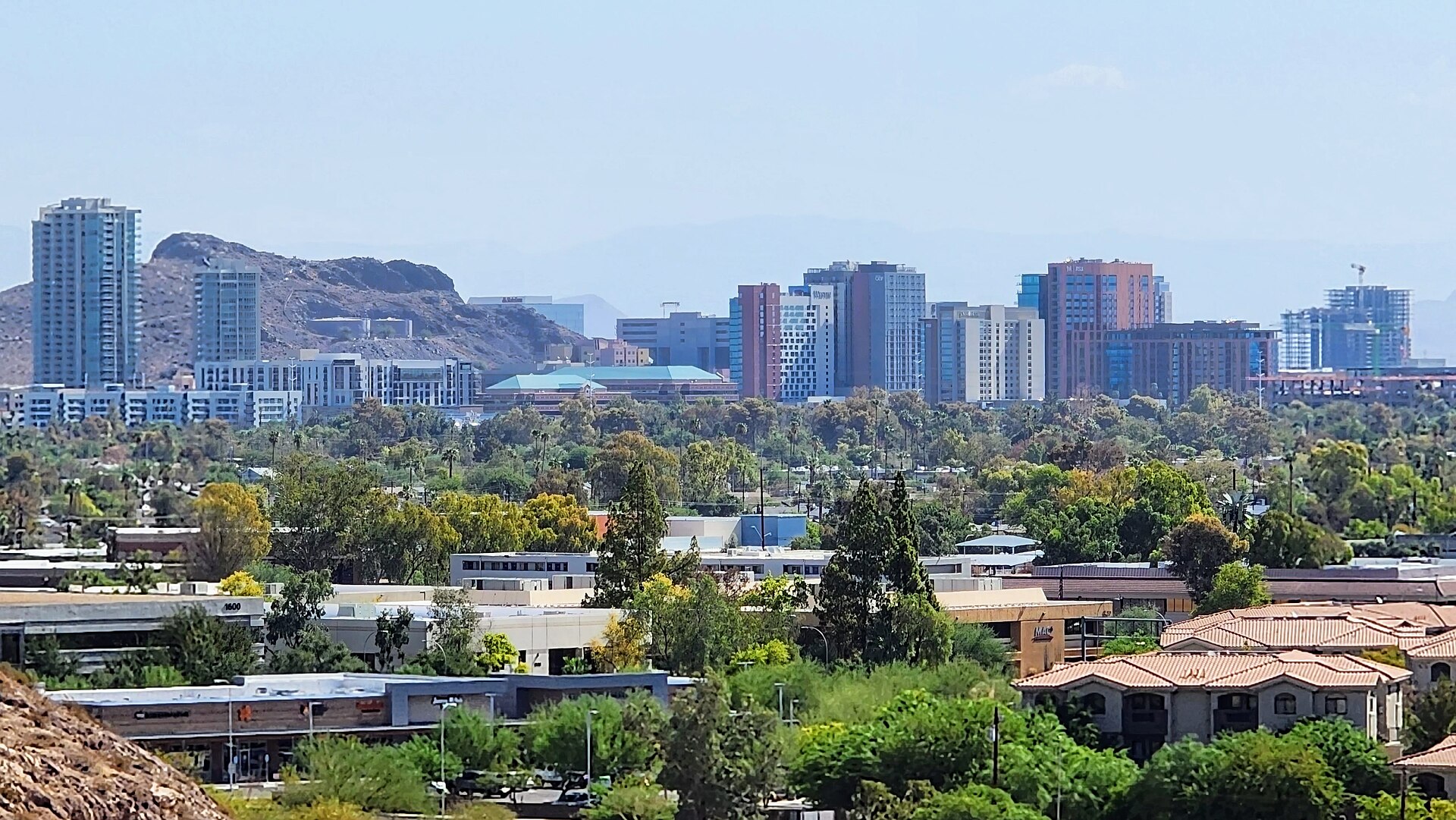
What changed: Fact-checked against primary sources in September 2026: 11 statements corrected, opening rewritten, photo replaced with a credited image of the city.
Photo: Siphonophora, CC BY-SA 4.0, via Wikimedia Commons.