Prescott, AZ Cost of Living in 2026: Housing and Transit
Prescott sits at about 5,400 feet in Yavapai County, about 90 miles north of metro Phoenix, and its median age is 60.3. The median household income of $69,151 is below the U.S. median of $78,538, while the median home value is $528,500 (Census ACS 2019-2023). At the 7.03% average 30-year mortgage rate Freddie Mac reported in late September 2026, a 10% down payment on that home means about $3,170 a month in principal and interest. This guide breaks down rent, groceries, transportation, healthcare and recreation costs.
A Quick Orientation: What Kind of Town Is This?
Prescott sits in Yavapai County in central Arizona, about 90 miles north of metro Phoenix and about a 1.75-hour drive from Flagstaff, according to the city’s tourism office. With a population of 46,744 (U.S. Census Bureau, 2019-2023 ACS 5-Year Estimates), it is a small city by any measure. The median age is 60.3 years, which tells you almost everything you need to know about who lives here. This is not a college town. It is not a tech hub. It is, deliberately and happily, a place where a significant share of residents have already closed out their working years or are approaching that finish line.
That skew shapes the entire culture. Downtown is genuinely pleasant on a Tuesday afternoon. Traffic is manageable. The pace is slow. The homeownership rate of 68.1% reflects a population that has largely settled in rather than passing through. And the median household income of $69,151 per year sits below the national median of $78,538 (same Census survey), propped up partly by retirement income and Social Security rather than high local wages.
The poverty rate of 11.6% is a reminder that not everyone here is a comfortable retiree. There is a working-class and service-sector population that struggles with local housing costs. That tension is real and worth understanding before you assume Prescott is uniformly comfortable.
Housing Costs: Renting and Buying in 2026
Housing is where Prescott surprises people, and not always pleasantly. The median home value is $528,500, which puts homeownership firmly out of reach for many households earning around the median income. At the 7.03% average 30-year fixed rate Freddie Mac reported for the week of September 24, 2026, a buyer putting 10% down on a $528,500 home is looking at a monthly principal and interest payment near $3,170, before taxes and insurance. That is roughly 55% of the median household’s gross monthly income. The math is uncomfortable.
Neighborhoods and What They Cost
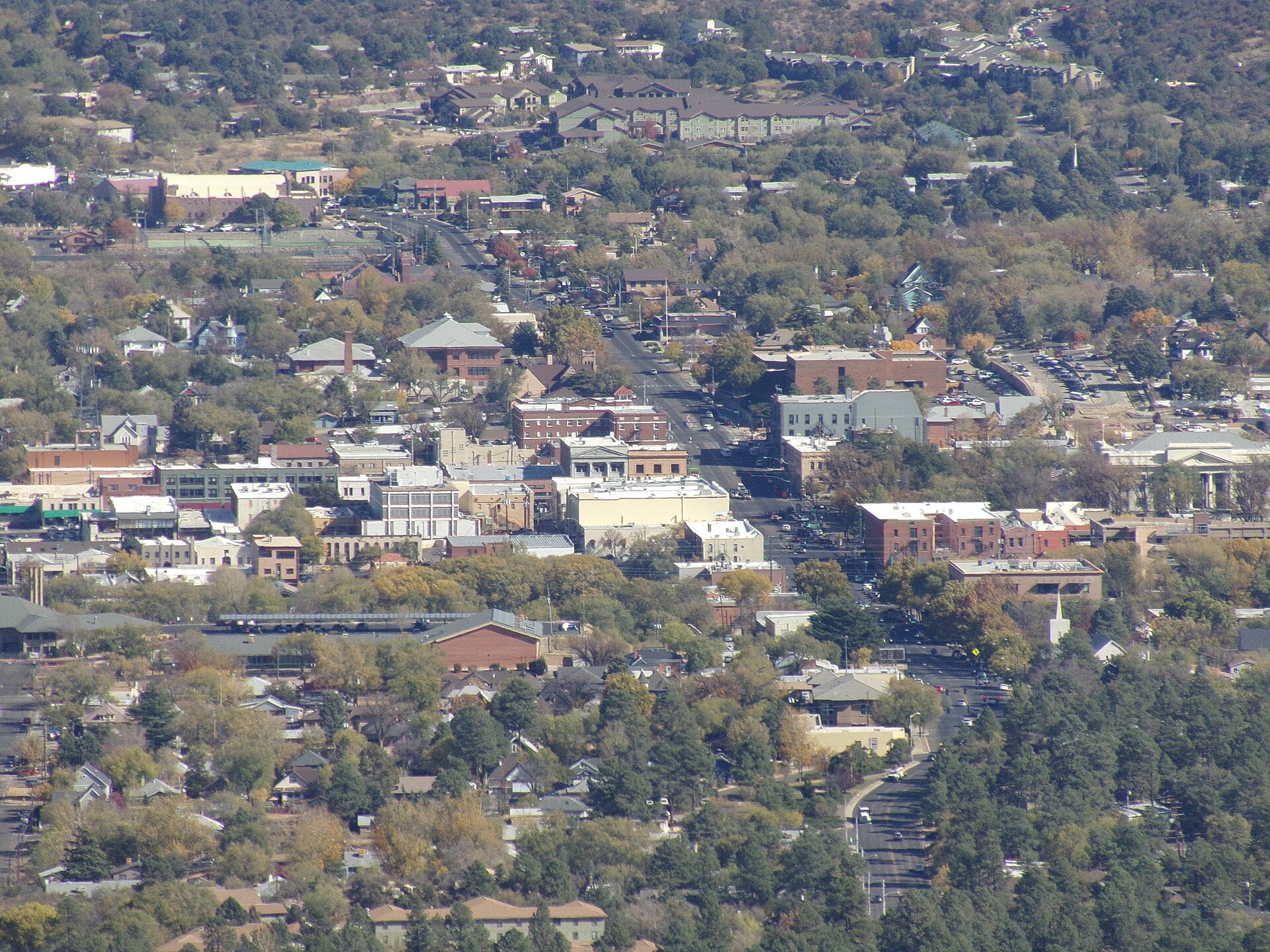
Downtown and the Courthouse Plaza area is Prescott’s walkable core. The city’s tourism office counts about 200 businesses, including shops, restaurants and bars, within a four-block radius of the Courthouse Plaza, and the Prescott Public Library is on Goodwin Street downtown.
Prescott Valley, the adjacent incorporated town to the east, is the more affordable sibling on home values. On Census figures, Prescott Valley’s median gross rent is $1,471, higher than Prescott’s $1,304, while its median home value is much lower at $376,300 (ACS 2019-2023).
Prescott Lakes and Talking Rock are communities built around private golf clubs; Talking Rock’s club has an 18-hole course.
Williamson Valley Road connects to Pioneer Parkway on Prescott’s north side and leads toward Williamson Valley, one of the smaller communities of central Yavapai County.
The rental picture, anchored by that $1,304 median gross rent, is a 2019 to 2023 figure; check current listings before setting a budget.
Food and Groceries: What a Month of Eating Costs
Grocery options include Fry’s (Kroger-owned) and Safeway stores in Prescott, Sprouts on East Sheldon Street, and Walmart stores in Prescott and Prescott Valley.
Sit-down options include El Gato Azul, which recommends reservations.
Transportation: You Will Need a Car
Prescott is car-dependent. Full stop. There is a local bus system, Yavapai Regional Transit, which is free to ride but runs limited days: its Red and Blue routes link Chino Valley, Prescott and Prescott Valley on Wednesdays, and its Green route runs between Chino Valley and Prescott on Mondays, Tuesdays, Thursdays and Fridays, but it is not a realistic substitute for a vehicle if you have a job, errands, or any need to reach Prescott Valley. Walking works downtown; almost nowhere else.
Downtown on-street parking is free, with over 100 spots that have no time limit, and the five-story parking garage one block from the Plaza is free except on certain holidays and during special events, according to the city’s tourism office. The main route to Phoenix is State Route 69 through Prescott Valley to I-17. Mingus Mountain, at 7,818 feet, sits on State Route 89A toward Cottonwood, not on the Phoenix route. If your life requires regular Phoenix trips, factor in the occasional white-knuckle drive or the time cost of waiting it out.
If you are commuting to Phoenix for work, think hard. The city’s tourism office lists the drive to Phoenix at about 90 minutes. People do it, but it is a grind.
Healthcare: Solid for a Small City
Healthcare is one of Prescott’s genuine strengths, and it matters enormously given the median age of 60.3 years. Dignity Health Yavapai Regional Medical Center operates two campuses, Yavapai Regional West in Prescott and Yavapai Regional East in Prescott Valley, each with an emergency department, and offers heart services, the Baskin Breast Care Center and lung cancer screening and care. It is designated a Level 4 trauma center within the Arizona Department of Health Services statewide trauma system. For a town of under 50,000, that is a substantial infrastructure.
The Northern Arizona VA Health Care System runs a medical center at 500 Highway 89 North in Prescott and is one of the city’s largest employers.
Anyone moving to Prescott before Medicare eligibility should price marketplace health insurance for their age and county before committing.
Entertainment and Lifestyle Costs
This is where Prescott punches above its weight. The Sharlot Hall Museum is a genuine regional treasure; admission is $17 for adults and $15 for seniors 65 and older, and a ticket is good for two consecutive days. The Phippen Museum covers Western art. Thumb Butte is in Prescott, and the Prescott National Forest has campgrounds and dispersed campsites. Watson and Willow lakes, set among the boulders of the Granite Dells, offer fishing, boating, a disc golf course and hiking trails.
The annual Prescott Bluegrass Festival and Frontier Days (one of the oldest rodeos in the world, since 1888) are long-running annual events. Whiskey Row, the block of historic saloons on Montezuma Street facing the courthouse plaza, keeps the social scene accessible without requiring a nightlife budget that would embarrass a bigger city.
A round at Antelope Hills, the city’s two-course municipal golf complex, lists at $52 to walk 18 holes or $76 with a cart under dynamic pricing, with twilight and Advantage Card rates from $30 to $48. Movie theaters include Harkins Theatres on Pav Way and the Picture Show on State Route 69.
For live performances, the downtown Elks Theatre and Performing Arts Center hosts both films and live shows.
How Prescott Compares to Nearby Cities
Prescott vs. Flagstaff, AZ
Flagstaff is about a 1.75-hour drive from Prescott, according to the city’s tourism office, and costs more for renters, though not for buyers on Census figures. Flagstaff’s median home value is $503,400 and its median gross rent is $1,555 per month (Census ACS 2019-2023). In exchange, Flagstaff offers Northern Arizona University and daily Amtrak service on the Southwest Chief. Flagstaff skews younger (median age of 26, driven by the university population). If you want a university-town energy at higher cost, Flagstaff wins. If you want stability and lower rent, Prescott has the edge.
Prescott vs. Phoenix, AZ
Phoenix is the obvious comparison for anyone considering the Prescott alternative. On Census figures (ACS 2019-2023), the median home value is $709,900 in Scottsdale and $469,800 in Chandler. The tradeoff is stark: Phoenix offers an enormous job market, major-league sports, and a genuine international airport. But Phoenix summer heat is brutal and unrelenting, with an average of 111 days a year at or above 100°F, including most days from the end of May through late September. Prescott’s average July high is about 90°F, although heat waves have pushed it as high as 105°F. That climate difference is not a minor lifestyle perk; for older adults especially, it is a health and quality-of-life factor. On Census figures Prescott costs more than Phoenix to buy (a median home value of $528,500 versus $381,900) and a little less to rent ($1,304 versus $1,458), but it is meaningfully cooler and quieter.
Honest Pros and Cons
The Real Advantages
- Climate: Four genuine seasons, mild summers, and manageable winters. The 5,400-foot elevation keeps things livable when Phoenix is an oven.
- Outdoor access: Prescott National Forest, the Granite Dells, Watson and Willow lakes, and more than 400 miles of trails, by the tourism office’s count, are close to town.
- Healthcare infrastructure: Two hospital campuses with emergency departments, plus the Northern Arizona VA Health Care System’s Prescott medical center.
- Walkable downtown core: The Courthouse Plaza area is genuinely pleasant and human-scaled in a way most Arizona cities are not.
The Real Drawbacks
- Home prices are not small-town prices: A $528,500 median home value is higher than Phoenix’s $381,900 (Census ACS 2019-2023), in a town with a $69,151 median household income. The affordability math does not work for many buyers.
- Job market is thin: The unemployment rate of 4.6% is manageable but the job options are limited. The largest employers include Yavapai Regional Medical Center, Yavapai County, the Northern Arizona VA Health Care System and Yavapai College. Remote workers and retirees fare far better than job-seekers.
- Car dependency is absolute: You cannot live here without reliable transportation.
- Demographically lopsided: A median age of 60.3 means younger residents often feel isolated or underserved by local programming, dating pools, and peer networks.
- The poverty rate of 11.6% reflects a real affordability gap: Not every household here is a comfortable retiree.
Who Actually Thrives in Prescott
The early retiree or retiree with portable income. This is Prescott’s core demographic for good reason. If your income is fixed but stable, Social Security and pension income go reasonably far here. The lifestyle infrastructure (healthcare, outdoor recreation, mild climate) is built around you.
The remote worker with a portable job. If you can work from anywhere, Prescott’s lifestyle proposition is strong. The climate, the pace, and the outdoor access are real benefits. Just confirm internet service options at a specific address before committing.
The outdoor-focused couple relocating from a higher-cost market. If you are leaving Southern California or the Seattle area and selling a home with significant equity, Prescott feels affordable by comparison. You get a real house with a yard, a pine forest out the back, and summers that do not require air conditioning at maximum blast.
The near-retiree doing a trial run. If you are nearing retirement and thinking about where to land for the next chapter, renting for a year in Prescott is a low-commitment way to find out if the reality matches the appeal.
The Verdict
Prescott is a genuinely good place to live, but only if you go in with clear eyes about what it is and what it is not. It is not an affordable small town. It is not a career destination. It is not where you move in your 30s hoping to build a social life from scratch. What it is: a well-run, physically beautiful, small Arizona city with excellent healthcare, four real seasons, and a downtown that functions as advertised. The people who regret moving here are usually the ones who expected Phoenix amenities at small-town prices. The ones who love it are the ones who wanted exactly what Prescott has always been offering.
Frequently Asked Questions
What is the average rent in Prescott, AZ in 2026?
Is Prescott, AZ affordable to buy a home in 2026?
What are the best neighborhoods in Prescott, AZ for retirees?
How is the healthcare in Prescott, AZ?
Is Prescott, AZ a good place for remote workers in 2026?
Sources & methodology. Demographic and economic figures in this guide are drawn from the U.S. Census Bureau, 2019 to 2023 American Community Survey 5-Year Estimates. A newer 2020 to 2024 release came out on January 29, 2026; this guide still uses the 2019 to 2023 figures. Other figures come from the sources named next to them.
Last reviewed September 2026.
How this guide was made. Figures come from the U.S. Census Bureau ACS 2019 to 2023 5-year estimates and the other sources named next to each number. A first draft was written with the help of an AI language model; every place name, price, date and claim was then checked against primary sources by the Small City Guide editors (see About and Methodology). Last verified: September 26, 2026.
What changed: Fact-checked against primary sources in September 2026: 17 statements corrected, opening rewritten, photo replaced with a credited image of the city.
Photo: LunchboxLarry, CC BY 2.0, via Wikimedia Commons.